In the golden glow of early autumn 1965, New York City was buzzing with the kind of theatrical energy only Broadway knows. Yet on one unforgettable evening, it wasn't the magic of the stage that captured every eye, but the majestic entrance of a woman who redefined glamour and audacity: Princess Margaret. Becoming the focus of awed silence as she swept through the lobby of a renowned New York theatre, Margaret was not just adorned in an exquisite gown; she was draped in legacy, luminescence, and an indelible sense of style that was purely her own.
The Heartbeat of the Empire: Princess Margaret's Aura
Princess Margaret, Countess of Snowdon, was no ordinary figure in the realm of royal elegance. The younger sister of Queen Elizabeth II, Margaret was often seen as the monarchy's effervescent spirit—a vibrant contrast to the composed sovereignty of the crown. Her life was a tapestry woven with color and charisma, often punctuated by her sharp wit and charismatic presence. In 1965, as she graced the United States with her visit, she carried not just the weight of a royal title, but the expectations of a storied institution intent on projecting elegance and grace across the Atlantic. Yet, there was little surprise that she did this not with stoic reserve, but with the brilliance that was quintessentially Margaret.
The Magnificence of Norman Hartnell's Creation
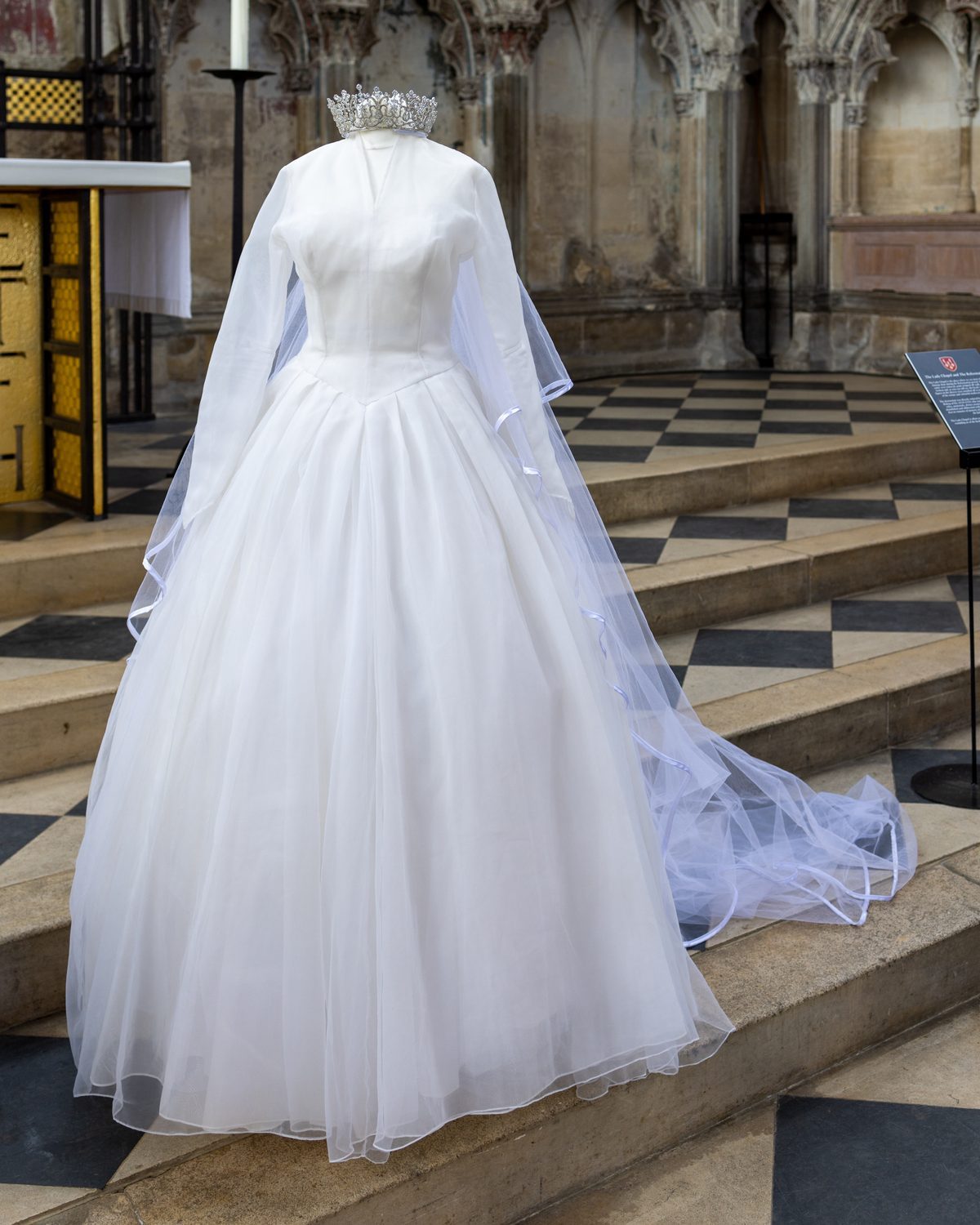
When discussing the iconic images of Princess Margaret, one cannot overlook the significance of her sartorial choices, many of which were crafted by Sir Norman Hartnell, the British couturier celebrated for his opulent creations. Hartnell's genius lay in capturing both the ethereal and the timeless—a gift he bestowed magnificently in Margaret’s enchanted Broadway gown. The ivory masterpiece was a feast for the senses, every inch running with an intricate array of pearls that shimmered like dew upon silken petals. These hand-sewn pearls were not merely embellishments but a signature of royal opulence and an art form in their own right.
The gown's design was emblematic of Hartnell's flair for combining tradition with forward-thinking flair, a perfect tribute to Margaret's bold personality. The meticulous draping and silhouette complemented her figure flawlessly, while the delicate shimmer of pearls illuminated her grace under the spotlight, leaving theatre-goers breathless — the stage quietly forgotten, if only for a moment.
A Theatrical Entrance: The Princess Steals the Show
It was a night Broadway would not soon forget. The city's elite gathered, anticipations high for an evening of high drama and spectacular entertainment. Yet, as the theatre lights dimmed, and the soft murmur of conversation faded, it was Princess Margaret's entrance that played the crescendo. Age-old tradition dictates that a royal should exude poise and demureness; Princess Margaret, however, had other plans, choosing instead to walk into a room with unabashed vitality.
"Margaret had never learned how to enter a room quietly."
This knack for capturing the collective breath of any gathering was her own unmistakable signature. Her confidence and vivid spirit made her every move a part of the spectacle. The gown, while a tease of radiance itself, was but an extension of her own luminescence, turning heads, stopping conversation, and lingering in the memories of all who witnessed.
The Royal Allure Across the Pond
Princess Margaret's visit was more than a glamourous affair; it was a symbolic union between the British monarchy and American culture during a vibrant yet complex era. It marked a period where the cultural influence of Britain, led by its monarchy, subtly entered the American consciousness, igniting fascination and adulation. Margaret’s fashion choices were not merely seen as aesthetic statements, but as cultural communications — this ivory gown a testament to the monarchy's blend of history and modernity.
In post-war Britain and amid the rise of the modern media spotlight, figures like Princess Margaret stood at the forefront of redefining the royal image, imbuing it with personality, charm, and accessibility. Her presence in New York was a calculated balance—merging the regal tradition with contemporary allure, an endeavor at which she excelled almost effortlessly.
Legacy of a Night: Reflections on Royal Glamour
As we look back upon that unforgettable autumn evening of 1965, it becomes clear that Princess Margaret’s gown was much more than a fashion triumph—it was a historical echo. It was a vivid expression of her individuality and the nuanced role she played within the framework of monarchy. The fabric and pearls were more than mere material; they were threads of narrative connecting the past to an ever-evolving present.
In today’s world, where fashion often comments on societal shifts, there’s much to appreciate in the way royal wardrobes like Margaret's have historically juxtaposed between formality and personality, tradition and innovation. Such choices continue to captivate, subtly influencing the global perception of royalty and style. Margaret’s story — her gown — reinforce the idea that even within prescribed roles, authenticity and personal expression remain enduringly impactful.
Princess Margaret may have never been one to quietly enter a room, but her presence continues to resonate, inviting admiration and serving as a reminder of the power of presence wrapped in elegance, a legacy never silenced by time.
📷 Photo: The wub. CC BY-SA 4.0 via Wikimedia Commons.