England was crumbling.
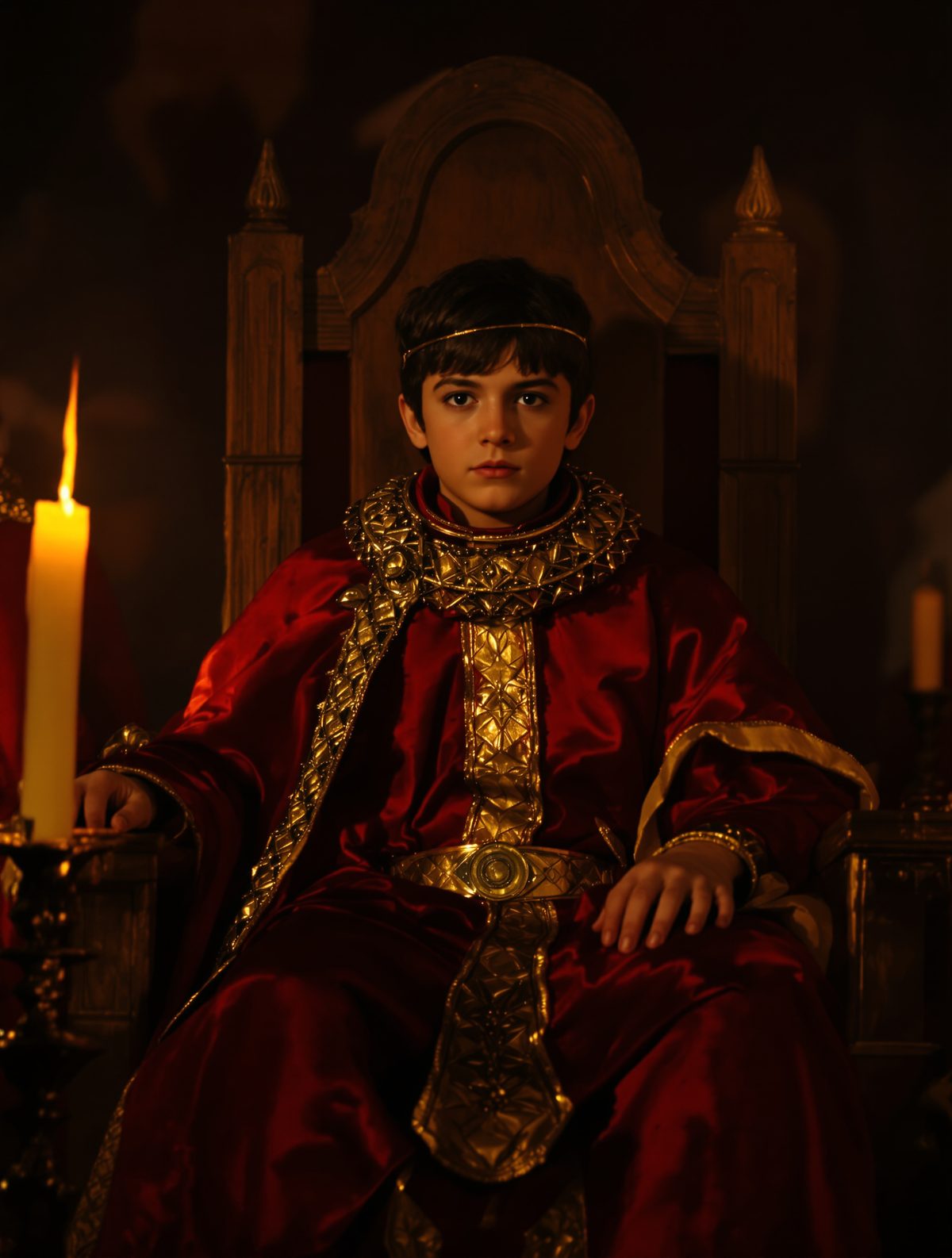
King John was dead, French forces held London, and the throne had been abandoned to a nine-year-old boy. What happened next — in a small tent in Gloucester, with a borrowed circlet and a handful of loyal nobles — became one of the most quietly remarkable coronations in British history. The schoolboy king Henry III's ascension marked a poignant chapter amid the turmoil of medieval England, illustrating resilience and hope when the nation seemed irreparably fractured.
A Kingdom in Peril: The Tumultuous Context of 1216
In the autumn of 1216, the English crown teetered on the edge of an abyss. King John, infamous for his contentious reign marked by rebellion, civil strife, and his fractious relationship with the barons, had left his realm in disarray. As his life waned, so did his grip on power, characterized cruelly by the loss of nearly half his kingdom to the French. Battle-weary and weakened by illness, John’s strategic decisions—such as upturning the popular Magna Carta—left him widely disliked and his court precariously unstable.
Meanwhile, Louis of France, the ambitious son of Philip II, pressed into English lands, capturing the capital, London, and proclaiming his claim to the English throne. This French invasion deepened the division among England’s barons, some of whom sided with the would-be French king, lured by the promise of change. Amid this chaos, King John’s untimely death left an unlikely successor: a nine-year-old Henry, thrust into a leadership role amidst these fractured alliances and overt foreign threats.
The Tent at Gloucester: Birthplace of a King
With London occupied, Gloucester provided a rare bastion of loyalty amidst the uneasy landscape. The decision to crown Henry III in the city was as symbolic as it was practical. On October 28, 1216, under the worn canvas of a tent pitched in the priory of Saints Peter and Paul, a small assembly of loyal nobles gathered. The ceremony was hastily arranged, spearheaded by Cardinal Guala Bicchieri and William Marshal, the venerable Earl of Pembroke, who became instrumental in the young king’s future.
The tent itself—a temporary, makeshift chapel—exemplified the urgency and resourcefulness of this coronation. With the crown jewels, including the regal diadem, likely lost or kept in hostile territories, they resorted to using a plain gold circlet. This unassuming circlet, borrowed from Queen Isabella, Henry III’s mother, served as a humble yet effective symbol of royal continuity.
History has painted little detail of the event itself, but it is this simplicity that underscores its profound meaning: in the face of adversity, in a modest tent instead of a grand cathedral, amidst war and uncertainty, the crowning ceremony signified not just the survival of a dynasty, but the enduring spirit of a nation undeterred.
Behind the Crown: The Household and Guardians
Despite his youth, Henry III was not without support. His early reign is most notably shaped by the stewardship of William Marshal. Marshal, renowned for his chivalry and statesmanship, effectively served as regent. His strategic acumen and diplomatic finesse maintained the kingdom’s fragile stability. Together with Bicchieri, they orchestrated a gradual shift in allegiance, enticing waverers from Louis’s cause back to the crown through diplomacy and strategic concessions.
Henry’s mother, Queen Isabella, also provided a nurturing presence. Widowed in a troubled landscape, she took refuge alongside her son in the relative safety of Gloucester. Her role was emblematic of the resilience she bestowed upon her son, aiding in Henry’s internalization of the ideals of kingship marked by piety and magnanimity, which would later define his style.
Even with these supports, the early years of Henry’s kingship were marked by a continual contest for loyalty and legacies of contention. However, his court, under Marshal’s adept guidance, slowly began to sway many barons previously aligned with the Dauphin, jointly reigniting hopes of a more unified English dominion.
The Quiet Remarkable Path to Stability
Henry III’s Improbable rise from the tent in Gloucester to later preside over half a century of rule speaks to the cohesion and resolve orchestrated by his regency council. By spring of the following year, support solidified enough to reclaim London and other territories—the tide slowly turning at the Battle of Lincoln Fair in May 1217, where royal forces successfully defeated the invaders.
During his lengthy reign, Henry’s adherence to ecclesiastical magnificence and architectural patronage came to define the grandeur synonymous with his monarchy. Central to his vision was the reconstruction of Westminster Abbey, a testament to both his faith and aspiration for a unified England, extending his legacy far beyond the boundaries of conflict and youth amidst which he ascended.
Continuity and the Monarchy's Enduring Legacy
Henry III’s tenure as king began in unassuming conditions, but offers a poignant reflection on the resilience of monarchical institutions. His story resonates with the intricate tapestry of British regal narratives, wherein the crown’s persistence through adversity was often orchestrated by unseen forces of unity and loyalty, rather than the overt grandeur of regal pomp.
That autumn day in Gloucester invites us to reflect on the elements that define historical continuity. Henry’s narrative reminds us of the responsibility tied to leadership, transcending ancestry or circumstance—a lesson as timeless as the ever-enduring institution of the British monarchy. In our contemporary landscape, where the monarchy remains a beacon of tradition and modern identity, there is no better testament to its endurance than the extraordinary tale of the schoolboy king crowned in a tent.