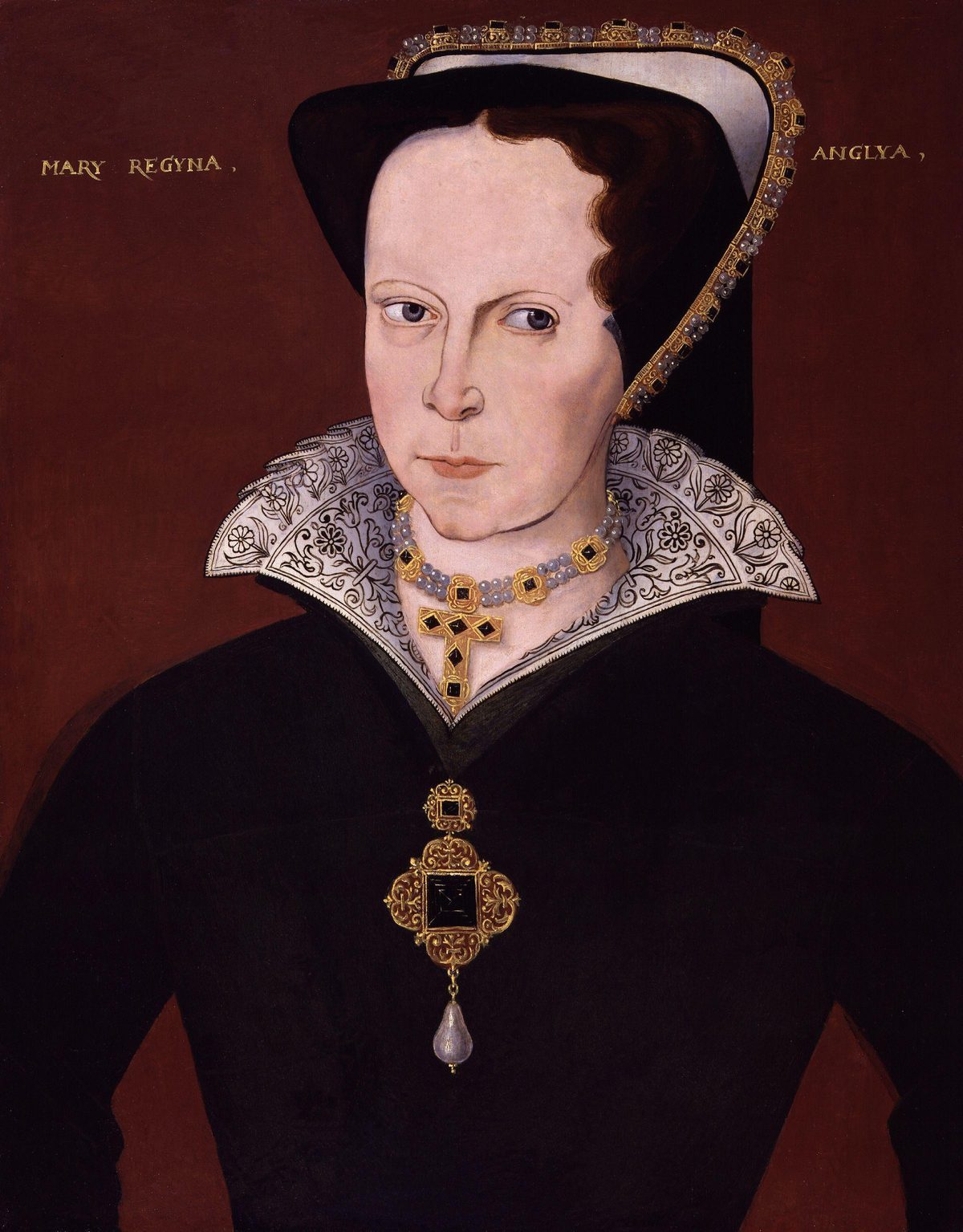
In the autumn of 1558, as the restless winds of November gusted through the regal corridors of St James's Palace, Queen Mary I lay upon her deathbed. She was England's first reigning queen, a position she tenaciously held amidst the tumultuous seas of Tudor politics. Around her, courtiers and ladies-in-waiting gathered, their whispers barely surfacing above the somber hush that enveloped the dying embers of England’s first woman sovereign. Many expected to hear the Queen's final prayers or perhaps even a vehement departing malediction aimed at her adversaries. Yet, when she summoned the strength for one last declaration, it was neither prayer nor curse. The fascination lay in the simplicity of her whispered confession—a single word burdened with lost hopes: Calais.
The Weight of a Realm
Mary Tudor, known to history as Mary I, faced a life overshadowed by monumental adversities even as she ascended to the throne in 1553. Born in 1516 to King Henry VIII and his first wife, Catherine of Aragon, her life had oscillated between privilege and hardship. While strife accompanied her tumultuous journey—marked by her mother’s divorce and her own disinheritance—she fought tenaciously to restore Catholicism to England amid the ruin left by her father’s schism with the Pope. Her dedicated return to her mother’s faith defined her reign, earning her monikers both endearingly maternal and harshly critical.
From restoring the old faith came difficult political engagements, not least her marriage to Philip II of Spain. Though encouraged by a union to cement alliances, it widened schisms within her realm and deepened her isolation. Concerned to weave England back into the Catholic tapestry of Europe, her ambitions rested heavily on alliances. However, it was the loss of the English-held city of Calais—the last dominion of England on the continent of France—that history remembered as a piercing blow, a loss Mary could neither politically nor personally endure.
The Calais Catastrophe
Calais, a city held by English rule since the time of Edward III, was famously regarded as a lasting English grip on French soil, one that embodied England’s prowess across the Channel. The strategic outpost loomed large in the national psyche, a jewel in the crown passed through successive generations. For Mary, its loss in January 1558 amidst a renewed French-English conflict rang the death knell for her endeavors to bind England to Spain’s allegiance and secure her throne within European Catholicism. Moreover, it was a mortal wound showcased against her enduring commitment to her mother’s Spanish roots.
The bitter return of Calais to the French echoed beyond warfare—it symbolized a fading Tudor claim over European influence. Mary herself lamented that at her death, “Calais” would be found inscribed on her heart. The statement, simple yet profound, was not merely about territorial surrender, but about the failure of her loftiest aspirations, a symbol of a personal and political breach that had irrevocably marred her dreams and driven a wedge into her legacy.
Beacons of Loyalties and Traditions
Within the walls of St James’s Palace, a site steeped in stirring Tudor history, Mary I was a figure both revered and contested. She had stamped her authority by reinstating papal supremacy, famously turning to religious conservatism to reinstate practices and end Protestant Reformation decrees instituted by her father and her late brother, Edward VI. But as she endeavored to coax England back into old pieties, she displayed intricacies of wisdom and emotion. Her council, a mixed court of Catholics and many Protestants, had often been the backdrop upon which her most intimate of diplomatic and domestic battles played out. It was within these tapestry-hung chambers that loyalty, tradition, and personal strivings intertwined.
Surrounded by the storied annals of her tenure, from daring reinstatement celebrations to the disheartening reality of Lady Jane Grey’s execution, Mary’s visage stood as a testament to tenacity amidst great political factionalism. Her court was a place where tradition and change met in fragile suspension—a place where royal pages and ladies-in-waiting would learn of both her triumphs and tribulations, finding in her a queen shaped by her ancestors but unyieldingly original.
The Monarchy’s Enduring Path through History
Mary I's pronounced final word—Calais—echoes against the richly paneled rooms of historical discourse. It bridges the vibrant Tudor chapters with our contemporary exploration of the monarchy's pillars—identity, allegiance, and duty. Though failures may litter the paths of reigning figures across history, queenship as Mary experienced remains eternally inspiring insofar as it demonstrates the resilience of personal conviction amidst national adversity. Her reign, marked by trials, reflected the burden every monarch shoulders, a delicate balance between personal beliefs and the sovereignty they embody.
As we examine the British monarchy’s storied past and peer into the majestic palaces, now preserved and celebrated in national memory, we find Mary’s whispered revelation a reminder of the human heart's entanglement with the fabric of historical events. Through the velvety corridors of St James’s, her life, interlaced with both heartache and nobility, allowed an understanding that history's great narratives whisper unto every ensuing generation. As her story reminds us, beneath the crown does lie a human soul, with aspirations and regrets, woven into England’s celebrated tapestry—a timeless connection that binds past to present, royal to subject, each whispering a fragment of the continuous heritage of a nation enduringly enchanted by its regality.
📷 Photo: Unknown authorUnknown author. Public domain via Wikimedia Commons.