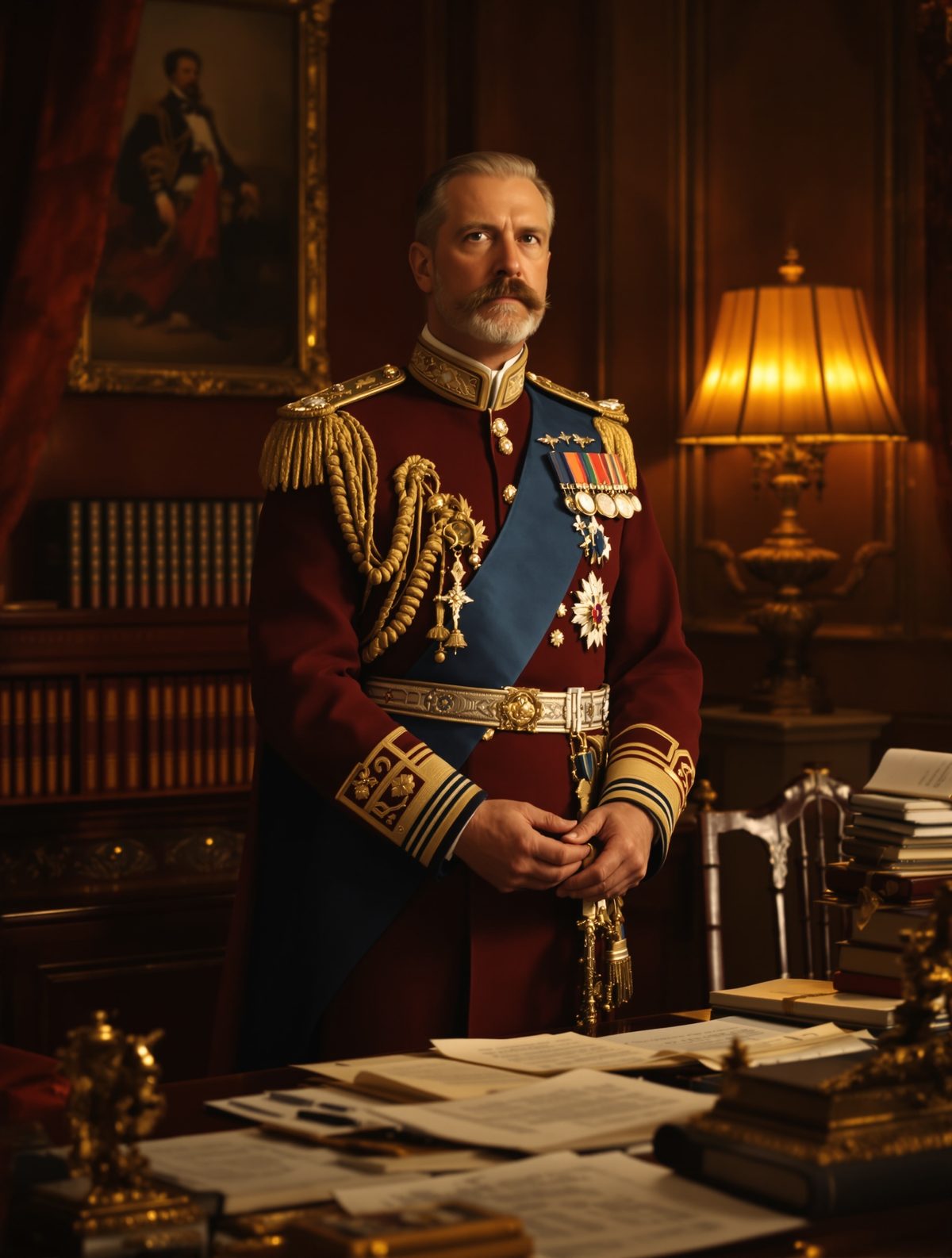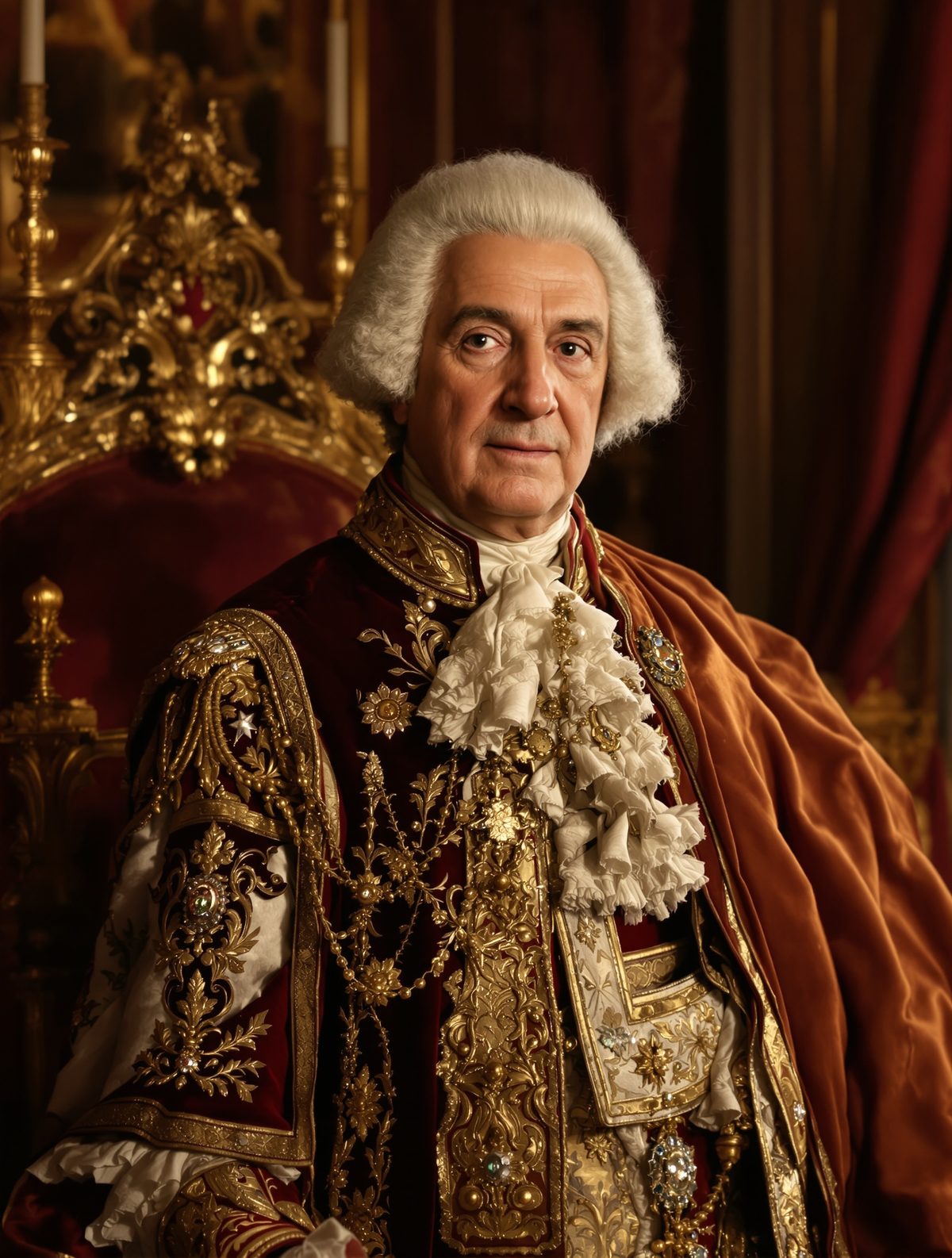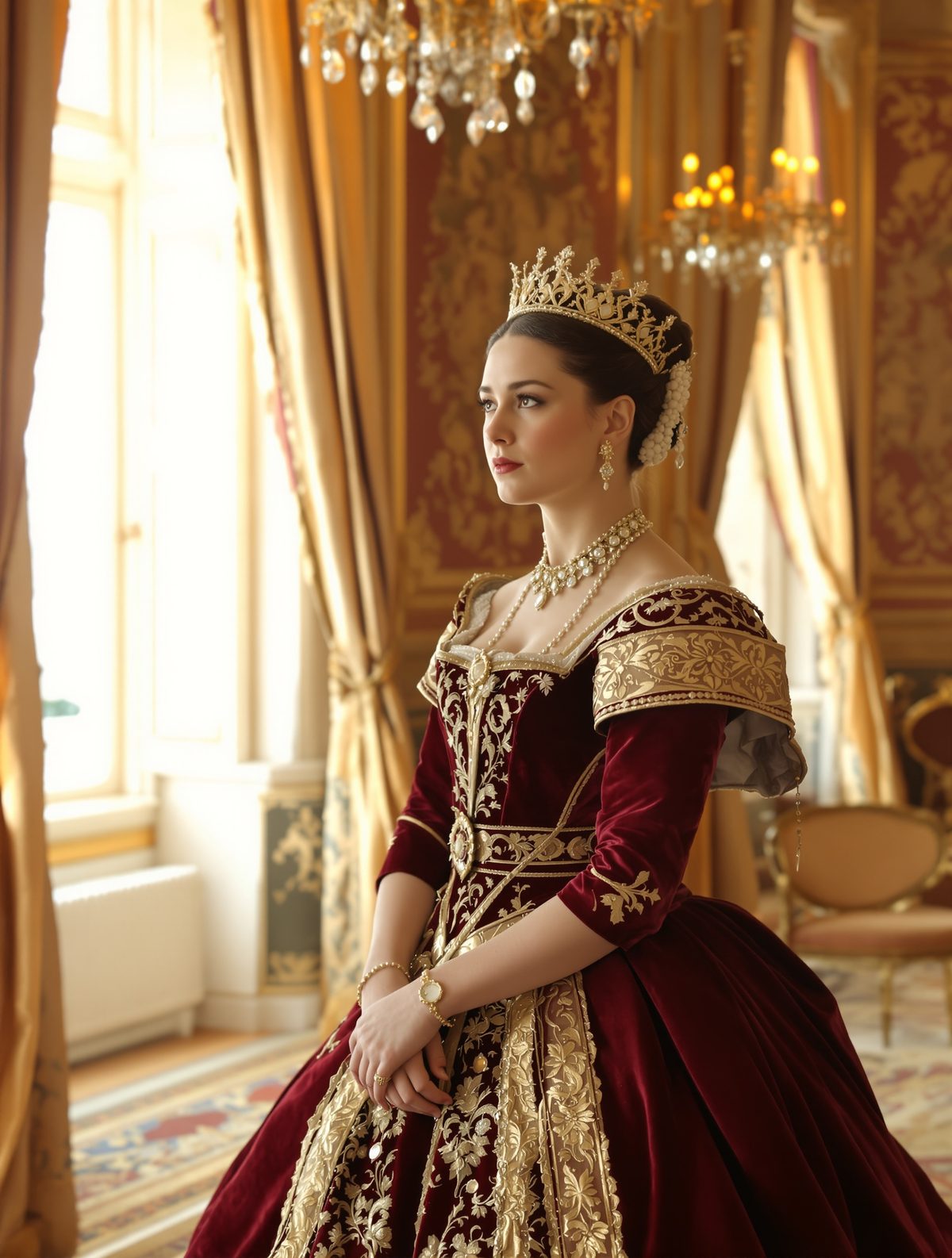

Dawn broke over Hampton Court Palace in 1742, and once again, King George II had vanished. His bodyguards raced through the Tudor corridors, their footsteps echoing off ancient stone walls as panic gripped the royal household. The King of Great Britain had disappeared from his heavily guarded chambers without a trace, just as he had every morning for the past five years. Palace staff checked the kitchens, the chapel, even the wine cellars. The guards scoured the vast grounds, fearing the worst. Had assassins breached the palace walls? Had political enemies finally struck? But seasoned courtiers knew exactly where to find their grieving monarch – in the same heartbreaking location where love transcended death itself.
The Daily Ritual of Royal Grief
Every morning at precisely 6am, King George II would slip away from his royal apartments at Hampton Court Palace, moving through the gardens with the stealth of a man half his age. His destination never varied: the private garden that had once been the domain of his beloved wife, Queen Caroline of Ansbach, who had died in 1737 after thirty years of marriage that had defied every expectation of royal unions.
What the guards discovered each morning was a scene of profound tenderness that revealed the very human heart beating beneath the crown. There sat the King of Great Britain, Ireland, and Hanover – ruler of a vast empire and commander of mighty armies – having an earnest conversation with an empty chair. Caroline's chair, positioned exactly as it had been during her lifetime, when she would sit in this very spot tending to her correspondence or simply enjoying the morning air.
The King would speak to her as if she were still there, sharing the concerns of state that had once been their private discussions, updating her on court gossip she would have found amusing, or simply sitting in companionable silence. Palace staff learned to approach with the utmost discretion, understanding that they were witnessing something sacred – a love that refused to acknowledge the finality of death.
A Marriage That Defied Royal Convention
To understand the depth of George's daily pilgrimage, one must appreciate the extraordinary partnership he had shared with Caroline. Their marriage in 1705 had been arranged for political convenience, yet it blossomed into one of the most genuinely affectionate royal unions in British history. Caroline was not merely a consort who bore heirs and smiled at state functions; she was George's intellectual equal, political advisor, and closest confidante.
Queen Caroline possessed a brilliant mind that she wielded with remarkable skill in the treacherous waters of 18th-century court politics. She had learned to manage her husband's famously explosive temper with a combination of wit, wisdom, and genuine affection. While George could be brusque and demanding with his ministers, with Caroline he revealed a tenderness that astonished those privileged enough to witness it.
The Queen had transformed the gardens at Hampton Court into her personal sanctuary, creating spaces where she could retreat from the endless demands of royal duty. She cultivated not just flowers and herbs, but also ideas – hosting informal gatherings where philosophers, writers, and scientists could engage in the kind of spirited intellectual discourse that Caroline cherished. These gardens had been witness to some of the most important political discussions of their reign, with Caroline's influence shaping policies that would affect the entire kingdom.
The Palace Guards' Bewildering Discovery
For the guards tasked with protecting the King's life, these daily disappearances initially caused genuine alarm. The 1740s were a period of significant political tension, with the War of Austrian Succession raging across Europe and Jacobite sympathies still simmering in parts of Britain. The idea of an unguarded monarch wandering palace grounds at dawn was the stuff of bodyguards' nightmares.
Captain of the Guard records from the period, preserved in the Royal Archives, detail the elaborate search protocols that were established during the early days of George's mysterious absences. Teams would fan out across Hampton Court's 60 acres, checking every outbuilding, every grove of trees, every secluded corner where danger might lurk. The palace's labyrinthine layout, with its maze of courtyards and hidden passages dating back to Cardinal Wolsey's time, provided countless places where a king might vanish – or be hidden by force.
Eventually, a young guardsman named Thomas Henley made the discovery that would solve the daily mystery. Following a barely visible path through the morning mist, he came upon the King in Caroline's garden, deep in what appeared to be an animated discussion with no one at all. The guard later wrote to his family that he had never felt more like an intruder in his entire military career than in that moment when he glimpsed the raw vulnerability of majesty in mourning.
Love Beyond the Grave
Word of the King's daily ritual spread carefully through the palace, shared in whispers among staff who had grown genuinely fond of their mercurial monarch. Rather than viewing his behavior as concerning, many found it deeply moving. Here was proof that beneath the pomp and protocol, their King possessed a heart capable of profound devotion.
The conversations George held with Caroline's memory reportedly covered everything from affairs of state to family concerns. He would seek her counsel on particularly difficult political decisions, just as he had during her lifetime when her wisdom had guided some of his most successful policies. He shared his worries about their children, his frustrations with ministers, and his genuine care for his subjects' welfare – all the burdens of kingship that Caroline had helped him bear.
Palace gardeners were given strict instructions to maintain Caroline's garden exactly as she had left it. Her chair was to be cleaned and positioned precisely each morning, the flower beds tended according to her specifications, even her personal gardening tools kept in their designated places. The King's household understood that they were preserving not just a garden, but a sacred space where love continued to bloom despite death's attempt to end it.
A Legacy of Enduring Devotion
George II's morning vigils continued for fifteen years, only ending with his own death in 1760. By then, what had begun as a source of concern for palace security had evolved into one of the most touching examples of marital devotion in royal history. The King who could be imperious in council meetings and demanding with his servants revealed himself in those garden moments to be simply a man who missed his wife.
This daily ritual offers us a remarkable window into the private emotional world of 18th-century monarchy. In an age when royal marriages were typically cold political arrangements and genuine affection was considered a pleasant bonus rather than an expectation, George and Caroline's love story stands as a beacon of what was possible when two hearts found each other despite the constraints of crown and convention.
Their story resonates across the centuries, reminding us that love's truest testament lies not in grand gestures or public declarations, but in the quiet, private moments of faithfulness that endure long after death parts us. In our modern age, when royal love stories capture global attention, perhaps there's something particularly poignant about a King who needed no audience for his devotion – just an empty chair, a morning garden, and memories too precious to let fade away.