He ruled an empire. He commanded armies. Yet, every morning, King George III pulled on his boots to walk among his cherished flock of Merino sheep in Windsor Great Park. This was not a pastime befitting a king, according to the expectations of his era, but George III embraced the moniker 'Farmer George' with the quiet, stubborn pride that often baffled his courtiers. The King, known for his piety and patriotism, found solace and purpose in the pastoral pursuits that distinctively marked his reign. In the rolling greens of Windsor, sheep grazed freely—unaware of the controversy and curiosity their regal shepherd stirred amongst the upper echelons of British society.
The Monarch Who Wore Boots
To fully appreciate George III's affinity for agriculture, one must understand the heart and mind of this eighteenth-century king. Born in 1738, George William Frederick ascended to the throne in 1760. Despite the crown's historical weight, young George harbored a fascination not just for sovereignty, but for soil and sheep as well. While princely duties demanded his attention, his heart and heels often led him outdoors, to fields lined with lush pastures.
Unlike the refined interests traditionally expected of royalty, King George carried a love for farming that might seem out of character. His era was marked by Enlightenment thought, burgeoning industrialization, and territorial expansion, yet amidst these dizzying changes, George III chose to ground himself quite literally in agrarian pursuits. To some in his court, it seemed unbecoming, an affront to the regal decorum they so zealously defended. However, the King himself remained undeterred; his commitment to agriculture was more profound than mere hobby—it was a philosophy.
Courtly Concerns and Bucolic Bliss
Many of King George's courtiers were, to put it mildly, appalled. Their monarch's apparent indulgence in agricultural labor clashed with their immeasurable expectations of imperial grandeur. It was unconventional, if not entirely unbecoming, for a king to so thoroughly embrace the laborious and earthy joys of farming. Yet, the more they winced, the more deliberate George became, aligning his monarchic flair with wooly companions among the fields of Windsor.
His choice of Merino sheep was particularly noteworthy. These Spanish imports were renowned for their superior fleece, and George III was instrumental in their introduction and propagation across British soil. Whether viewed as an economic strategy or a personal passion project, his dedication to improving livestock was rooted deeply in the betterment of Britain. The King took pride in leading by example, demonstrating the value of agricultural advancements amidst an increasingly industrial society.
It was whispered in courtly circles that to engage in agrarian chores was beneath royal dignity, yet for George III, these whispers were but a caress of the wind. His royal duties, he believed, extended beyond governance; true leadership included the cultivation of prosperity from the realms of the earth. Thus, each stroll among his sheep was both a personal pleasure and an unstated manifesto.
The Cultural Implications of 'Farmer George'
The King’s pastoral passion did not only bewilder his courtiers; it captivated the public imagination too. Affectionately dubbed 'Farmer George,' George III became a king deeply connected with his subjects—an anomaly in both action and reputation. His image, tending sheep beneath the skies of Windsor, presented an approachable divergence from the often aloof and distant perceptions of monarchy.
This name, 'Farmer George,' held double significance. In one sense, it was a simple recognition of his agrarian zeal. In another sense, though, it suggested an affinity with the common man that was both rare and endearing. While his political decisions were subject to the critiques of history, his genuine interest in agriculture and rural improvement endeared him to many contemporaries, setting him apart as a monarch in tune with the very soil his nation was built upon.
A Legacy of Land and Leadership
King George III’s farming fervor was not a fleeting fancy. It sowed seeds that continued to bloom long after his reign. His efforts with Merino sheep contributed to the prosperity of the British wool trade, and his enduring interest in agronomy laid fertile ground for future agricultural innovations. Windsor Great Park, ever-verdant with the lushness of royal affection, remains a testament to his intimate relationship with the landscape.
Today, this historical narrative invites reflection on a form of leadership that integrates gentle stewardship with sovereign duties. In an age where the width of one’s influence was measured by the vastness of their empire, George III demonstrated that the depth of one’s impact could also be measured by the quiet grace with which they tended to mundane, yet momentous, tasks.
As we explore the past through the lens of 'Royal & Regal,' King George III and his beloved sheep offer a timeless message about dedication to both land and people. It is a reminder that some of history’s most profound legacies stem not from grand gestures, but from simple acts of genuine passion and care. In this way, 'Farmer George’s' enduring influence grazes far beyond the fields of Windsor—touching hearts with a warmth that bridges the centuries between King and country.
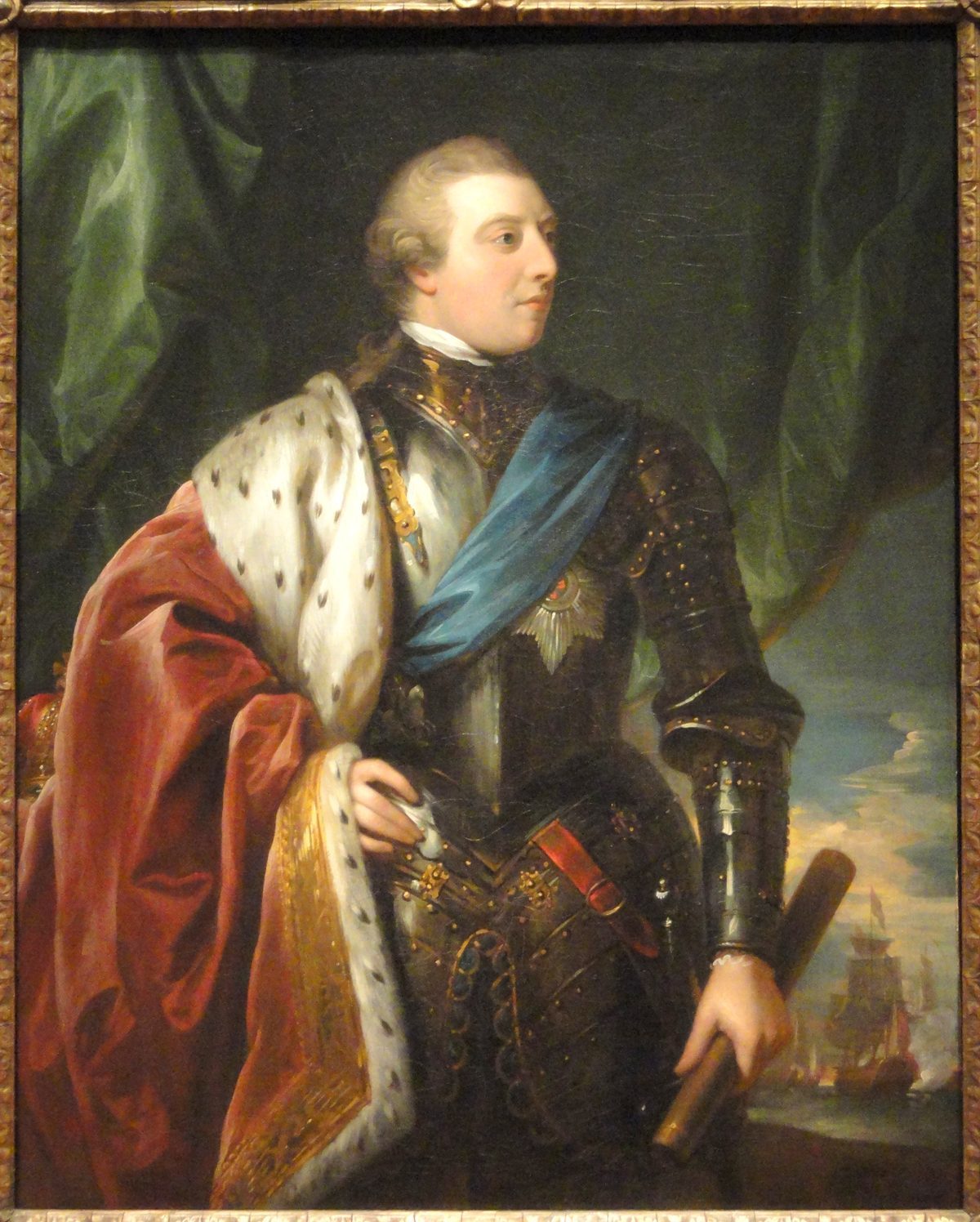
📷 Photo: Daderot. CC0 via Wikimedia Commons.