In the shadowy annals of British royal history, where swirling intrigue often veils the stoic visages of monarchs, one unassuming passion of King George V stands silently triumphant. As the shadows stretched longer each evening, cloaking the grand halls of Buckingham Palace, the King quietly retreated to a haven of solitude. There, amidst his meticulously arranged treasures, he would spend an hour in what he fondly termed "the only hour of the day that truly belonged to him." Welcome to the serene world of King George V's secret stamp collection, a quiet endeavor that maintained his equilibrium through the tumultuous years of his reign.
The Unexpected Monarch
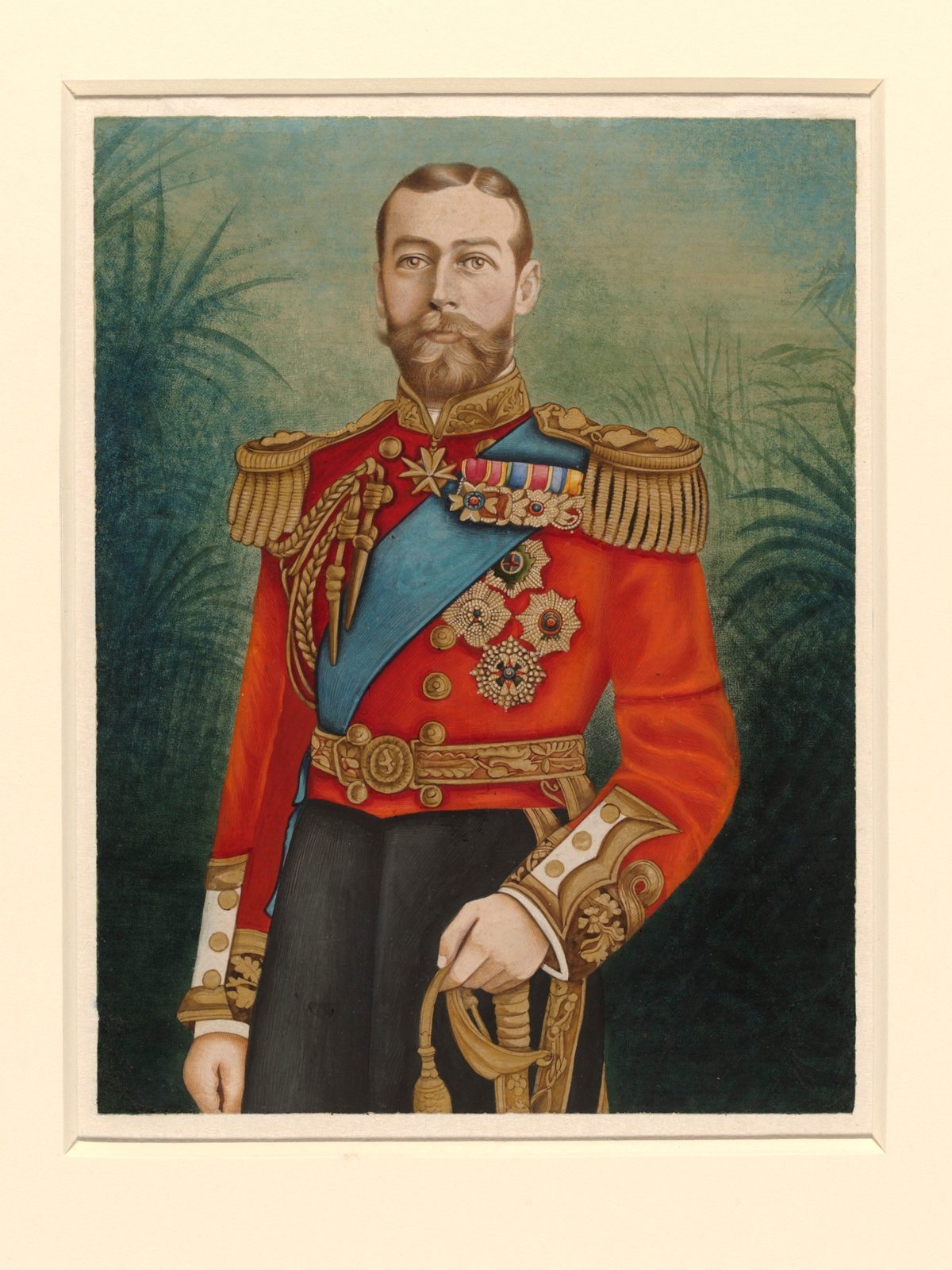
Ascending the throne in the wake of his elder brother's premature demise, King George V's trajectory from naval officer to sovereign was anything but anticipated. Born in 1865, George Frederick Ernest Albert was a younger son who seemed destined for a quiet naval life. However, the sudden death of his elder brother, Prince Albert Victor, in 1892, thrust George into the limelight as heir apparent. On May 6, 1910, he ascended to the throne, facing the Herculean task of steering an empire that spanned the globe.
The early years of King George's reign were marked by significant challenges. Not only did he inherit a politically unstable Europe, but he also bore witness to the seismic shifts towards modernity. Within the four corners of his ornate office, George V grappled with the transformational waves brought by the First World War and the yearning for social change. Yet, beneath the golden crown and the weight of an empire, he found a rare respite in the quiet, patient pursuit of philately.
A Sanctuary in Stamps
Each evening, as twilight descended over London, King George V would disappear into a small, private room. Here, amidst the soft flicker of oil lamps, he laid down the burdens of kingship and embarked on a different kind of exploration — one composed of paper and ink. His was not just any collection; it was a curation that mirrored the vastness of the very empire he ruled.
The king's interest in stamps began when he was a child, but it evolved into a serious passion during his adult years. He famously remarked, "Philately fills my mind without tiring it; it is for the young and the old. It soothes me." Within the enveloping quiet of that room, away from courtiers and counsel, George meticulously sorted and studied postage stamps gathered from all corners of the British Empire.
His collection, which grew to encompass more than 330 albums and 45,000 pages, was not merely a private hobby. It was a chronological journey, each stamp a tiny canvas depicting the cultural, political, and geographical nuances of distant lands. What distinguished King George's collection was not just its size but its depth and categorization, making it one of the most valuable in the world.
The Hidden Realm Within the Palace
To the curious courtiers who passed by, the evening ritual was both a familiar and mystifying occasion. The room was off-limits except for a select few, hinting at the reverence surrounding the King's unlikely refuge. Within this secluded space, he used delicate instruments — tweezers, magnifying glasses — to protect and preserve his trove from the ravages of time.
The significance of King George's passion was well understood by those within the palace. It was an intrinsic component of his everyday life, revered with the same solemnity as the evening prayers or state dinner. For George, the artistry of philately offered a sense of control, a realm where precision and patience governed, diametrically opposed to the unpredictability of ruling an empire.
There are stories, fondly recounted, of his youngest son, Prince George (the future Duke of Kent), joining him in these sessions. The unspoken bond between father and son, basking in the shared quietude of sorting stamps, is a poignant testament to the power of simple pleasures amid complex lives.
A King Preserved by His Passion
In wartime Britain, when hope was a scarce resource, King George V's stamp collection offered an oasis of calm. It was a poignant reminder that despite the external chaos, personal passions could nurture a resilient spirit. This quiet pursuit embodied a timeless lesson: that in every human soul exists the yearning for ephemeral joys untainted by the constancy of duty.
The King's devoted philately mirrored his character: disciplined, unassuming, and scrupulous. His collection survived him, eternally encapsulating a narrative of devotion both to his role as a monarch and to his personal reprieve. It represented a part of George V that was unyielding yet tender, a dimension of the King that starred in the quieter chronicles of his reign.
Today, the collection remains a treasure of historical significance, kept with great care by the Royal Philatelic Collection. It stands as an enduring symbol of a monarch's intimate escape, where serenity held sway amidst the duties of a sovereign. Though the British monarchy has continually transformed with the passage of time, the legacy of King George's passion for stamps offers a universal message that resonates through the ages.
The Legacy of Quiet Pursuit
In a world where instant connection and unending noise are the norms, King George V's sanctuary of stamps offers a gentle reminder of the healing power of quiet hobbies. The enduring legacy of his pastime serves as an inspiration to generations who seek solace in the simple acts that bring tranquility to the heart.
It also presents an invigorating view of an often misunderstood monarch, casting him in a light that shines for both royal enthusiasts and novices alike. King George V's stamp collection was not just a personal pursuit; it was a lifeline, a testament to the quiet strength one can find in the face of duties that are both timeless and grand.
📷 Photo: Unknown (production). Public domain via Wikimedia Commons.