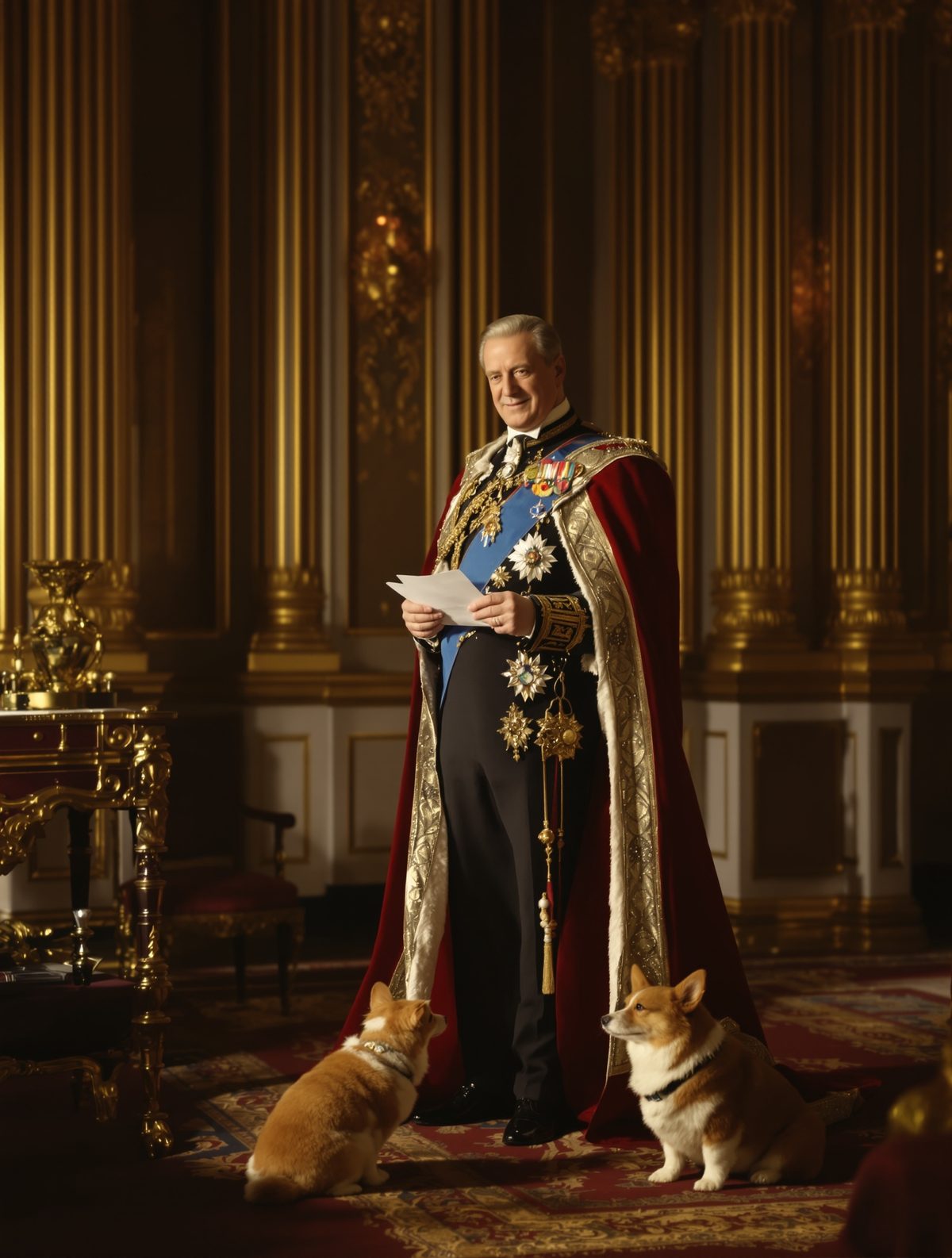
In the quiet corridors of Buckingham Palace during the spring of 1937, an extraordinary rehearsal was taking place. A man who had never expected to wear the crown stood before an audience of one—his beloved Welsh Corgi, Dookie. King George VI, thrust into kingship by his brother's abdication, was preparing for the most daunting moment of his reign: delivering his coronation speech to millions of subjects across the British Empire. His secret? A four-legged companion who offered something no courtier could—infinite patience and unconditional acceptance.
The Reluctant King's Greatest Fear
George VI's path to the throne had been anything but conventional. Born Prince Albert Frederick Arthur George, he was the second son of King George V, destined for a life of royal duty but never the crown itself. His severe stammer, which had plagued him since childhood, made public speaking a torturous ordeal. Unlike his charismatic older brother Edward, who seemed born for the spotlight, Albert—known as "Bertie" to his family—preferred the shadows.
The abdication crisis of 1936 changed everything. When Edward VIII chose love over duty, abdicating to marry American divorcée Wallis Simpson, the crown fell to the reluctant younger brother. Suddenly, the Duke of York became King George VI, and with it came the terrifying prospect of addressing not just the British Isles, but the entire Commonwealth.
The coronation speech represented everything the new king feared most about his unexpected role. Unlike private conversations where his stammer was manageable, or even smaller gatherings where his genuine warmth could shine through, this would be broadcast live via radio to an estimated 200 million listeners worldwide. The weight of the British Empire would hang on every carefully chosen word—words that he struggled desperately to pronounce without stumbling.
An Unlikely Rehearsal Partner
Enter Dookie, the royal family's first Pembroke Welsh Corgi and an unwitting star of royal history. A gift to the then-Duke and Duchess of York in 1933, Dookie had quickly become a cherished member of the household. The small, intelligent dog possessed qualities that made him the perfect confidant for a nervous king: he was an excellent listener, completely non-judgmental, and refreshingly unconcerned with matters of protocol or royal dignity.
Palace staff would later recall seeing His Majesty in his private study, speech in hand, with Dookie sitting attentively nearby. The corgi seemed to understand the importance of these sessions, remaining remarkably still for hours as the King worked through each paragraph, each challenging consonant, each moment where his speech might falter. Unlike human courtiers who might show signs of impatience or, worse still, pity, Dookie simply waited with the calm devotion that would become a hallmark of the royal corgis.
These private rehearsals were more than mere practice sessions; they were therapeutic moments where the King could work through his anxiety without fear of judgment. The dog's presence provided a sense of normalcy in what had become an extraordinarily abnormal life. In Dookie's steady gaze, George VI found not a subject to be impressed, but a friend who accepted him exactly as he was—stammer and all.
The Speech That Defined a Reign
The coronation of King George VI and Queen Elizabeth took place on May 12, 1937, at Westminster Abbey. The ceremony itself was a magnificent spectacle, with the Abbey filled with peers of the realm, foreign dignitaries, and representatives from across the Commonwealth. But for all the grandeur of golden coaches and glittering crowns, perhaps no moment was more significant than when the newly crowned King stepped up to the microphone to address his people.
Those countless hours of practice with his patient canine audience had not been in vain. While the King's delivery was measured and careful—a necessary accommodation for his speech impediment—it was also profoundly moving. His obvious sincerity and determination to serve, despite his personal challenges, resonated with listeners across the empire. Here was a monarch who had not sought power but accepted it with humility and dedication.
The speech touched on themes that would define his reign: service, duty, and the strength found in unity. "I shall always work, as my father did throughout his life, to advance the happiness and prosperity of my peoples, spread as they are the world over," he declared. These were not just ceremonial words but a heartfelt promise from a man who understood the weight of unexpected responsibility.
The Healing Power of Unconditional Companionship
The story of King George VI and Dookie illuminates a deeply human aspect of royal life that often gets overlooked in the pageantry and protocol. Behind the crown was a man grappling with personal limitations while trying to serve his people with dignity. The corgi's role in his preparation speaks to the remarkable ways that animals can provide comfort and support during our most challenging moments.
Dookie's patient presence during those practice sessions represented something invaluable: acceptance without conditions. In a world where every public appearance was scrutinized, every word analyzed, and every gesture interpreted, the King found solace in a companion who simply offered quiet companionship. This relationship would establish a pattern that continues to this day—the deep bond between the royal family and their beloved corgis.
The success of the coronation speech marked a turning point for George VI. While he would always struggle with his stammer, he had proven to himself and his subjects that he could rise to meet the demands of kingship. The confidence gained from those private rehearsals with Dookie would serve him well in the years to come, particularly during the dark days of World War II when his radio broadcasts would become a source of comfort and inspiration for the British people.
This touching tale of a king and his corgi reminds us that even those born to the highest positions are, at heart, simply human beings doing their best with the circumstances they've been given. George VI's legacy—as a devoted husband, loving father, and steadfast monarch who guided Britain through its finest hour—was built not just on royal training and constitutional duty, but on the quiet confidence gained in a palace study with a small dog who never doubted him for a moment. In our own age, as we watch the royal family continue their tradition of corgi companionship, we see the enduring power of that simple truth: sometimes the most important support comes from those who ask nothing in return but offer everything they have to give.