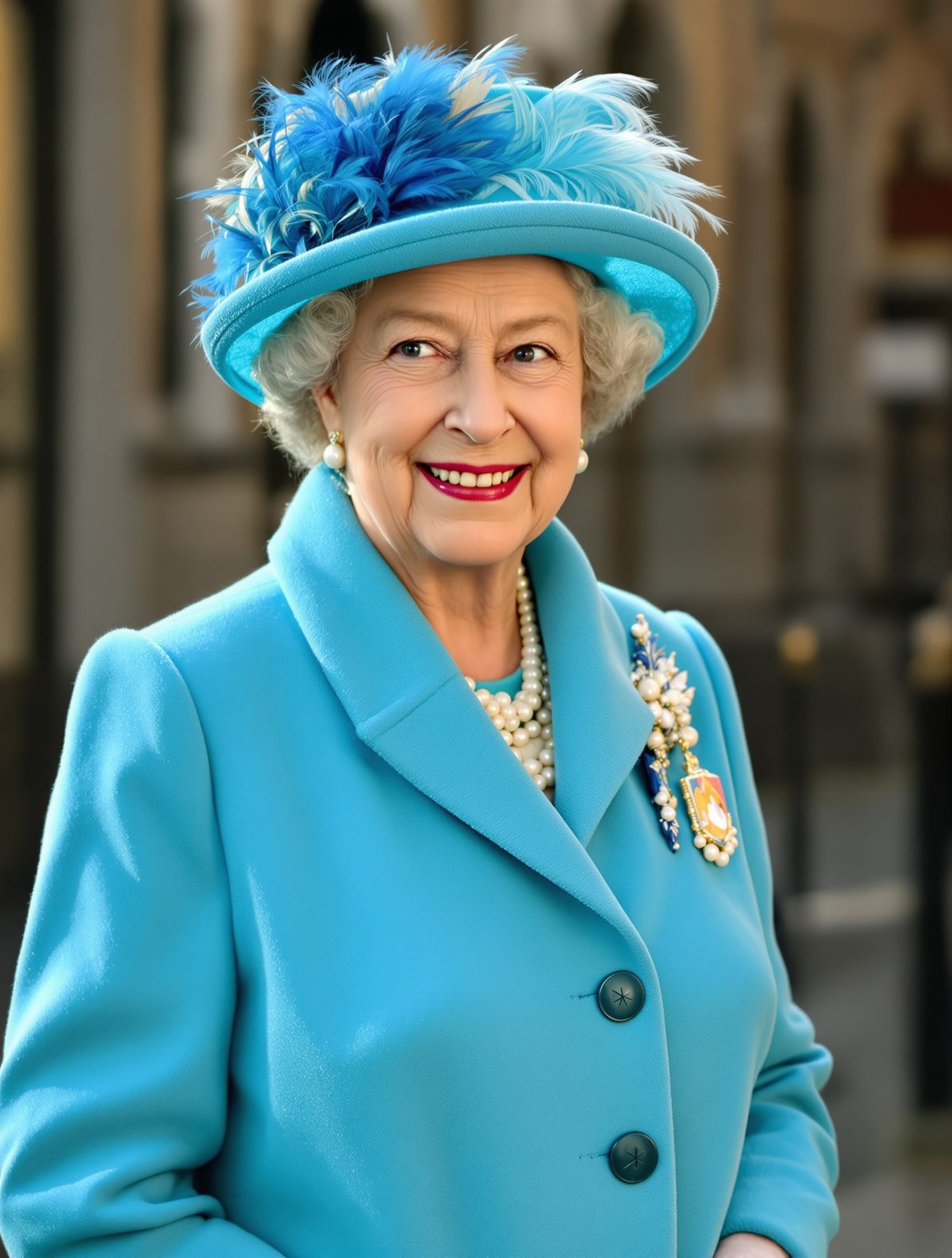
As German bombers thundered overhead and London's East End lay in ruins, a remarkable royal rebellion was taking place behind the palace walls. In September 1940, with Britain standing alone against Nazi Germany, Queen Elizabeth—later beloved as the Queen Mother—made a decision that would shock Buckingham Palace officials and ultimately capture the hearts of a nation under siege. Her weapon of choice? A wardrobe of vibrant pastels that blazed like beacons of hope through the darkest days of the Blitz.
A Palace in Crisis
The autumn of 1940 found the British Royal Family in uncharted territory. King George VI and Queen Elizabeth had already weathered the abdication crisis that thrust them unexpectedly onto the throne, but nothing could have prepared them for the relentless bombing campaign that began that September. Night after night, the Luftwaffe pounded London and other British cities, leaving thousands dead and entire neighborhoods reduced to rubble.
Palace protocol dictated a somber response. Royal advisors and government officials strongly urged the Queen to adopt a wartime wardrobe befitting the gravity of the situation—dark colors, minimal jewelry, and an overall appearance that reflected the nation's suffering. After all, how could the monarchy appear out of touch when ordinary citizens were losing their homes, their livelihoods, and their lives?
The prevailing wisdom suggested that royal glamour had no place in wartime Britain. Austerity was the order of the day, and even the Royal Family was expected to demonstrate their solidarity with the people's hardships through their appearance and lifestyle choices.
The Great Wardrobe Rebellion
But Queen Elizabeth had other ideas entirely. As she prepared for her visits to bombed-out areas of London's East End, she deliberately selected her most eye-catching outfits from her extensive wardrobe. Powder blue coats trimmed with fur, rose pink day dresses, and her signature three-strand pearl necklaces became her uniform for touring the devastation.
The reaction from palace officials was swift and scandalized. How dare the Queen appear in such finery when visiting families who had lost everything? Surely this would create resentment among the very people the monarchy was trying to support? The advisors' concerns were not entirely without merit—Britain was experiencing unprecedented rationing, and clothing coupons meant that even the well-to-do were making do with worn garments.
Norman Hartnell, the Queen's favored designer, later recalled the tension surrounding these wardrobe choices. Palace staff worried that photographs of the Queen in her beautiful clothes would appear tone-deaf in newspapers alongside images of destruction and despair. Yet the Queen remained resolute in her decision, driven by a philosophy that would prove both intuitive and inspired.
A Royal Philosophy Emerges
The Queen Mother's reasoning, though controversial at the time, revealed a deep understanding of human psychology and the unique role of monarchy during national crisis. She believed that her appearance served a purpose far greater than personal vanity—it was about providing hope, dignity, and a sense that life's beautiful things were worth fighting to preserve.
Her approach represented a fundamental departure from traditional royal protocol during times of national mourning or crisis. Rather than mirror the people's suffering through her appearance, she chose to embody their aspirations and remind them of better times ahead.
The People's Verdict
The true test of the Queen Mother's fashion rebellion came not in the palace corridors, but in the bombed-out streets of London's working-class neighborhoods. As she picked her way through rubble in her elegant shoes and perfectly coordinated ensembles, something remarkable happened—the people embraced her exactly as she had hoped they would.
Eyewitness accounts from the time paint a picture of genuine warmth and appreciation from those who met the Queen during her visits. Rather than feeling resentment at her finery, people seemed to draw strength from it. Her presence, resplendent in beautiful clothes despite the surrounding destruction, sent a powerful message: this is still Britain, we are still who we were, and we will emerge from this darkness with our dignity intact.
The Queen's instinct proved remarkably astute. In the depths of wartime deprivation, people didn't want their Queen to look as tired and worn as they felt—they wanted her to represent something aspirational, something worth fighting for. Her vibrant colors and elegant styling served as a visual reminder that beauty, refinement, and hope could survive even the most brutal circumstances.
A Lasting Impact on Royal Style
Photographs from this period show the Queen Mother's unique ability to strike the perfect balance between accessibility and majesty. She would crouch down to speak with children in her immaculate powder blue coat, or comfort elderly women who had lost their homes while wearing her finest jewelry. The contrast between her elegant appearance and the devastated surroundings created some of the most powerful images of royal service from the entire war.
This wartime fashion philosophy would become a defining characteristic of the Queen Mother's public persona for the rest of her long life. Her love of pastel colors, particularly her signature shades of blue and pink, became as much a part of her identity as her warm smile and unwavering sense of duty.
Legacy of a Wartime Style Icon
The Queen Mother's wartime fashion rebellion offers profound insights into the evolving role of the monarchy and the power of thoughtful royal presentation. Her instinctive understanding that the people needed hope more than sympathy demonstrated an emotional intelligence that served both the crown and the nation brilliantly during Britain's darkest hour.
This approach to royal dressing during crisis has influenced royal protocol ever since. The carefully considered balance between solemnity and hope, between acknowledging suffering and projecting strength, became part of the royal playbook for managing the monarchy's public image during national emergencies.
The Queen Mother's decision to wear her finest clothes while visiting bomb sites reveals something beautiful about both monarchy and human nature. In choosing hope over despair, beauty over bleakness, she created moments of light that people carried with them through the darkness of war. Her rebellion against palace protocol wasn't really about fashion at all—it was about understanding that sometimes the greatest service a Queen can provide is to remind her people of their own dignity and worth, even when everything around them lies in ruins.
Looking back, the Queen Mother's wartime wardrobe stands as a masterclass in the subtle art of royal influence. She understood that true leadership sometimes means choosing what feels wrong to others but right to the people who matter most. In doing so, she not only helped sustain British morale during the nation's greatest trial but also established herself as one of the most beloved royal figures of the twentieth century.