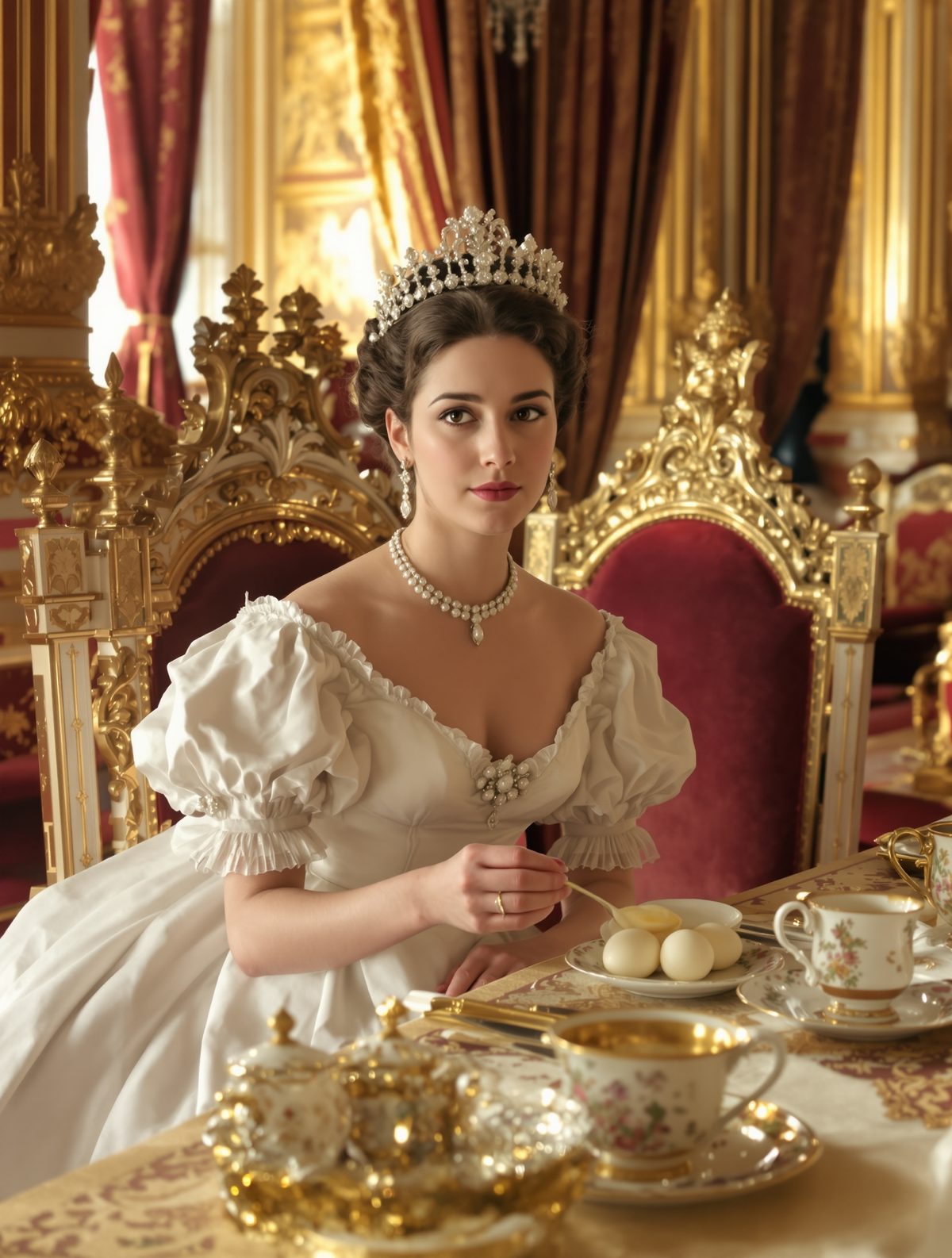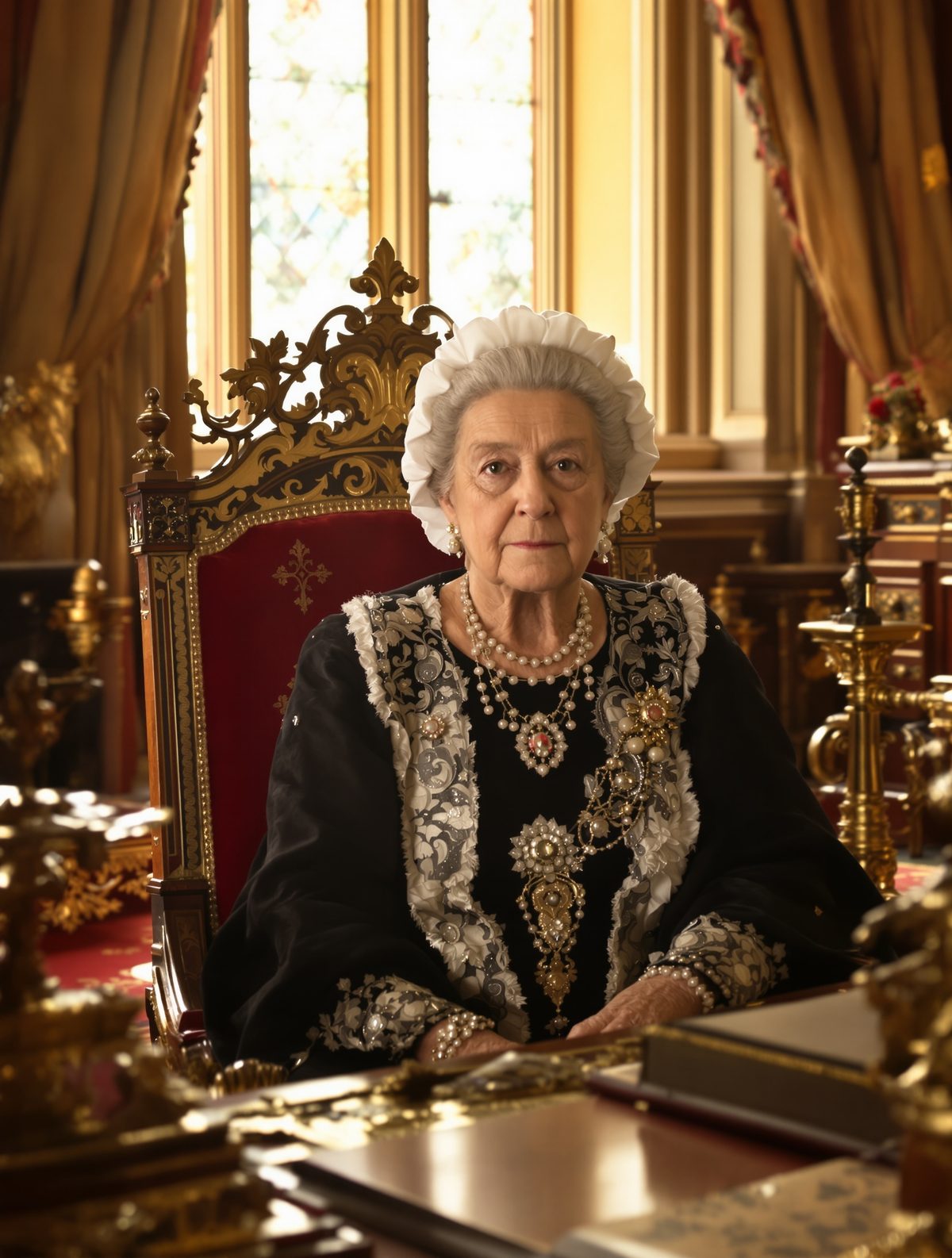
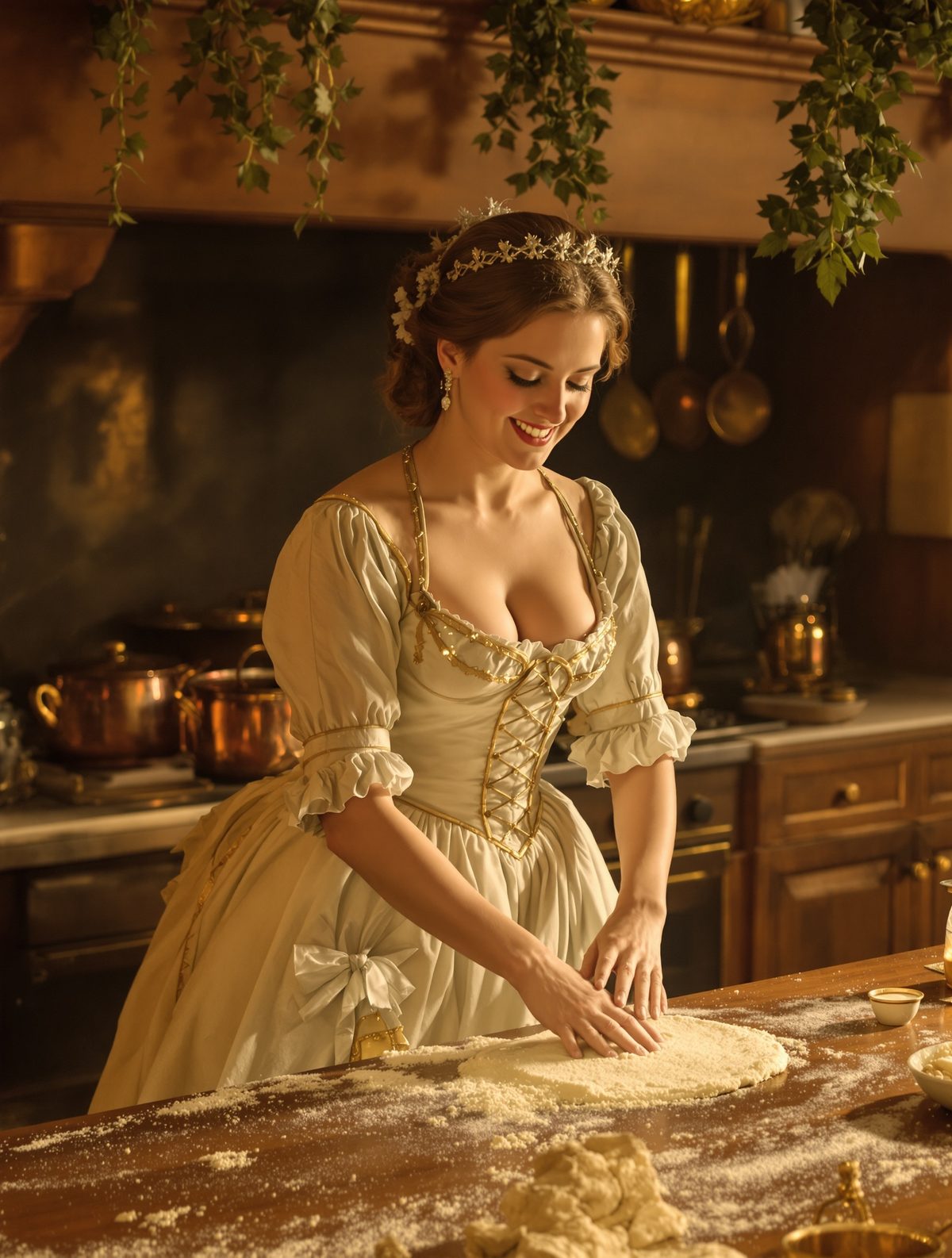
The scene that greeted Lady de Clifford in the kitchens of Carlton House one afternoon in 1815 would have made any proper governess faint with horror. There, amid the bustling servants and steaming pots, stood Princess Charlotte of Wales—heir to the British throne—with flour dusting her dark curls and pastry dough clinging to her royal fingertips. The future Queen was not merely observing the culinary arts from a respectable distance; she was participating, rolling out pastry with the enthusiasm of a seasoned cook and the complete disregard for protocol that had already made her the most talked-about princess in Europe.
A Princess Unlike Any Other
Princess Charlotte Augusta was never destined to be a conventional royal. Born in 1796 to the tumultuous marriage of the Prince Regent (later George IV) and Caroline of Brunswick, she possessed a spirit that seemed to rebel against the rigid constraints of Regency court life. By her teenage years, Charlotte had already established herself as a force of nature—intelligent, wilful, and possessed of an insatiable curiosity about the world beyond the gilded walls of her father's palaces.
Her governess, Lady de Clifford, faced the unenviable task of molding this spirited young woman into a suitable future monarch. The elderly baroness, who had served the royal family with unwavering dedication, understood the delicate balance required in educating a princess who would one day rule an empire. Charlotte was expected to master languages, literature, music, and dancing—the accomplishments befitting a lady of her station. Cooking, most decidedly, was not among them.
The princess's unauthorized culinary adventures began innocuously enough. During her residence at Carlton House, her father's magnificent London palace, Charlotte had developed an unusual fascination with the domestic workings of the household. While other young ladies of her rank might content themselves with embroidery or watercolours, Charlotte found herself drawn to the bustling energy of the servants' quarters, particularly the aromatic world of the kitchens.
Into the Heart of the Kitchen
Carlton House boasted some of the finest kitchens in London, overseen by a French chef whose culinary creations were legendary among the ton. The elaborate dinners and entertainments hosted by the Prince Regent required an army of skilled cooks, pastry chefs, and kitchen maids working in perfect harmony. It was into this professional domain that Princess Charlotte boldly ventured, initially as an observer but soon as an eager participant.
The kitchen staff found themselves in an impossible position. How does one refuse the direct heir to the throne when she expresses a genuine desire to learn the art of pudding-making? The chef, despite his concerns about propriety, was reportedly charmed by the princess's enthusiasm and natural aptitude. Charlotte demonstrated a particular talent for pastry work, and her requests for lessons became increasingly specific and frequent.
The princess approached cooking with the same intellectual vigour she brought to her other studies. She wanted to understand not just the how but the why of culinary techniques. Why did certain ingredients behave as they did? What was the science behind a perfect sauce? Her questions challenged even the most experienced cooks, and they found themselves genuinely enjoying their unusual pupil's company.
The Bread That Broke Protocol
The incident that would become palace legend occurred on a particularly busy afternoon when preparations were underway for one of the Prince Regent's elaborate dinner parties. Charlotte had slipped away from her lessons and made her way to the kitchens, where she convinced the staff to teach her the art of bread-making. There she was discovered by Lady de Clifford—sleeves rolled up, hair escaping its pins, kneading dough with the focused determination that characterized everything she did.
For her governess, the sight was nothing short of catastrophic. Here was the future Queen of England, performing manual labour alongside the servants. The social implications were staggering. If word reached the wrong ears, the scandal could undermine Charlotte's reputation and, by extension, the dignity of the monarchy itself. The very idea of a princess engaging in such "common" activities flew in the face of everything Regency society held sacred about class distinction and royal behaviour.
The Scandal of Self-Sufficiency
Lady de Clifford's horror was not merely snobbery—it reflected the genuine anxieties of an era obsessed with social hierarchy. The Regency period was defined by rigid class structures, and the royal family sat at the apex of this carefully ordered system. For a princess to engage in activities associated with the servant class was seen as dangerously subversive, potentially undermining the very foundations upon which royal authority rested.
The governess's concerns extended beyond mere protocol. In an age when the monarchy faced increasing scrutiny and criticism, any behaviour that could be construed as undignified posed real political risks. The Prince Regent himself was hardly a paragon of respectability, and his daughter's unconventional interests could easily be weaponized by critics of the crown.
Yet Charlotte's kitchen adventures revealed something profound about her character—a democratic instinct and genuine curiosity about how ordinary people lived and worked. These qualities, while alarming to her handlers, suggested a future monarch who might rule with unusual empathy and understanding. Her willingness to learn practical skills also demonstrated an independence of spirit that would serve her well in the complex political landscape she was destined to navigate.
A Legacy Beyond the Kitchen
The flour-dusted princess who so scandalized her governess would never live to inherit the throne—Charlotte's tragic death in childbirth in 1817 changed the course of British history, ultimately leading to the accession of her cousin Victoria. Yet her brief life and spirited character left an indelible mark on royal history. Her natural warmth, intellectual curiosity, and disregard for artificial social barriers prefigured many of the qualities we most admire in modern royalty.
The kitchen incident at Carlton House offers a charming glimpse into a princess who refused to be confined by the expectations of her time. In an era when royal women were expected to be ornamental rather than practical, Charlotte's determination to master the humble art of cooking revealed a refreshingly human side to monarchy. Her flour-covered hands and enthusiastic kneading spoke to a desire for authentic experience that transcended the artificial world of court.
Today's royal family would hardly bat an eye at such domestic interests—we've seen working royals champion everything from organic farming to home cooking. Princess Charlotte's secret culinary lessons seem almost prophetic, anticipating a more accessible and relatable monarchy. Her governess may have been horrified to find her royal charge covered in flour, but history suggests that the future Queen's instinct to connect with the practical realities of daily life was precisely what the monarchy needed. In those clandestine kitchen sessions, a princess was learning not just to bake bread, but to understand the lives of her future subjects—one perfectly kneaded loaf at a time.