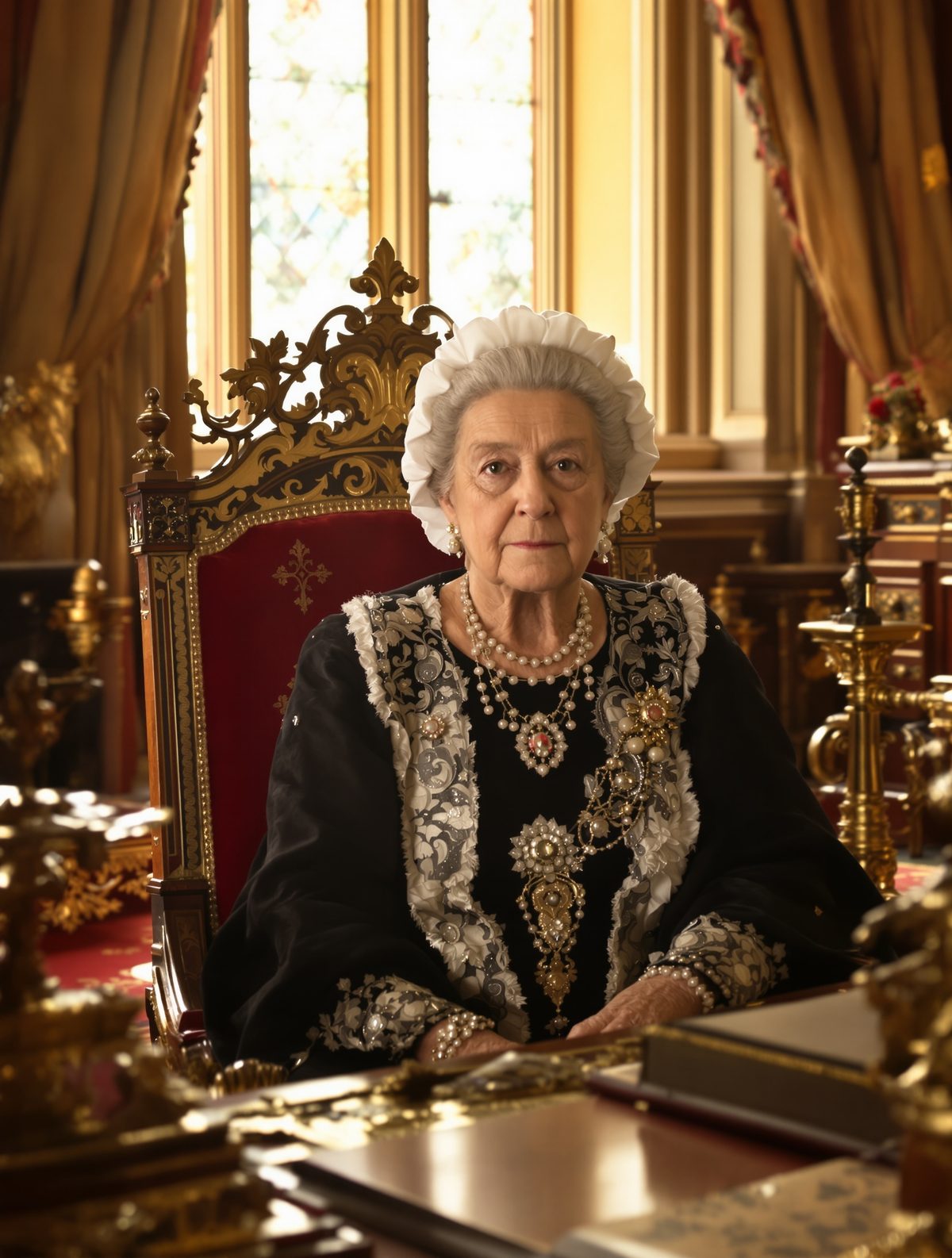
When Queen Victoria drew her final breath at Osborne House on January 22, 1901, the nation prepared to bid farewell to their beloved sovereign in the traditional manner befitting a British monarch. What they didn't know was that the woman who had ruled an empire for 63 years had penned a series of secret instructions that would turn royal funeral protocol on its head. Hidden away in her private papers lay detailed plans for a ceremony that would prioritize her heart over centuries of established custom—and her family was about to discover just how far their matriarch would go to control her own final chapter.
The Widow Queen's Hidden Wishes
For nearly four decades, Queen Victoria had dressed exclusively in black, mourning her beloved Prince Albert who died unexpectedly in 1861. The sight of their sovereign in perpetual mourning dress had become so familiar that many of her subjects could barely remember her in any other color. So when her private secretary and closest confidants opened her sealed funeral instructions, they were stunned to discover that the Queen had explicitly forbidden black mourning clothes at her funeral.
Instead, Victoria had requested to be dressed in white—specifically, a white silk dress that would symbolize her reunion with Albert in the afterlife. This wasn't merely a preference; it was a carefully considered rebellion against the very mourning protocols she had embodied for decades. The instructions, written in her own hand, were comprehensive and left little room for interpretation. She had been planning this moment for years, quietly crafting a ceremony that would reflect her personal beliefs about death, love, and eternity rather than the somber expectations of state.
The court officials who first read these instructions reportedly exchanged worried glances. How could they possibly explain to the Archbishop of Canterbury, to Parliament, and to the grieving nation that their Queen—the very symbol of Victorian propriety—wanted to break with centuries of royal funeral tradition?
Love Tokens for Eternity
Victoria's rebellion went far beyond her choice of dress. Among her most treasured instructions was the placement of specific mementos that would accompany her on her final journey. Most significantly, she requested that Albert's gold wedding ring be placed on her finger—not the coronation rings or state jewelry that typically adorned deceased monarchs, but the simple band that had symbolized their profound love story.
The Queen had also specified that a photograph of Albert should be placed in her hands, along with a plaster cast of his hand that she had cherished since his death. These deeply personal items were to remain hidden beneath flowers during the public ceremonies, known only to her closest attendants. It was as if Victoria was creating two funerals: the public spectacle that duty demanded, and the private ceremony of love that her heart required.
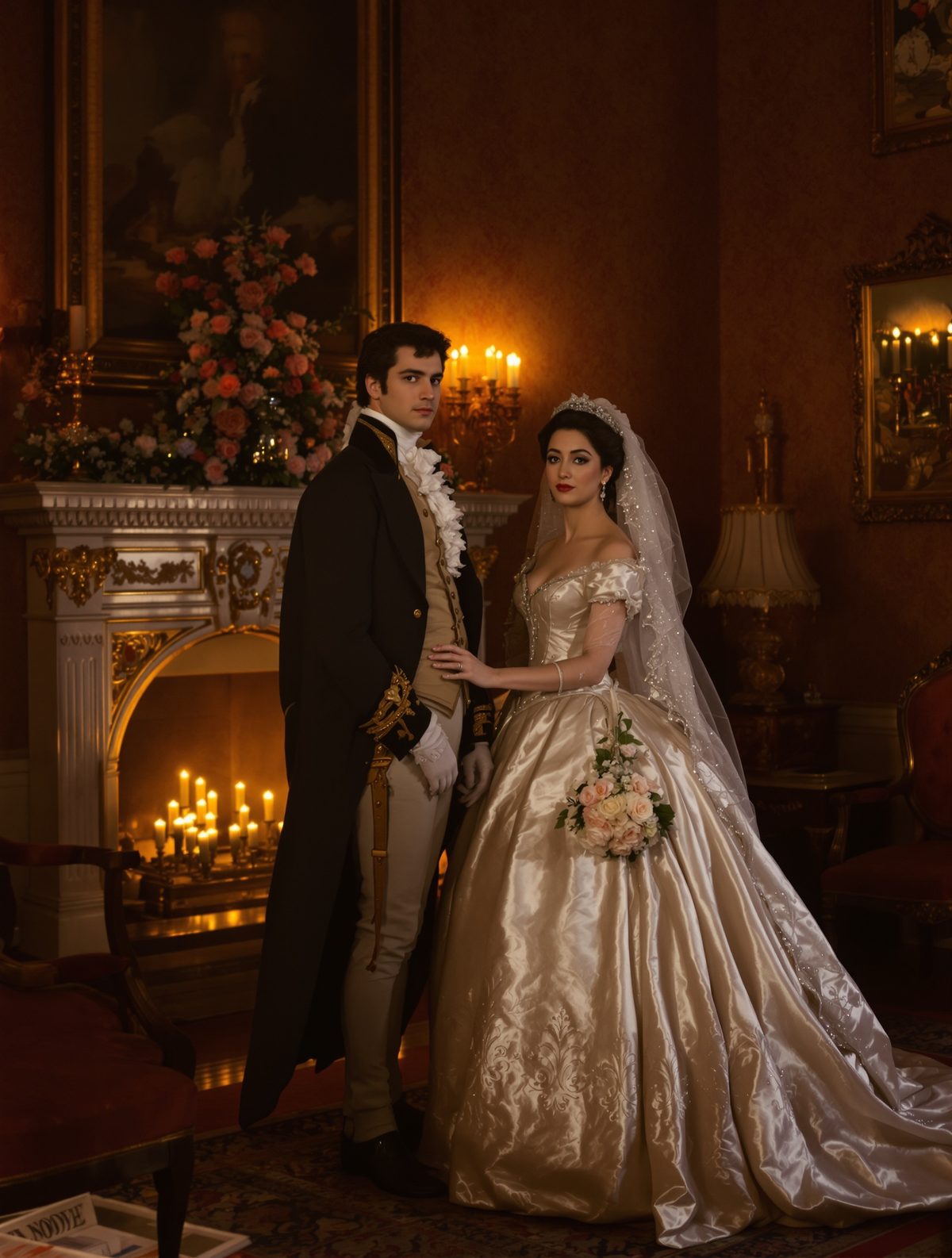
Perhaps most touching of all, she had requested that her wedding veil—the same Honiton lace that had adorned her on that joyous day in 1840—should cover her face. After nearly 40 years of widowhood, Victoria was symbolically transforming her funeral into a reunion, preparing to meet her beloved Albert not as a mourning widow, but as his bride once more.
The Court's Dilemma
The revelation of these instructions sent shockwaves through the royal household. Victoria's children, led by her eldest son who was now King Edward VII, found themselves in an unprecedented position. How could they honor their mother's wishes while managing the expectations of a nation accustomed to the solemn pageantry of royal mourning?
The new King and his siblings were well aware of their mother's devotion to their father's memory, but even they were surprised by the extent to which she had planned to carry this devotion into death. Some family members worried about public reaction—would the nation understand why their Queen had chosen to abandon the very mourning traditions that had defined her reign?
Behind the scenes at Windsor Castle and Buckingham Palace, courtiers debated how much of Victoria's unconventional plan could realistically be implemented. The white dress was manageable, as it would be largely hidden beneath ceremonial robes during the public procession. But the complete abandonment of black funeral protocol represented a significant departure from established custom.
Remarkably, the royal family chose to honor their matriarch's wishes. In doing so, they demonstrated the same courage that Victoria herself had shown—the willingness to put genuine emotion and personal meaning above rigid adherence to protocol when the two came into conflict.
A Funeral Unlike Any Other
On February 2, 1901, Queen Victoria's funeral proceeded with a unique blend of state grandeur and personal touches that reflected her secret rebellion. While the public witnessed the expected military processions, ceremonial cannon fire, and formal religious services, those closest to the coffin knew that beneath the imperial crown and ceremonial robes lay a woman dressed as a bride, reuniting with her beloved.
The white silk dress remained hidden from public view, but Victoria's other instructions were subtly woven throughout the ceremony. White flowers, rather than the traditional dark funeral arrangements, adorned many of the displays. The overall tone, while respectful and solemn, carried an undercurrent of celebration that puzzled some observers but would have pleased the Queen immensely.
Even in death, Victoria managed to surprise those who thought they knew her completely. The sovereign who had become synonymous with rigid moral standards and unchanging tradition revealed herself to be, at heart, a woman whose deepest loyalty was not to protocol but to love. Her final act of rebellion wasn't against her family or her subjects, but against the impersonal demands of state that had shaped so much of her public life.
The Legacy of a Royal Love Story
Queen Victoria's secret funeral rebellion offers us a profound glimpse into the woman behind the crown—a reminder that even monarchs are, fundamentally, human beings driven by the same powerful emotions that move us all. Her willingness to challenge centuries of tradition for the sake of love speaks to a romantic spirit that had been largely hidden beneath decades of official mourning dress and imperial responsibility.
This extraordinary final chapter of Victoria's story resonates particularly strongly today, as we witness the current royal family's own efforts to balance tradition with personal authenticity. The Queen's great-great-great-granddaughter, Elizabeth II, and her successors continue to navigate the delicate balance between duty and personal expression that Victoria herself struggled with throughout her reign.
Victoria's white dress rebellion reminds us that the strongest traditions are often those flexible enough to accommodate the deepest human truths. By choosing love over convention in her final hour, the Queen who defined an era proved that the monarchy's greatest strength has always been its ability to embody both the grandeur of state and the intimate hopes of the human heart. In the end, perhaps that's the most royal quality of all—the courage to remain true to what matters most, even when the whole world is watching.