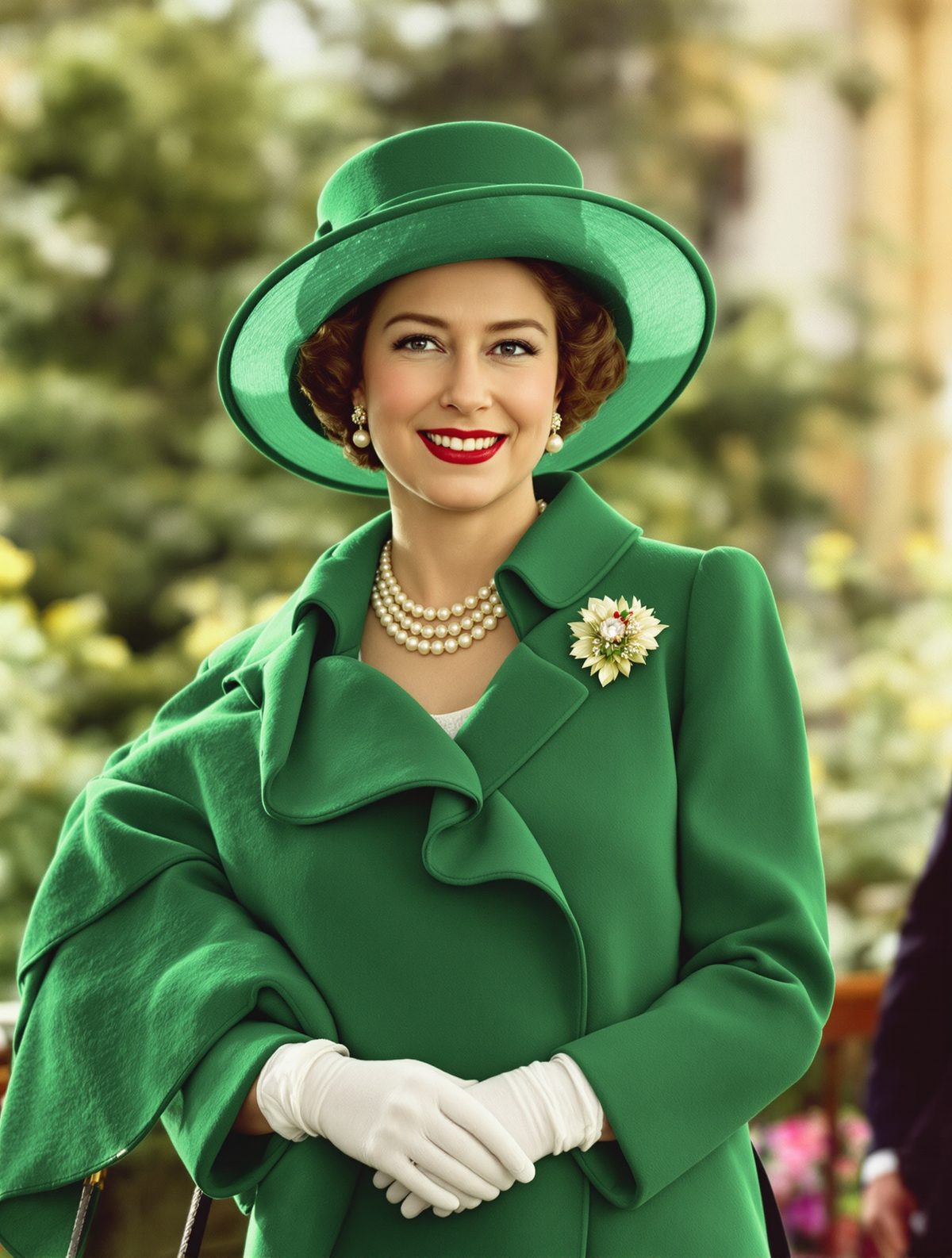
Picture this: a 25-year-old Queen, barely two years into her reign, stands before her mirror in Buckingham Palace while her dresser holds up a magnificent sapphire blue coat. Around her, palace officials shift uncomfortably, their faces betraying centuries of rigid royal tradition. The young monarch's decision to wear such a vibrant hue to a public engagement wasn't just a fashion choice—it was a quiet revolution that would transform royal style forever.
In the austere world of 1950s royal protocol, where monarchs traditionally favored muted tones and conservative cuts, Queen Elizabeth II's insistence on wearing bright, bold colors was nothing short of revolutionary. What began as a practical consideration would evolve into one of her most enduring legacies, forever changing how the British Royal Family presented itself to the world.
The Weight of Royal Tradition
When Elizabeth ascended to the throne in 1952, royal fashion had remained virtually unchanged for generations. Her predecessors, including Queen Victoria and Queen Mary, had established a template of dignified restraint that favored dark, somber colors—deep purples, forest greens, and navy blues. These choices weren't merely aesthetic; they represented the gravity and solemnity expected of a monarch.
The young Queen inherited not just a crown, but an entire wardrobe philosophy steeped in Victorian sensibilities. Palace courtiers, many of whom had served her father and grandfather, viewed fashion through the lens of constitutional propriety. To them, a monarch's clothing should whisper rather than shout, blend rather than stand out.
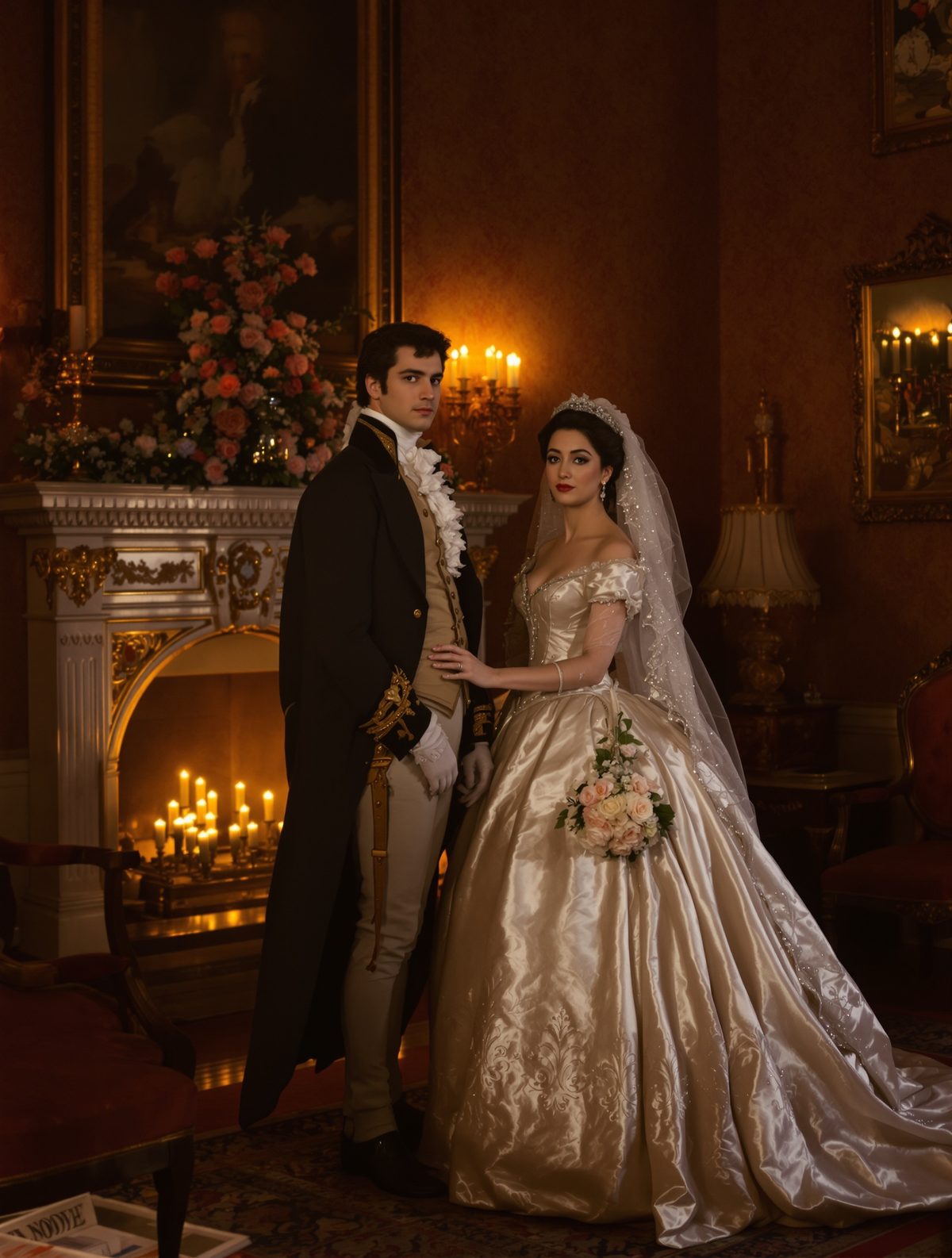
But Elizabeth had different ideas. Even as Princess, she had shown flashes of sartorial independence—choosing a relatively simple yet elegant Norman Hartnell gown for her 1947 wedding, adorned with crystals and pearls that caught the light beautifully. It was a hint of the visual drama that would later become her signature.
The establishment's resistance to change was formidable. Senior courtiers worried that bright colors might appear frivolous or undignified. After all, this was a monarchy still recovering from the abdication crisis and establishing its post-war identity. Every public appearance carried enormous weight, and traditional wisdom suggested that conservative dress was the safest path.
A Practical Revolution
The Queen's fashion rebellion wasn't born from vanity or a desire to shock—it emerged from a deeply practical consideration that would become the foundation of her public persona. "I have to be seen to be believed," became her guiding principle, though the exact origins of this philosophy remain debated by royal historians.
During her early public engagements, Elizabeth noticed something troubling. In crowds of thousands, wearing the traditional dark colors favored by her predecessors, she risked becoming invisible to her subjects. The very people she was there to see and inspire might struggle to spot their young Queen among the sea of officials and security personnel surrounding her.
The solution was as brilliant as it was bold: embrace color with unprecedented royal enthusiasm. By the mid-1950s, Elizabeth was appearing in sunshine yellow at garden parties, electric blue at state functions, and vibrant pink at ceremonial events. Each appearance was carefully planned, with colors chosen not just for their beauty, but for their visibility and psychological impact.
Her dressmakers, initially hesitant about these dramatic departures from royal tradition, soon embraced the creative possibilities. Norman Hartnell, who had dressed her since her teenage years, found himself working with a palette that previous generations of royal couturiers could never have imagined. The collaboration between Queen and designer produced some of the most memorable royal looks of the decade.
Palace Panic and Public Delight
The reaction within palace walls was swift and, according to several accounts from royal biographers, quite dramatic. Senior household staff, accustomed to decades of predictable royal presentation, found themselves navigating uncharted territory. Private secretaries worried about press reaction, while more traditional members of the royal household questioned whether such bold choices were appropriate for state occasions.
The concerns weren't entirely unfounded. In an era when even minor royal fashion choices made headlines, the Queen's colorful revolution was bound to attract attention. Some newspapers initially expressed surprise, with fashion editors scrambling to interpret this new royal aesthetic for their readers.
However, public reaction was overwhelmingly positive. Crowds at royal events found the young Queen easier to spot and photograph, creating a new kind of intimacy between monarch and subjects. The bright colors photographed beautifully in the emerging color photography of the era, making Elizabeth one of the most photogenic royals in history.
Perhaps most importantly, the Queen's fashion choices resonated with post-war Britain's growing optimism. After years of rationing and restriction, her vibrant wardrobe seemed to embody the nation's hopes for a brighter, more prosperous future. The young monarch wasn't just wearing color—she was wearing hope.
The Science of Royal Visibility
What began as instinct evolved into something approaching science. The Queen and her team developed an sophisticated understanding of how color worked in different settings and lighting conditions. Certain shades photographed better under the artificial lights of state banquets, while others were perfect for outdoor ceremonies where natural light could wash out more subtle tones.
The logistics became increasingly complex and carefully orchestrated. Advanced planning ensured that the Queen's outfits would stand out against whatever backdrop she might encounter—whether the red carpets of state visits, the green lawns of garden parties, or the varied architectural settings of her tours across the Commonwealth.
This attention to visual impact extended beyond mere color selection. The Queen's silhouettes were designed for maximum recognizability, with structured coats and distinctive hat shapes that remained instantly identifiable even from considerable distances. Every element worked together to create what fashion historians now recognize as one of the most successful personal brands in history.
The financial investment in this new approach was substantial, but the returns—in terms of public engagement and media coverage—proved its worth many times over. The Queen's colorful image became synonymous with modern monarchy, helping to distinguish her reign from those of her more traditionally-dressed predecessors.
A Legacy Written in Living Color
The ripple effects of Elizabeth's fashion rebellion extended far beyond her own wardrobe. Other members of the Royal Family began embracing brighter colors and more contemporary styles, though none with quite the same systematic approach as the Queen herself. The entire visual language of British royalty shifted, becoming more accessible and engaging.
Royal fashion gained new relevance and influence, with the Queen's choices inspiring countless copies and interpretations. High street retailers began offering "royal-inspired" collections, while fashion magazines devoted increasing coverage to royal style. The monarchy's visual impact on British culture grew exponentially.
Even royal portraiture evolved to accommodate this new aesthetic. Official photographs began emphasizing the drama and beauty of the Queen's colorful wardrobe, creating images that felt more alive and contemporary than the formal poses of previous generations.
Today, decades after that young Queen first shocked palace officials with her bold color choices, her rainbow wardrobe remains one of her most beloved characteristics. The sight of Elizabeth II in one of her signature bright coats has become as iconic as the Crown Jewels themselves—a testament to the power of quiet rebellion in service of a greater cause.
In an age where visual communication dominates our daily lives, the Queen's instinctive understanding of the power of color seems remarkably prescient. Her fashion revolution wasn't just about clothes—it was about connection, visibility, and the evolving relationship between monarchy and people. That young woman who defied centuries of royal tradition created something entirely new: a crown that could be seen, loved, and remembered by all.