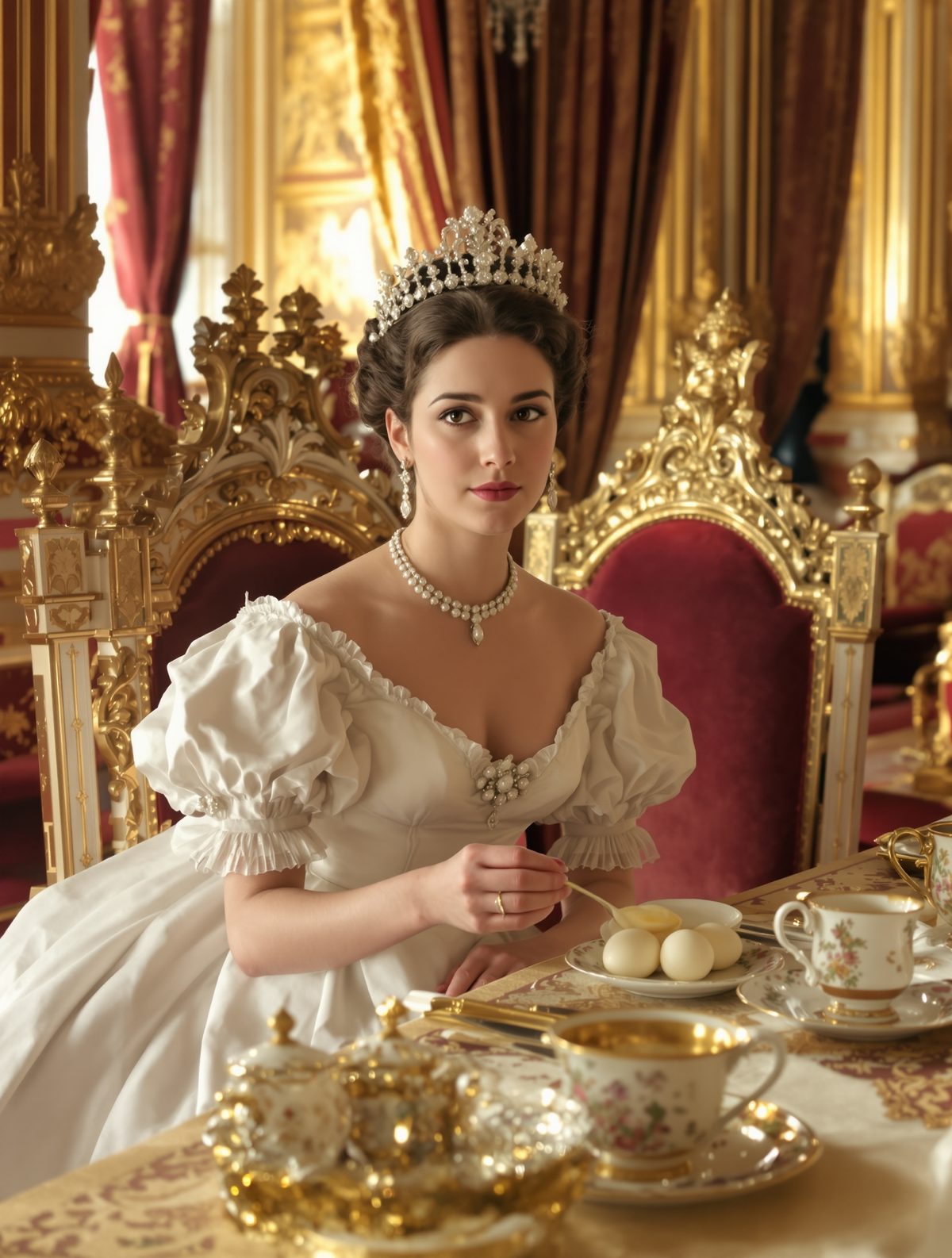
The carefully pressed uniform hung ready in the wardrobe, the schedule meticulously planned, and the photographers positioned at respectful distances. On a crisp February morning in 1945, the Auxiliary Territorial Service prepared to welcome their most distinguished recruit: 18-year-old Princess Elizabeth. Military brass had choreographed what they assumed would be a dignified royal visit—perhaps some gentle observation of vehicle maintenance, a few carefully staged photographs, and a gracious departure back to Windsor Castle. Instead, they were about to discover that the future Queen Elizabeth II had rather different plans for her wartime service.
A Princess Determined to Serve
By early 1945, the Second World War had been raging for nearly six years, and Princess Elizabeth had spent much of her teenage years watching from the sidelines as her generation answered the call of duty. While her contemporaries drove ambulances through the Blitz, operated anti-aircraft equipment, and kept Britain's machinery running, the heir to the throne remained safely ensconced at Windsor Castle, continuing her education and royal duties under the watchful eye of her governess.
The princess had been pressing her parents, King George VI and Queen Elizabeth, to allow her to contribute more directly to the war effort. At 18, she was finally old enough to join the women's services, and despite initial royal resistance, arrangements were made for her to train with the ATS—the women's branch of the British Army. The compromise reached was typical of wartime royal protocol: she would train during the day but return to the castle each evening, maintaining both her service commitment and her security.
What palace officials and military commanders hadn't fully grasped was just how seriously the young princess took this opportunity. This wasn't to be a ceremonial appointment or a token gesture—Elizabeth was determined to master real, practical skills that would genuinely contribute to the war effort.
Getting Her Hands Dirty
The scene at the ATS training center that first morning was one of barely contained formality. Officers had prepared demonstrations of vehicle maintenance, expecting their royal recruit to observe politely from a safe distance. The princess arrived promptly in her crisp ATS uniform, looking every inch the properly turned-out servicewoman, complete with her service number: 230873.
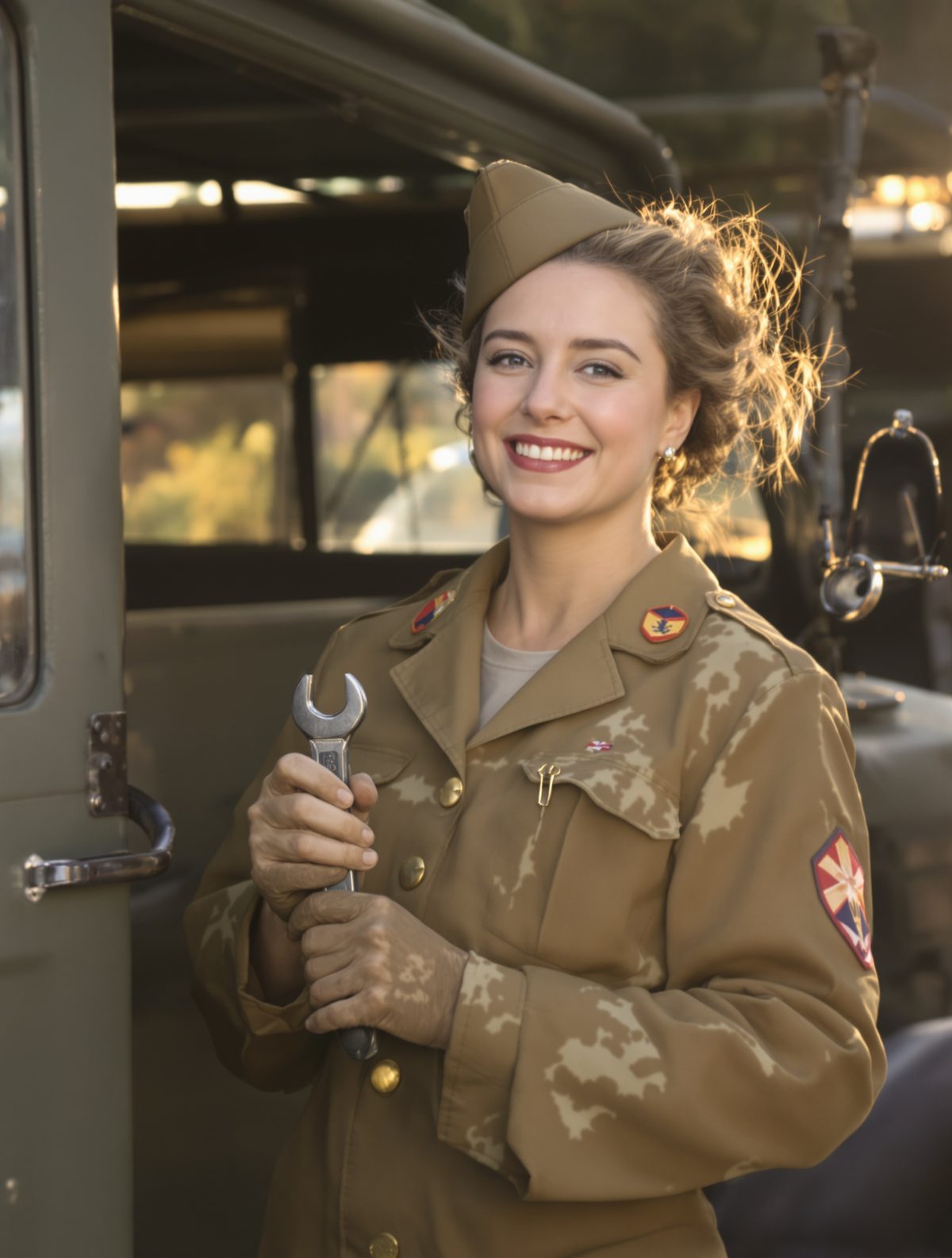
But when instructors began explaining engine maintenance on a military truck, something remarkable happened. Rather than maintaining the expected royal distance, Princess Elizabeth stepped forward, rolled up her sleeves, and asked to try the procedures herself. When offered a wrench, she didn't hesitate to take it. When shown how to change a spark plug, she insisted on doing it herself until she could manage it competently.
By afternoon, the carefully orchestrated royal visit had transformed into something entirely different. The future queen was lying on her back beneath a vehicle, her uniform stained with grease, working to replace a transmission part. Her fellow ATS members, initially tongue-tied in the presence of royalty, found themselves working alongside someone who was clearly determined to pull her weight.
The princess's enthusiasm for mechanical work wasn't just for show. She genuinely relished learning how engines worked, how to diagnose problems, and how to fix them. Her instructors reported that she asked detailed technical questions and wouldn't move on to the next lesson until she had mastered the current one.
Beyond Royal Expectations
Word of the princess's hands-on approach quickly spread through military circles, creating something of a sensation. Here was the heir to the throne, someone who could have spent the war in complete safety and comfort, choosing instead to learn skills that were both physically demanding and traditionally considered "unfeminine."
The training wasn't easy, even for someone of royal birth. Princess Elizabeth learned to drive and maintain heavy military vehicles, understanding not just how to operate them but how to repair them when they broke down. She studied map reading, vehicle maintenance, and basic mechanics. The work was often dirty, sometimes frustrating, and always challenging.
Her fellow servicewomen initially found it surreal to work alongside someone they'd only seen in newspapers and official photographs. But as days turned into weeks, the princess's genuine commitment to the work and her lack of pretension won over even the most skeptical. She didn't expect special treatment, didn't complain about the physical demands of the work, and showed the same determination to master difficult skills that would later characterize her approach to royal duties.
The impact extended beyond the training center itself. News of the princess's practical war service resonated powerfully with the British public. Here was tangible proof that the royal family truly understood the sacrifices being made across the nation. The image of Princess Elizabeth in overalls, tools in hand, became a powerful symbol of shared national purpose.
A Future Queen in the Making
The ATS training lasted several weeks, and by its conclusion, Princess Elizabeth had earned her qualification as a fully trained driver and mechanic. She could strip down an engine, diagnose mechanical problems, and handle heavy military vehicles with confidence. More importantly, she had proven—to herself as much as to others—that she could master practical skills and work effectively alongside people from very different backgrounds.
The experience clearly made a lasting impression on the young princess. Throughout her long reign, Queen Elizabeth II would frequently reference her wartime service and maintained a lifelong interest in engineering and mechanical innovations. She became known for her detailed knowledge of how things worked, from the engines in the royal cars to the mechanical systems at Buckingham Palace.
Her ATS service also established a template for how she would approach royal duties throughout her reign: thorough preparation, genuine engagement, and a determination to understand rather than simply observe. The princess who insisted on getting her hands dirty with truck engines would become a queen who approached every aspect of her role with the same practical thoroughness.
Those few weeks in 1945 offered a remarkable glimpse of character that would define a reign lasting more than seven decades. The young woman who shocked her officers by grabbing a wrench instead of maintaining royal distance had already begun to demonstrate the hands-on approach and genuine curiosity that would make her such an effective monarch. In choosing to serve her country as a mechanic when she could have remained safely above the fray, Princess Elizabeth showed that duty, for her, would never be merely ceremonial.