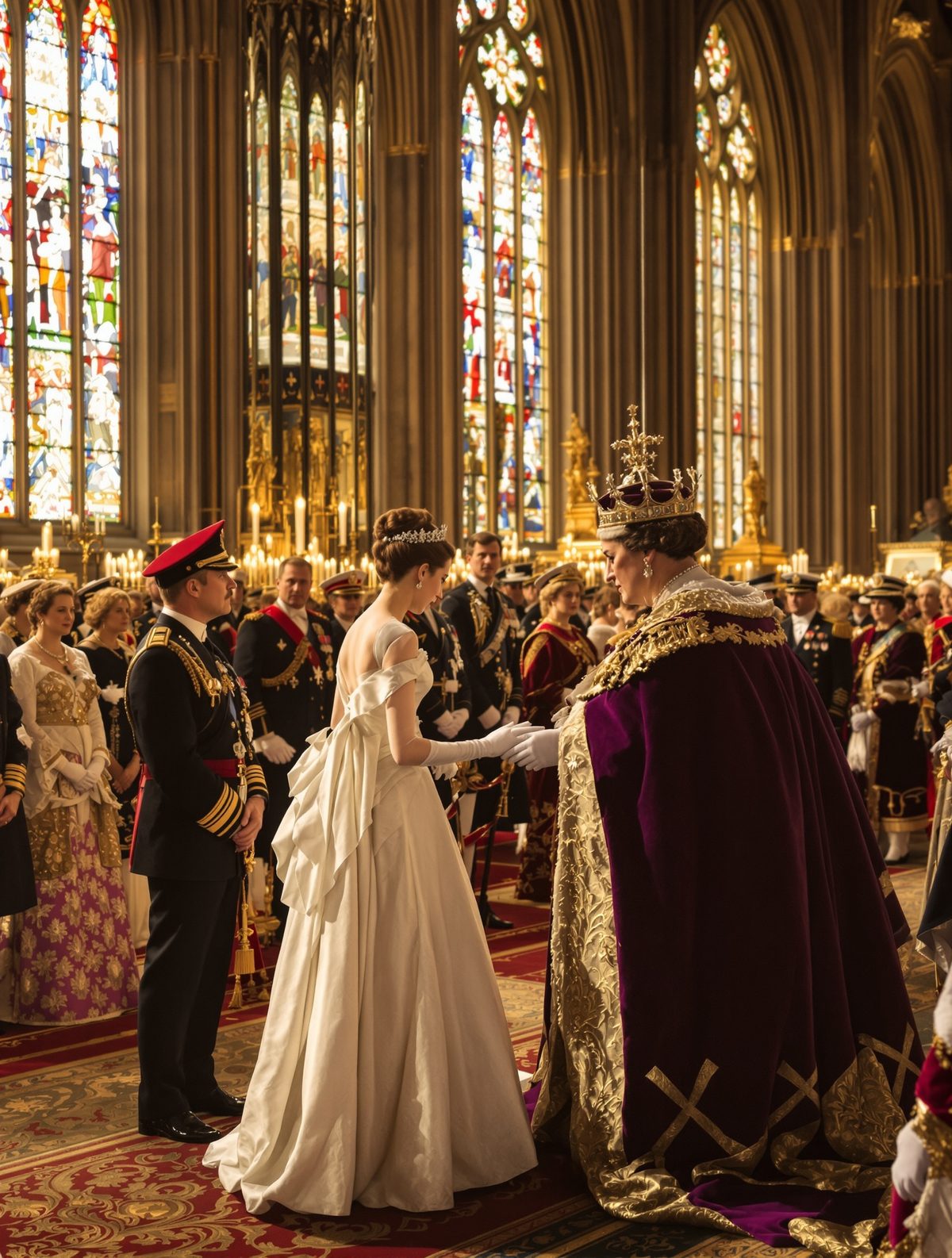
The morning of 22 June 1911 dawned bright and clear over London, as if the heavens themselves had conspired to honour the crowning of King George V. Inside Westminster Abbey, beneath the soaring Gothic arches that had witnessed centuries of royal ceremony, fourteen-year-old Princess Mary sat transfixed as her father transformed from prince to sovereign. But it was what happened next that would echo through the halls of royal history—a simple gesture that broke 600 years of protocol and changed the monarchy forever.
The Weight of Crown and Ceremony
The coronation of King George V was more than mere pageantry; it was a carefully choreographed assertion of continuity at a time when monarchies across Europe faced unprecedented challenges. The elaborate ceremony, with its ancient rituals and symbolic regalia, represented an unbroken chain stretching back to William the Conqueror. Every bow, every genuflection, every moment of reverence had been prescribed by centuries of tradition.
Princess Mary, the King's only daughter, understood the gravity of the moment better than most. Born into the strict hierarchy of Edwardian court life, she had been raised to understand that protocol was not merely etiquette—it was the very foundation upon which royal authority rested. Her grandmother, the formidable Queen Alexandra, had drilled into her the importance of proper deportment and the sacred nature of royal precedence.
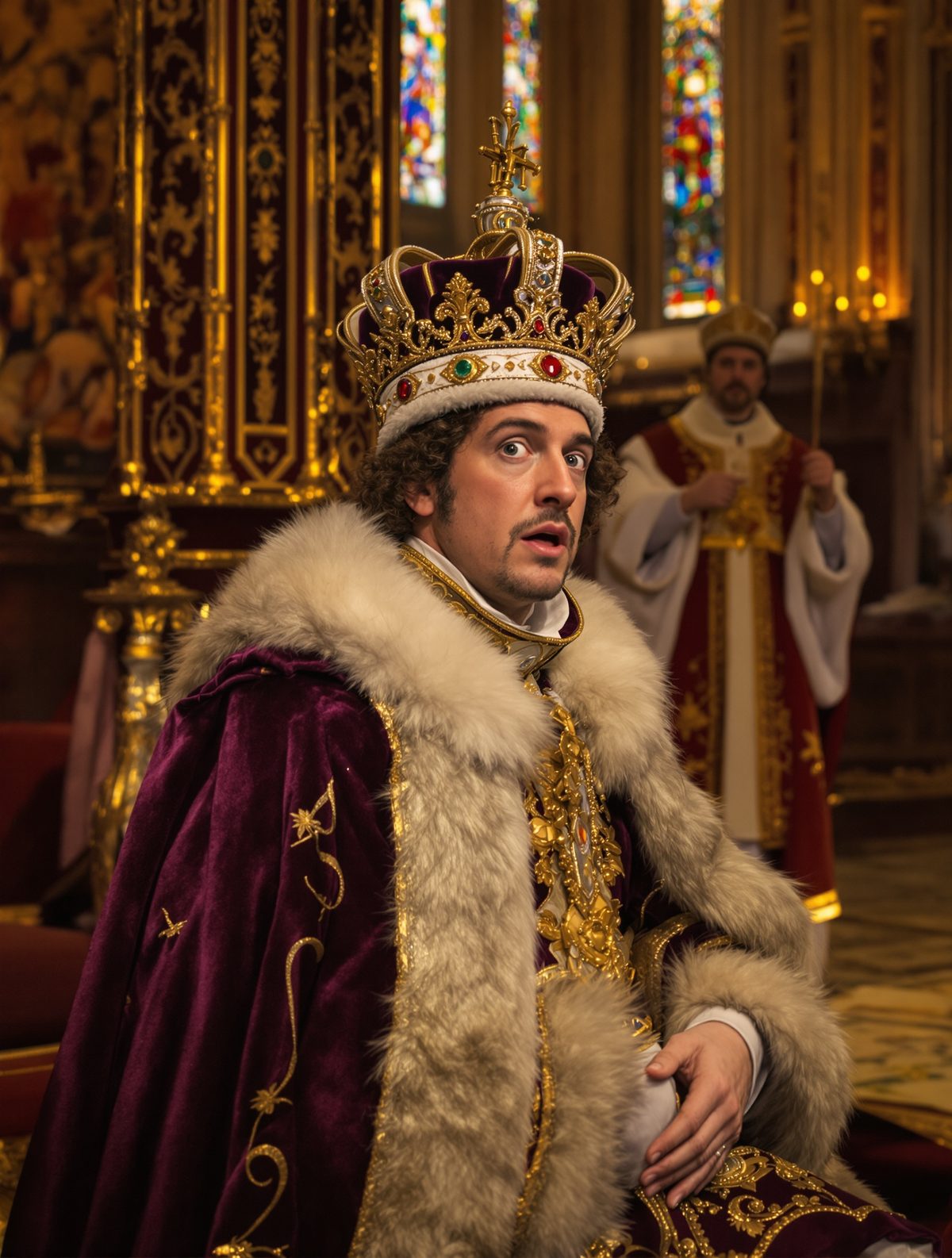
As the newly crowned King George V and Queen Mary processed through the Abbey in their magnificent coronation robes—he in purple velvet trimmed with ermine, she in a gown of golden silk that caught the light streaming through the ancient windows—the young princess watched with the intensity that would characterise her entire life of royal service.
A Moment That Changed Everything
What happened next was entirely unprecedented. As the royal couple made their stately progress past the assembled congregation of peers, foreign dignitaries, and family members, Princess Mary rose from her seat. In full view of the Abbey's two thousand guests, she performed a deep, formal curtsey to her own mother.
The gesture sent a ripple of shock through the ancient nave. For six centuries, royal children had been exempt from such formalities toward their parents. The principle was clear: family relationships transcended royal hierarchy within the immediate circle of succession. A princess did not curtsey to her mother, regardless of crowns or titles.
But Princess Mary saw something that others had missed. In that moment of transformation, as the Crown of Queen Mary settled upon her mother's head, she recognised that her mother had become something more than a parent—she had become Queen. The young princess, with an intuitive understanding of monarchy that would serve her throughout her life, recognised that this change demanded acknowledgment.
The impact was immediate and profound. Queen Mary, usually the embodiment of royal composure, was visibly moved. Tears sprang to her eyes as she witnessed her daughter's spontaneous recognition of her new role. For a woman who had married into the royal family and sometimes felt the weight of not being born to her position, this public acknowledgment from her own child was deeply meaningful.
The Human Story Behind the Crown
To understand the full significance of Princess Mary's gesture, one must appreciate the unique position of Queen Mary herself. Born Princess Victoria Mary of Teck, she had originally been engaged to the Duke of Clarence, George V's elder brother. When the Duke died unexpectedly in 1892, duty and genuine affection led her to marry the future King George V instead.
Queen Mary had spent years proving herself worthy of her adopted role, transforming herself into the epitome of royal dignity. She had studied British history with scholarly intensity, collected royal artifacts with passionate devotion, and supported her husband through every challenge of his unexpected path to the throne. Yet there remained something poignant about her position—always conscious of being watched, always striving to embody an ideal of queenship that seemed to come naturally to others.
Princess Mary, observing her mother's journey with the keen eye of a devoted daughter, understood the sacrifices involved. Her curtsey was more than protocol—it was recognition, validation, and love expressed through the language of monarchy. In that single gesture, she publicly affirmed that her mother had not merely worn the crown, but had earned it.
A Family United by Service
The coronation day curtsey also revealed something fundamental about the Wales family's approach to monarchy. Unlike some royal houses that emphasised the divine right of kings, the family that would become the House of Windsor understood monarchy as service. Princess Mary's gesture suggested that even within the family, respect must be earned and acknowledged.
This philosophy would echo through the decades. Princess Mary herself would become the hardest-working member of the royal family, earning the nickname "the workhorse" for her dedication to public duty. Her understanding that monarchy meant service rather than privilege became a defining characteristic of the modern British royal family.
Ripples Through Royal History
The immediate aftermath of Princess Mary's spontaneous curtsey was telling. Rather than censure or correction, the royal household quietly acknowledged that she had instinctively understood something important about the nature of constitutional monarchy. The gesture was not repeated into protocol, but neither was it discouraged. It remained a unique moment of personal recognition within public ceremony.
Palace insiders noted that the relationship between mother and daughter seemed to deepen following the coronation. Queen Mary, touched by her daughter's gesture, began to involve Princess Mary more closely in royal duties. The young princess became her mother's companion on official engagements, learning statecraft at Queen Mary's side.
The long-term impact was even more significant. Princess Mary's intuitive understanding of when personal relationships must acknowledge public roles became a template for future generations. Her gesture suggested that the royal family's strength lay not in rigid hierarchy, but in their ability to balance genuine human relationships with the demands of constitutional monarchy.
A Legacy of Understanding
Throughout her long life—Princess Mary lived until 1965, serving through two world wars and massive social change—she maintained the same intuitive understanding of monarchy that she had displayed as a fourteen-year-old. She knew when to set aside personal preference for public duty, when family relationships required the formality of royal protocol, and when authentic emotion could enhance rather than diminish royal dignity.
The coronation day curtsey became family legend, a story passed down through generations as an example of how to navigate the complex relationship between personal affection and public role. It demonstrated that the strongest monarchies are those that understand when tradition must bend to accommodate genuine human feeling.
As we watch today's royal family navigate their own balance between public duty and private relationships, Princess Mary's spontaneous gesture at her father's coronation remains remarkably relevant. Her intuitive understanding that love and respect can be expressed through royal protocol, rather than despite it, offers a timeless lesson about the enduring strength of constitutional monarchy. In a single moment of teenage insight, she helped define what it means to be both genuinely human and authentically royal—a balance that continues to define the British monarchy more than a century later.