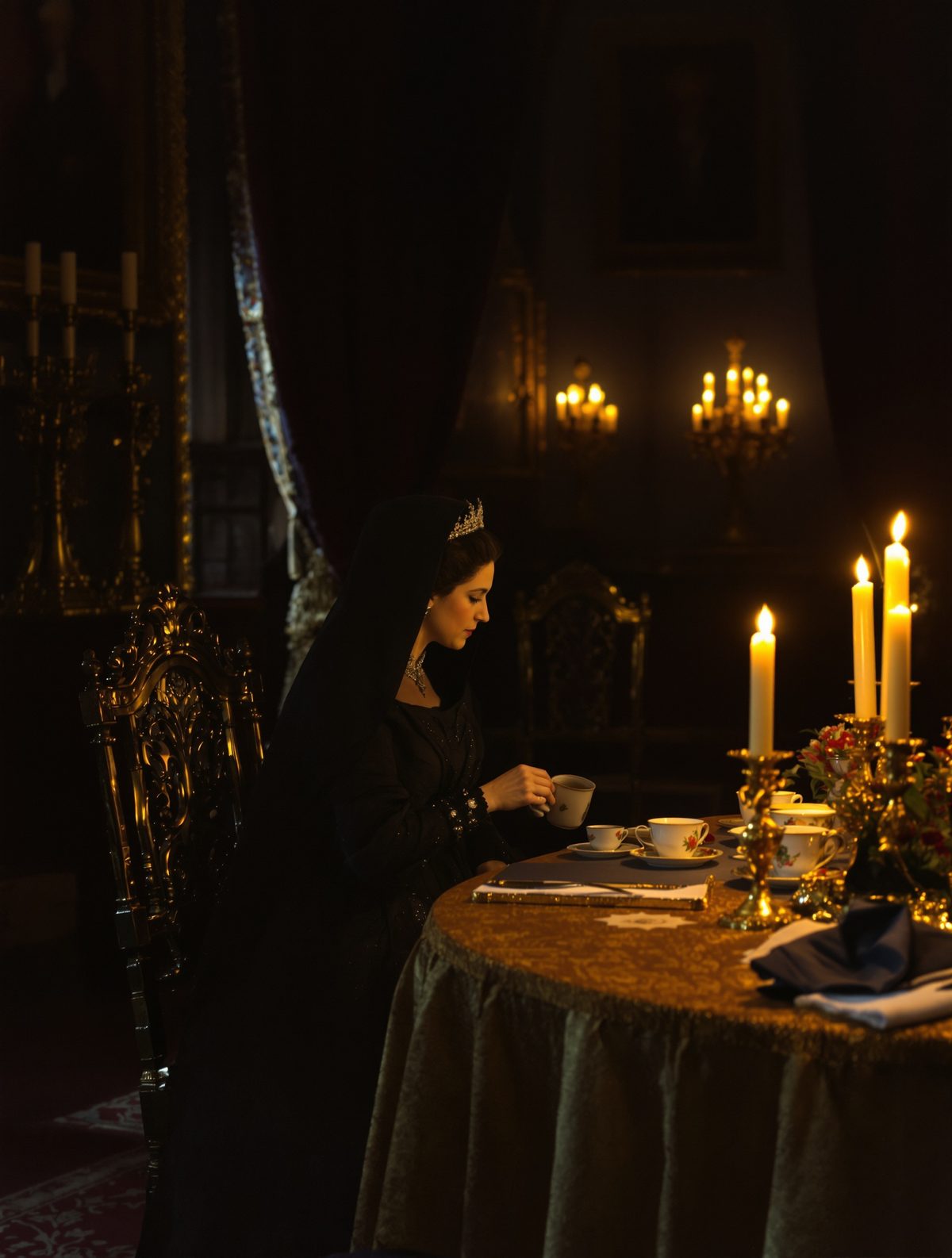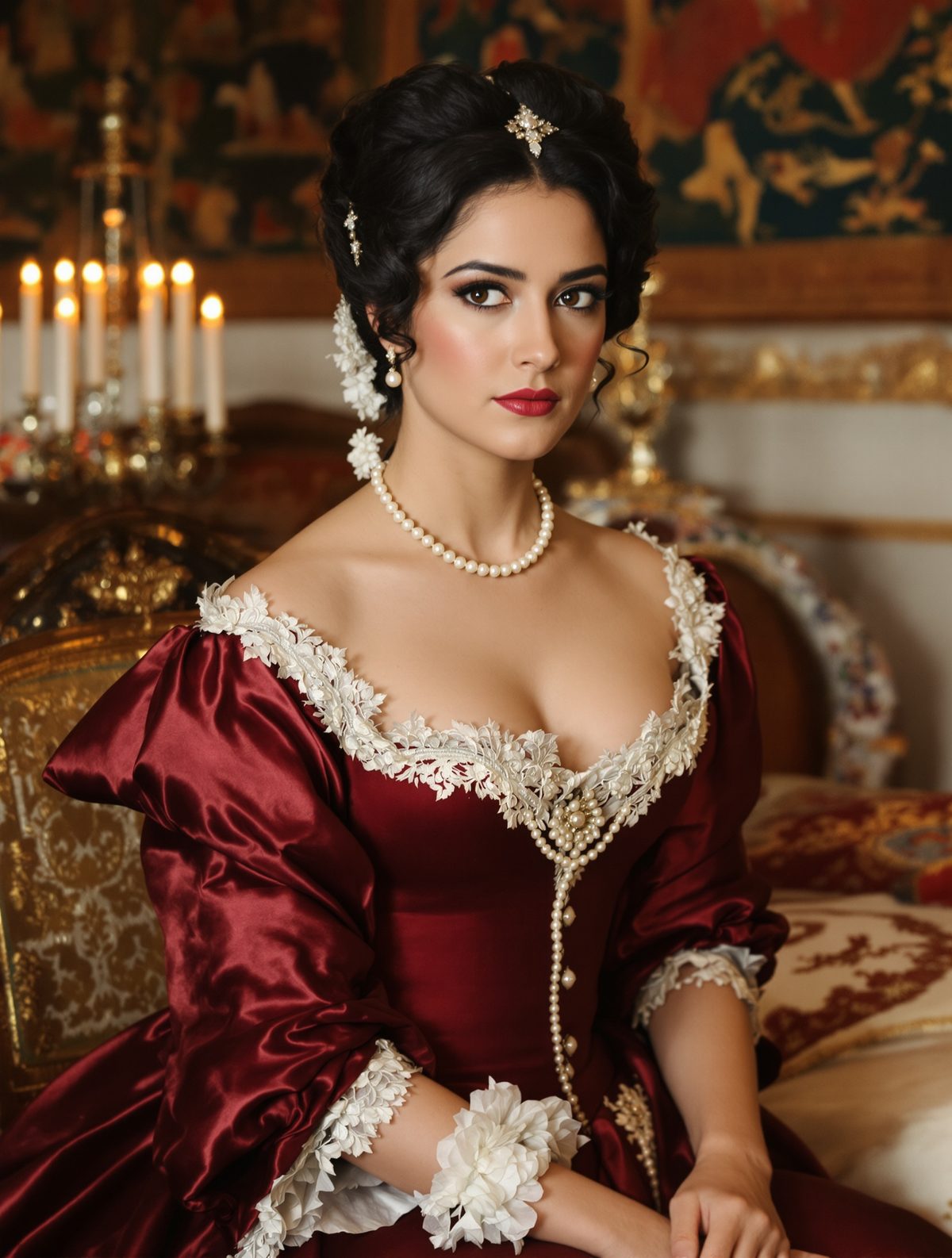
When Queen Alexandra first appeared at Edward VII's court, her unusually high necklines puzzled fashion observers across Europe. While other royal ladies adorned themselves with sweeping décolletage and elaborate tiaras, the new Queen Consort seemed inexplicably devoted to covering her throat with strand after strand of pearls, ornate chokers, and meticulously crafted high collars. What they didn't know was that beneath her famous pearl chokers lay a carefully guarded secret that would transform royal style forever—and prove that sometimes our greatest vulnerabilities become our most influential strengths.
A Danish Princess with a Hidden Mark
Alexandra of Denmark arrived at the British court in 1863 as a breathtakingly beautiful princess, destined to marry the future King Edward VII. Born in 1844, she had spent her childhood in the relatively modest surroundings of the Yellow Palace in Copenhagen, where her father, Prince Christian, would later become King of Denmark. It was during these carefree early years that a playful moment with the family dog would leave an indelible mark—quite literally—on both Alexandra and the future of royal fashion.
The incident occurred when Alexandra was still a young girl, though the exact details remain shrouded in the discretion that royal families of the era maintained around such personal matters. What we do know is that a beloved family pet, in a moment of overexcitement or perhaps protective instinct, bit the young princess on her neck, leaving a scar that would remain visible throughout her life. In an age when physical perfection was expected of royal ladies—particularly those destined for the throne—this mark presented what many would have considered an insurmountable challenge to her public image.
Yet Alexandra, even as a young woman, displayed the ingenuity and grace that would define her reign. Rather than retreating from public life or submitting to the restrictive beauty standards of Victorian society, she chose to transform her perceived flaw into a distinctive style statement that would captivate courts across Europe.
The Birth of an Iconic Look
When Alexandra became Princess of Wales in 1863 and later Queen Consort in 1901, her signature style was already well-established. Her approach to concealing her scar was nothing short of revolutionary. Instead of simply hiding behind high necklines, she turned her neck into a canvas for the most exquisite jewelry and fashion accessories of the era.
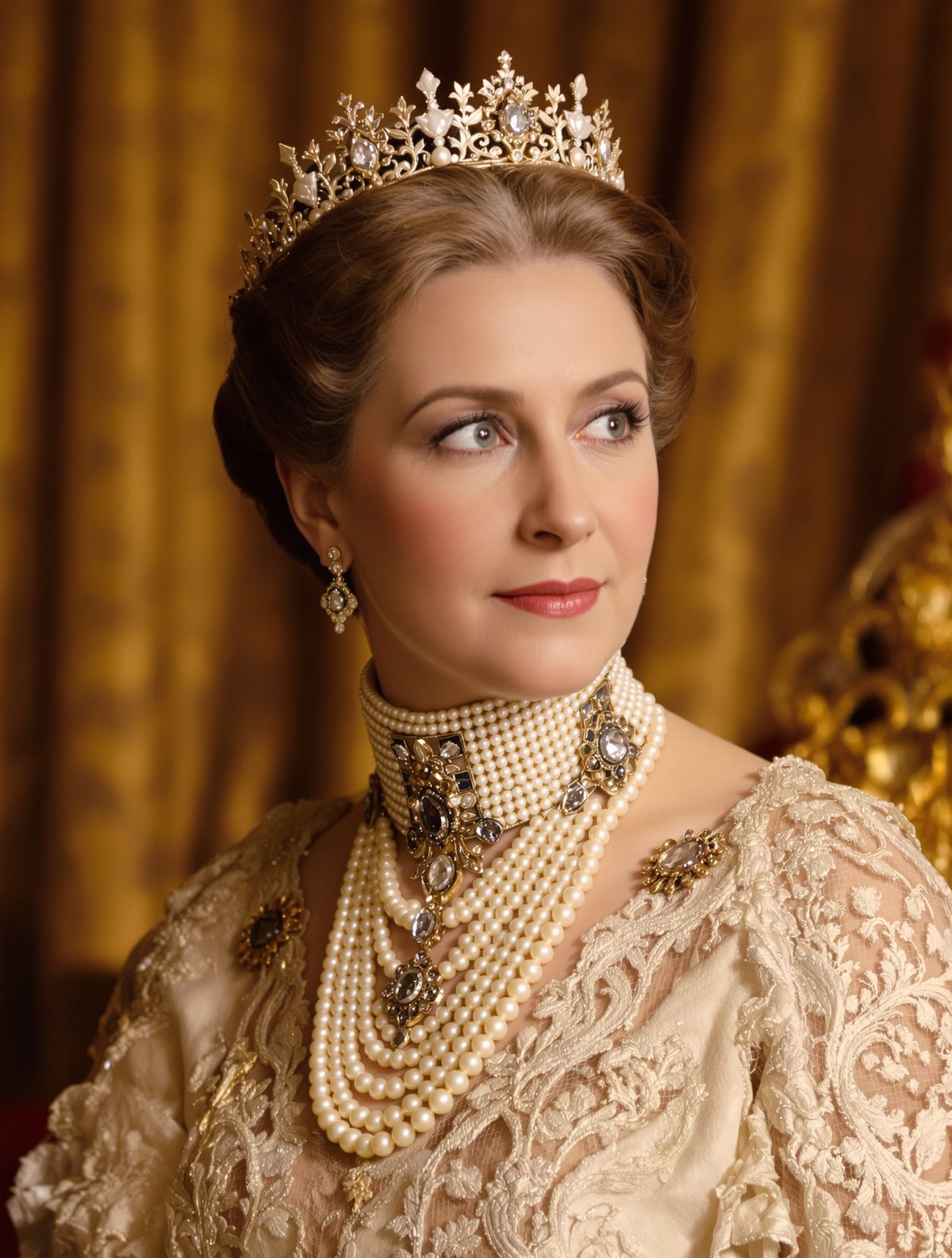
Her collection of chokers became legendary throughout European society. Crafted by the finest jewelers of the time, these pieces featured everything from lustrous pearls to glittering diamonds, from delicate chains to bold medallions. The Queen's favorite was often said to be her diamond and pearl choker, which she wore with such elegance that it appeared to be floating around her graceful neck rather than concealing anything beneath.
Alexandra's daytime ensembles featured high lace collars, intricately embroidered bands, and sumptuous velvet ribbons that transformed the simple act of covering one's throat into an art form. Her evening wear showcased increasingly elaborate chokers that complemented her tiaras and created a harmonious cascade of jewels from her crown to her décolletage. Court observers noted how the Queen's neck accessories often became the focal point of her entire ensemble, drawing attention upward to her luminous complexion and sparkling eyes.
What made Alexandra's approach so masterful was how she wore these pieces with absolute confidence. There was never a sense that she was hiding or compensating for anything—instead, she projected the image of a woman who had chosen this distinctive style because it enhanced her natural beauty and regal bearing.
A Fashion Revolution Spreads Across Europe
The influence of Queen Alexandra's choker style spread like wildfire through the fashionable circles of Edwardian society. What began as a practical solution to a personal concern quickly became the most coveted look among aristocratic ladies across Europe. Fashion houses in Paris, London, and Vienna began creating increasingly elaborate high-neck designs, each trying to capture the effortless elegance that Alexandra made appear so natural.
The trend was particularly notable because it marked a departure from the Victorian era's emphasis on displaying as much décolletage as propriety would allow. Alexandra's covered throat created an air of mystery and sophistication that proved far more alluring than the more obvious charms favored by previous generations. Young debutantes and seasoned society matrons alike began requesting "Alexandra-style" chokers from their jewelers, and fashion magazines of the era devoted entire features to achieving "the Queen's distinctive neckline."
The style proved remarkably versatile, adapting beautifully to both formal court presentations and more intimate social gatherings. During state dinners at Buckingham Palace, visiting dignitaries' wives would arrive wearing their own interpretations of the Queen's choker style, creating a glittering sea of covered throats that represented a entirely new aesthetic in royal fashion.
Interestingly, many of the ladies who adopted this trend had no physical reason to conceal their necks—they simply recognized that Alexandra had stumbled upon something genuinely beautiful and sophisticated. The style transcended its practical origins to become a symbol of refined taste and royal elegance.
The Personal Grace Behind the Public Style
What made Queen Alexandra's transformation of her childhood scar into a fashion statement so remarkable was the profound personal grace it represented. In an era when physical imperfections were often seen as deeply shameful—particularly for women in the public eye—Alexandra chose to approach her situation with creativity rather than insecurity.
Those close to the Queen noted that she never displayed any self-consciousness about her neck, even in private moments with family and friends. Her lady-in-waiting later recalled how naturally the Queen would select her daily choker, treating it as simply another element of her ensemble rather than a necessary concealment. This genuine confidence was perhaps the secret ingredient that made her style so compelling and widely imitated.
Alexandra's approach also reflected her Danish upbringing, where practicality and resourcefulness were valued alongside beauty and refinement. Rather than allowing a childhood accident to diminish her confidence, she found a way to transform it into one of her most distinctive and admired features. The Queen's ability to turn a potential liability into her signature asset became an inspiration that extended far beyond matters of fashion.
King Edward VII himself was said to particularly admire his wife's choker collection, often selecting pieces for her to wear to important state functions. Their partnership in showcasing these beautiful accessories demonstrated how the Queen's personal style became an integral part of the monarchy's public image and diplomatic charm.
A Legacy That Transcends Time
Queen Alexandra's influence on royal fashion extended far beyond her own lifetime, establishing principles that continue to guide royal style choices today. Her demonstration that perceived flaws could be transformed into distinctive assets created a template for how members of the royal family approach personal style challenges with grace and creativity.
The choker trend she popularized experienced numerous revivals throughout the 20th and 21st centuries, appearing on everyone from Princess Diana—who famously wore a sapphire and pearl choker that had been a wedding gift—to contemporary fashion icons who likely have no idea they're channeling a style born from a Danish princess's childhood encounter with a family pet.
More profoundly, Alexandra's approach to her scar represents a timeless lesson in self-acceptance and creative problem-solving that resonates just as strongly today. In our current era of social media perfection and impossible beauty standards, her example offers a refreshing reminder that true style comes not from hiding our imperfections, but from finding beautiful and confident ways to work with them.
The Queen's pearl chokers, carefully preserved in the Royal Collection, continue to sparkle as testimony to one woman's refusal to be diminished by circumstance. Instead, Queen Alexandra chose to shine all the brighter, creating a legacy of elegance that transformed not only royal fashion but our understanding of how grace under pressure can turn life's unexpected challenges into our most memorable strengths.