The grand opulence of Westminster Abbey stood as a soaring testament to history and tradition when Queen Elizabeth II approached the throne on that fateful day, June 2, 1953. Here, in this hallowed venue, every stone and every whisper seemed to echo the legacies of past monarchs who had donned the crown. The world watched with bated breath as Elizabeth, poised and ready, took her final steps toward this monumental milestone in her life. Yet, equipped with grace and determination, she faced something few could truly imagine: the profound responsibility that came with the weight of St Edward's Crown. This was more than a piece of regalia—it was a sublime symbol of her new life as the head of Britain's renowned monarchy.
The Rehearsals: Preparing for Majesty
Before the grand spectacle, there was the meticulous preparation, a hallmark of both the royal family and Elizabeth herself. Rehearsals for the coronation were held with precision, requiring the young queen to practice every detail of her ascension to the throne. She wore a replicated crown—lighter than the authentic St Edward's Crown—to become accustomed to the proceedings that would place her at the helm of an empire.
Designed to ensure that Elizabeth was comfortable with the weight and the expectations of the crown, each rehearsal nurtured her confidence. The 1953 coronation was set to be unlike any other, a televisual feast reaching nearly half the British population and far beyond. However, no rehearsal could fully replicate the soul-stirring moment of stepping into that historical spotlight under the weight of almost five pounds of gold set with emeralds, rubies, and sapphires.
The Royal Entourage: Support and Symbolism
Elizabeth was not alone on this journey to sovereignty. Beside her stood a cohort of ladies-in-waiting, steeped in loyalty and tradition, each chosen for their unyielding support. Among them was Lady Anne Glenconner, who later recounted the palpable electricity in the air as Elizabeth prepared to ascend. Observers have noted that Glenconner whispered Elizabeth appeared "utterly alone" in the vastness of the Abbey. These women, though silent on that day, played a critical role, upholding the protocols and providing quiet reassurance to their queen.
The Duke of Edinburgh, her consort and source of steadfast support, accompanied Elizabeth, striving to craft a new era for the monarchy. His insistence on televising the ceremony is still remembered as a forward-thinking decision—one that connected the British monarchy more intimately with its subjects than ever before.
Coronation Day: A Nation Awaits
The anticipation reached a fever pitch as Elizabeth II arrived at Westminster Abbey, the echoes of coronations past resonating through its venerable halls. Resplendent in a white satin gown designed by Norman Hartnell, Elizabeth moved with the serene poise that had already won hearts around the world. Yet beneath the regal exterior lay the familiar trepidation of a woman taking on immense responsibility.
As the Archbishop of Canterbury placed St Edward's Crown upon her head, many witnesses reported seeing the young Queen tremble. It was not merely the physical burden of the gold and gemstones, but the emotional realization of the journey she was embarking upon. Yet, as if righting herself under its symbolic weight, Elizabeth soon steadied, assuming her role with quiet determination. In that instant, more than being merely crowned, she was transformed into a symbol of continuity and resilience for her people.
From Young Queen to Resilient Monarch
The touch of the crown may have initially unnerved Elizabeth, but it swiftly became a part of her, much like the inherent strength she displayed throughout her long reign. The effect was profound, marking the beginning of an era defined by her unparalleled dedication and unwavering duty.
Within those Abbey walls, Elizabeth faced not only the critical gaze of millions but the heartbeat of a nation counting on her leadership. She was, as always, equal to the task. As the choir’s voices soared, her sense of loneliness was assuaged by a feeling of belonging within the heavy mantle of British history.
A Legacy Carried Forward
Queen Elizabeth II's coronation was a moment that defined an era—one that forged a deep connection between the British monarchy and its people. Her graceful acceptance of the crown became a poignant, enduring symbol of duty over personal desire. As modern monarchists look back, they see a young queen whose steady hand would guide her people through decades of change and challenge.
In today's fast-paced world, the historic ceremony remains a touchstone of elegance and continuity. Its impact is woven into the fabric of British heritage, reminding us that, through the passage of time, the monarchy endures. For Queen Elizabeth, formerly Princess Elizabeth, that fleeting moment beneath St Edward's Crown began a journey of unprecedented longevity.
Decades later, the respect and admiration for that young queen from 1953 has only grown. She remains a figure of unity and steadfastness, casting light on what it means to rule with dignity. The timeless image of the young Elizabeth ascending to her throne continues to inspire a global audience, charting the remarkable story of a life so well lived under the gaze of a nation.
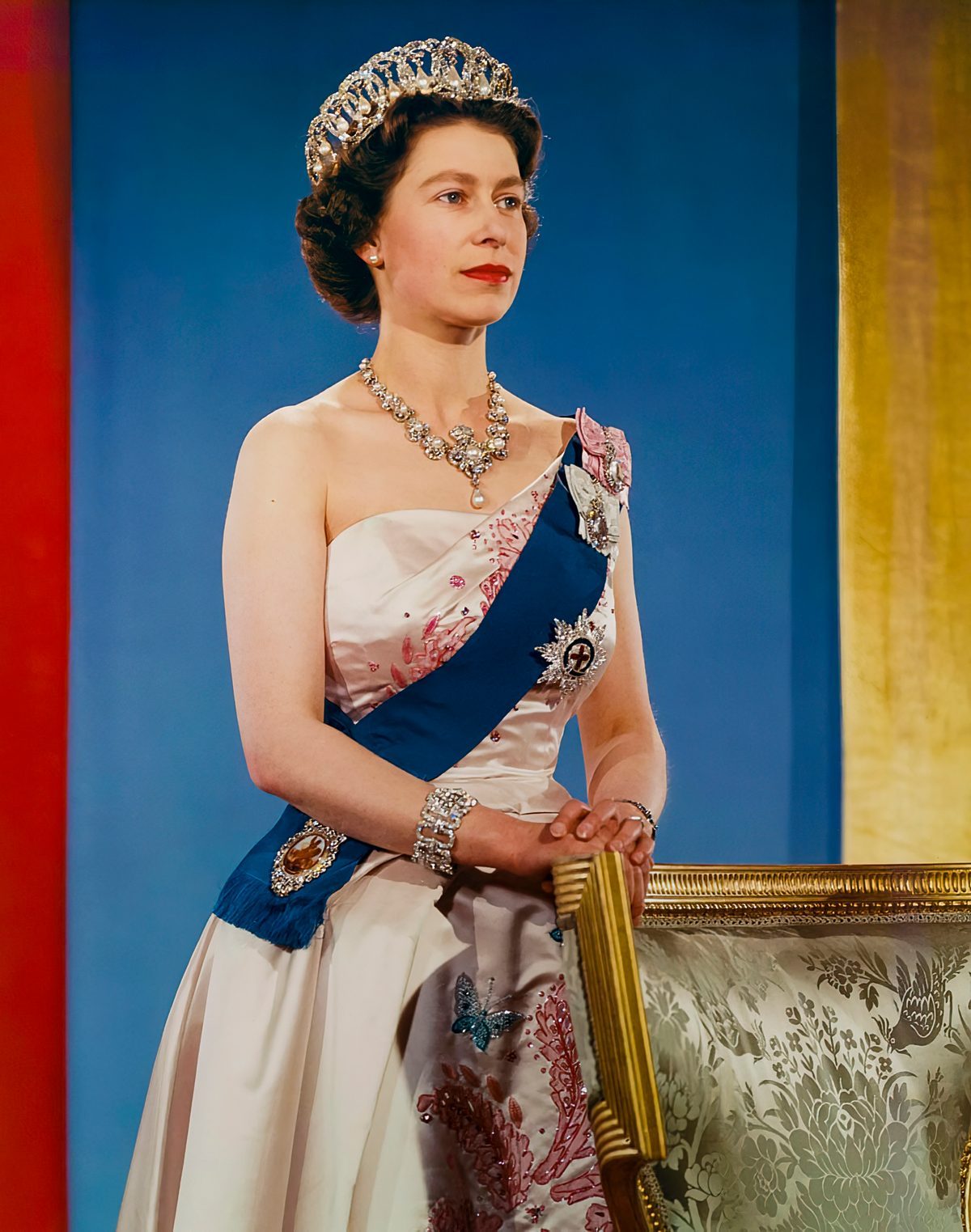
📷 Photo: Donald McKague. Public domain via Wikimedia Commons.