He had never expected the throne. Never trained for it. Never wanted it. Nearly a century ago, as shadows of anxiety darkened pre-war Britain, a reluctant king found himself on the precipice of monumental change. The night before his coronation, King George VI, known affectionately as Bertie, knelt alone in his study and wept. He confided to his diary that he felt 'wholly unprepared' for the weighty mantle handed to him after his brother's abdication. Yet, as dawn approached, he stood, dusted off the skepticism, and prepared to step into history. The following morning, as he walked into Westminster Abbey, he was not just becoming king; he was becoming a symbol of resilience for a nation in turmoil.
A Crown Unseen
Born into the world as the second son of King George V, Prince Albert Frederick Arthur George was never intended to wear the crown. He was groomed for a life of dutiful service from the background, thriving quietly without the glare of the spotlight reserved for an heir. He married the effervescent Lady Elizabeth Bowes-Lyon, whose double dose of charm and approachability endeared them both to the British public. Their lives appeared comfortably set, until the seismic decision in 1936 by his brother, King Edward VIII, rocked the foundation of royal expectations.
King Edward's abdication, fueled by his ardent wish to marry Wallis Simpson, an American divorcee, thrust Bertie abruptly into a role he neither anticipated nor actively sought. The transition was a daunting spotlight shift from tranquil shadows to the throne’s luminary presence—an endeavor daunting not only due to the unexpected nature of its occurrence but also given his own well-documented battle with a childhood stammer that often rendered communication a formidable challenge.
The Night of Tears
The heart of Bertie’s coronation tale, however, beats strongest on the eve of May 12, 1937. Amid the dawn of a new kingdom, historians agree that the weight of expectation bore heavily on his shoulders. It was in the quietude of his study at Buckingham Palace that the king felt the full gravity of his impending anointment. Kneeling before solitude, fear, and faith, the new king wept—a poignant acknowledgement to himself of the momentous path that lay ahead.
He recorded this moment in his diary, articulating uncertainty yet sheer determination. "I chased away any fluctuation of doubts," he wrote, as quoted in later biographies. Below the surface of ceremonial splendor that Britain anticipated the following day, the king's tears reflected not failure, but rather a profound acknowledgment of the human heart's vulnerability in the face of unintended destinies.
The Abbey Awaits
Morning unfolded to the tune of ceremonial anticipation, and Westminster Abbey stood draped in royal regalia. History was ready to etch another chapter amidst its ancient pillars. Despite the delicate burden he bore, George VI emerged into the public eye embodying a quiet strength that had eluded him the night prior.
His entrance into Westminster Abbey was saturated with a blend of dignity and solemnity. An ensemble of Britain's elite, foreign dignitaries, and spirited citizens bore witness to this noble endeavor. As orchestrated choirs sang and richly embroidered banners soared, the new king walked forth, every step an echo against the marble floors—resonating both ceremonial grandeur and courageous introspection.
The coronation ceremony was an intricate tableau—a dance of traditions steeped in history, as sovereign and state renewed their vows to one another. The imperial crown, studded with diamonds and weighted with legacy, found its rightful place atop a head committed not by desire but by duty.
From Prince to Protector
George VI's coronation was more than a rite of passage into kingship; it marked the dawn of his emergence as a bulwark in an age of disquiet. With Europe on the cusp of conflict, Britain needed a leader who could stand strong against the brewing storm clouds of war. His unexpected yet steadfast monarchy fostered resilience; bolstering Britain’s morale amidst the adversities of World War II. His resolve and the queen's spirited presence became symbols of unity—rallies against despondency which encouraged the famous wartime phrase, "Keep Calm and Carry On."
Such strength belied a man once shaking with trepidation. Beneath pearls of royal ornamentations throbbed a heart committed to his people. His transformation from prince to protector was not merely the adornment of a crown but the manifestation of courage amid personal strife.
The Legacy of Duty
Decades have now passed since the coronation of King George VI, yet his legacy endures—a poignant reminder that responsibility often chooses us, bearing gifts of courage we could never expect. The tears that fell within the walls of Buckingham Palace on the night before his coronation were not surrendered to despair, but instead became seeds from which the steadiness of a monarch blossomed.
Today, reflections upon his unexpected ascension and subsequent reign remind us of the indelible obligation the British monarchy holds as symbolic custodians of continuity and fortitude. King George VI's journey from reluctant inheritor to beloved ruler is celebrated not as mere history, but as an enduring narrative of perseverance, embodying the spirit of duty that defines the monarchy.
In the collective memory of the British people, King George VI stands as a testament to honorably facing the unexpected with grace, supporting the institution of monarchy through turbulent times, a beacon of nobility's true essence—not defined by chosen destiny but by the unity and resilience it nurtures.
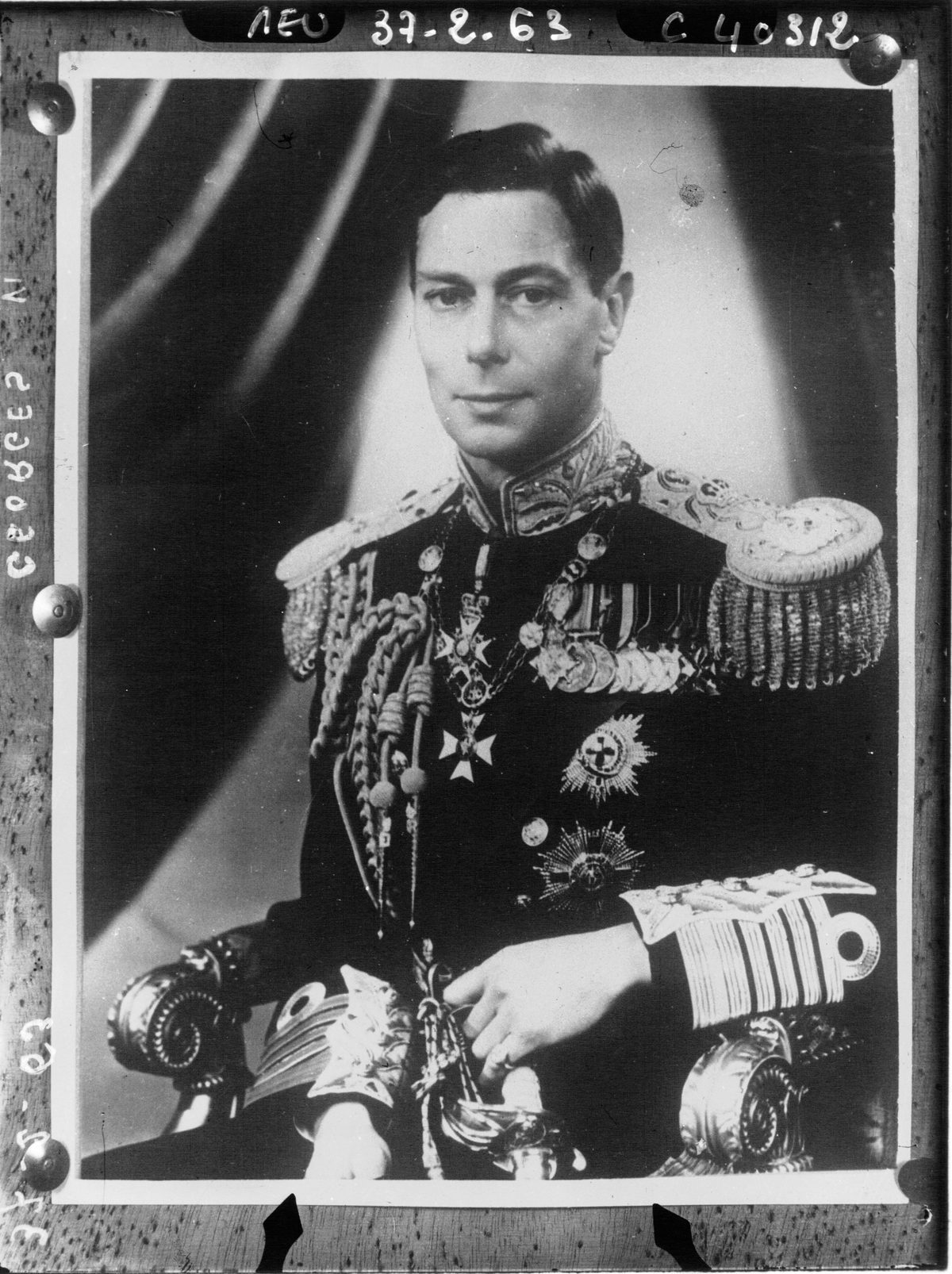
📷 Photo: Agence de presse Meurisse. Agence photographique (commanditaire). Public domain via Wikimedia Commons.