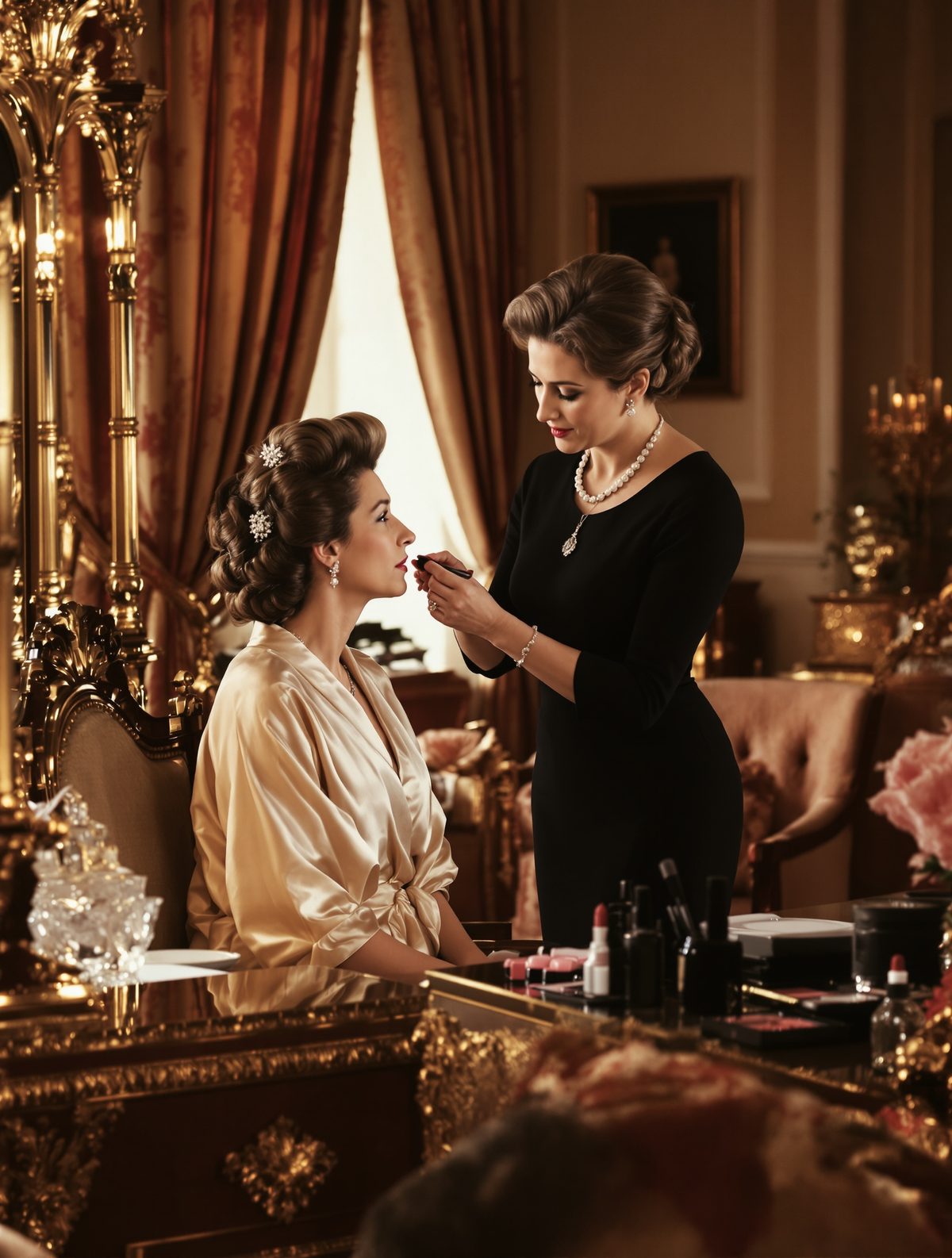
Behind the polished facade of royal appearances lies a carefully guarded secret that the Palace protected for over four decades. While Hollywood stars and fellow royals employed teams of professional makeup artists, Queen Elizabeth II maintained one of the most intimate and trusted relationships in royal history. Each morning, in the private quarters of Buckingham Palace, Windsor Castle, or Balmoral, her beloved dresser Margaret "Bobo" MacDonald would gently apply the Queen's lipstick and powder her face with the same devotion she had shown since the future monarch was a young princess.
This extraordinary arrangement, which lasted from the 1950s through the 1990s, reveals not just the Queen's preference for simplicity and trusted companions, but also offers a rare glimpse into the deeply personal relationships that sustained the monarchy behind closed doors.
The Woman Behind the Royal Routine
Margaret MacDonald was far more than a dresser—she was confidante, companion, and keeper of royal secrets. Born in Scotland in 1904, "Bobo" joined the royal household in 1926 as nursemaid to the then-Princess Elizabeth, beginning a relationship that would span an incredible seven decades. When other members of the royal staff came and went, Bobo remained, earning an unprecedented level of trust and access to the monarch.
Living in her own suite of rooms above the Queen's private apartments at Buckingham Palace, MacDonald was one of the few people who could enter the royal presence without permission. This unique position made her the natural choice when it came to the Queen's daily beauty routine. While other royals of the era were beginning to employ professional makeup artists for both public and private occasions, the Queen preferred the gentle, familiar touch of the woman who had known her since childhood.
The arrangement spoke to Elizabeth II's character in profound ways. Rather than seeking the glamorous expertise of London's top beauty professionals, she chose continuity, trust, and the comfort of routine. Each morning, Bobo would carefully apply a light dusting of powder, a touch of rouge, and the Queen's signature lipstick—creating the understated elegance that became synonymous with the British monarch.
Maintaining the Royal Mystique
The Palace's decision to keep this arrangement secret was deliberate and strategic. Royal protocol traditionally maintained an air of effortless perfection around the monarchy, suggesting that the Queen's composed appearance was somehow natural rather than carefully cultivated. Admitting that Her Majesty required daily makeup application—even by her trusted dresser—might have seemed too ordinary, too human for an institution built on mystique and divine appointment.
This discretion extended to official royal portraits and public appearances. When photographers captured the Queen at state dinners, garden parties, or ceremonial occasions, the subtle artistry of Bobo's daily routine was invisible to the public eye. The Queen appeared polished and regal, but never overly made-up, striking the perfect balance between royal dignity and feminine grace.
The secret also protected the intimacy of the Queen's private world. While press and public were fascinated by royal fashion choices and hairstyles, the daily ritual between monarch and dresser remained sacred and private. This boundary between public duty and personal life became increasingly precious as media attention intensified throughout the decades.
A Relationship Beyond Protocol
What made this arrangement truly extraordinary was the depth of the relationship between Elizabeth II and Bobo MacDonald. In a world governed by strict protocol and formal hierarchy, their bond transcended traditional royal-servant boundaries. MacDonald was often described as having an almost maternal relationship with the Queen, offering not just practical assistance but emotional support and companionship.
The daily makeup routine became more than mere grooming—it was a moment of calm connection in the Queen's demanding schedule. While official engagements required formal protocol and public face, these private morning moments allowed for genuine interaction between two women who had shared a lifetime together. Bobo knew exactly how the Queen preferred her makeup for different occasions, understanding instinctively when a slightly bolder lip was needed for evening events or when the subtlest touch would suffice for morning appointments.
This personal knowledge extended beyond cosmetics to an intimate understanding of the Queen's moods, preferences, and needs. MacDonald could read the monarch's expression and adjust her approach accordingly, whether the day ahead held exciting ceremonial duties or challenging political meetings. The makeup routine became a daily ritual of care and preparation, both physical and emotional.
The Evolution of Royal Beauty Standards
The Queen's reliance on Bobo MacDonald for her makeup coincided with dramatic changes in beauty standards and the cosmetics industry. The 1950s through 1990s saw the rise of professional makeup artistry, with celebrities and public figures increasingly employing specialists for their appearances. Yet the Queen remained faithful to her traditional approach, perhaps recognizing that her role required different considerations than those of film stars or socialites.
While other members of the royal family began working with professional artists for major events—particularly as television coverage made visual presentation increasingly important—the Queen's routine remained unchanged. This consistency reflected her broader approach to royal duties: preferring evolution to revolution, tradition to trend. Her makeup style remained elegantly understated throughout the decades, never dramatically shifting with fashion but maintaining a timeless quality that served her well across changing eras.
The arrangement also reflected practical considerations unique to royal life. Professional makeup artists might have brought technical expertise, but they couldn't match MacDonald's understanding of the Queen's skin, preferences, and the specific requirements of royal duties. Bobo knew exactly how makeup would appear under different lighting conditions, from the soft glow of state dining rooms to the harsh glare of television cameras.
Legacy of Trust and Tradition
When MacDonald retired in 1993 and passed away just months later, the Queen lost not only her dresser and makeup artist but one of her oldest and most trusted companions. The end of their daily routine marked the conclusion of an era, representing the kind of deep, personal relationship that became increasingly rare in the modernizing monarchy.
Following Bobo's departure, the Queen gradually began working with professional makeup artists for certain occasions, though she maintained much of her private routine herself. The transition reflected broader changes within the royal household, as traditional roles evolved and new staff brought different expertise to their positions.
The story of Queen Elizabeth II and Bobo MacDonald's daily makeup ritual reveals something profound about the nature of royal life—the fundamental importance of trust, continuity, and personal connection within an institution often seen as formal and distant. For forty years, in the quiet privacy of royal apartments, two women maintained a relationship that transcended protocol and hierarchy, creating moments of genuine human connection within the grandeur of monarchy. This extraordinary arrangement reminds us that even queens need the comfort of familiar hands and trusted companions, and that sometimes the most important royal relationships are those hidden from public view, built on decades of shared mornings and mutual devotion.