On the Eve of Destiny: A Daughter's Dilemma
Mary II of England, hailed far and wide as both a preserver of Protestantism and a harbinger of hope, was poised on the brink of destiny. As the eve of her coronation in 1689 slowly waned, the atmosphere in Whitehall was a frenzied celebration of what was to come. Yet, amid the anticipation and jubilation, Queen Mary II experienced a solitary agony. Behind closed doors, away from the adoring crowds and vibrant court, she wept for the father she had helped dethrone, her burden of monarchy weighed heavily by a daughter's loyalty.
This pivotal moment in British history, though marked by a jubilant transition of power, was also a complex tapestry of personal sacrifice and profound emotional conflict. Mary, in the quiet of her chamber, was a sovereign wrapped in the sorrow of filial piety — readying to accept the crown her father, James II, once bore but lost.
A Kingdom at Crossroads: Political Turmoil and a "Glorious" Revolution
The late 17th century was no gentle era for England’s monarchy. A nation steeped in religious strife found itself questioning centuries-old traditions, primarily due to James II's unwavering Catholicism amidst Protestant dominance. His reign was marked by distrust, as his policies favored his faith, leading to fears of a Catholic dynasty.
The answer came in a swift and bloodless revolution that was anything but harmonious on a personal level. William of Orange, James's son-in-law, emerged as the champion of Protestantism. With the specter of an impending invasion, England turned toward Mary, James's eldest and deeply Protestant daughter, to save its future from potential Catholic hegemony.
Through the Revolution of 1688—often referred to as the “Glorious Revolution”—William and Mary were declared joint sovereigns by the very Parliament that had supplanted her father's claim to the throne. Yet beneath the public pageantry lay the heart of a daughter torn between allegiance to her father and duty to her realm.
The Royal Court: A Place of Grandeur and Guilt
Whitehall Palace, the grand locus of English power, was an intricate world unto itself. On the surface, the court flickered with opulence and ceremony. The great and the good of England filled its halls, all too willing to support the transfer of power from James to his more palatable daughter and her husband. This support, while outwardly unanimous, belied the inner grief felt by Mary—grief sequestered away in her private quarters.
The court itself was a living tableau of loyalty and intrigue. Flags waved, ministers strategized, and loyalists lifted their glasses to the new order. But as midnight approached, the palace walls, thick with history, seemed to absorb Mary’s silent lamentations. It was a spectacle of contradictions—a public theatre of celebration in the echoing halls and a sombre dirge relegated to the shadows.
Meditations on Monarchy: The Crown and the Heart
Mary’s reflections, as she cried that quiet night, likely spanned the personal and political expanse. Her path to the throne came at the cost of familial bonds, a reality complicated by the societal expectations of monarchs who were to serve as both figureheads and familial patriarchs or matriarchs. Her tears, solitary and unseen, watered this complex soil of power and personal duty.
Perhaps she grieved for the father who had hoped for another chance to govern reconciled with his kingdom. Or she foresaw the challenges of ruling jointly with William, an arrangement novel in the annals of English monarchy. In shepherding the crown into a new chapter, she faced the not entirely unprecedented but nonetheless profound separation between being a beloved daughter and a sovereign. Each tear marked a question of identity—was she her father’s daughter or her kingdom’s queen?
Legacy of the Heart: Mary II’s Enduring Influence
Mary II’s reign alongside William is remembered fondly as a period of remarkable growth and stability—an era that ushered in the constitutional monarchy we recognize today. Her resolution despite personal anguish set a precedent, underscoring the resilience required of royals who must oftentimes place country above kindred.
Her story speaks earnestly to the eternal dance between duty and devotion. The challenges she faced remind us that even in an age when the divine right of kings was a prevailing doctrine, monarchs were deeply human, subject to the same loves and losses as those they governed.
The legacy of Mary II illustrates the weight of the crown that, while regal and resplendent on the outside, bears witness to the solitary and storied journey of the heart. The British monarchy today celebrates this duality—the public duty entwined irreversibly with personal sacrifice—and Mary’s silent night of tears echoes as a test of her strength and her humanity.
Today, as the modern monarchy continues to evolve, it is in such stories of personal sacrifice and resilience that we find the profound connection from past to present. The emotive dance between allegiance and affection echoes still, reminding us why the monarchy endures as a cherished emblem of our shared history and identity.
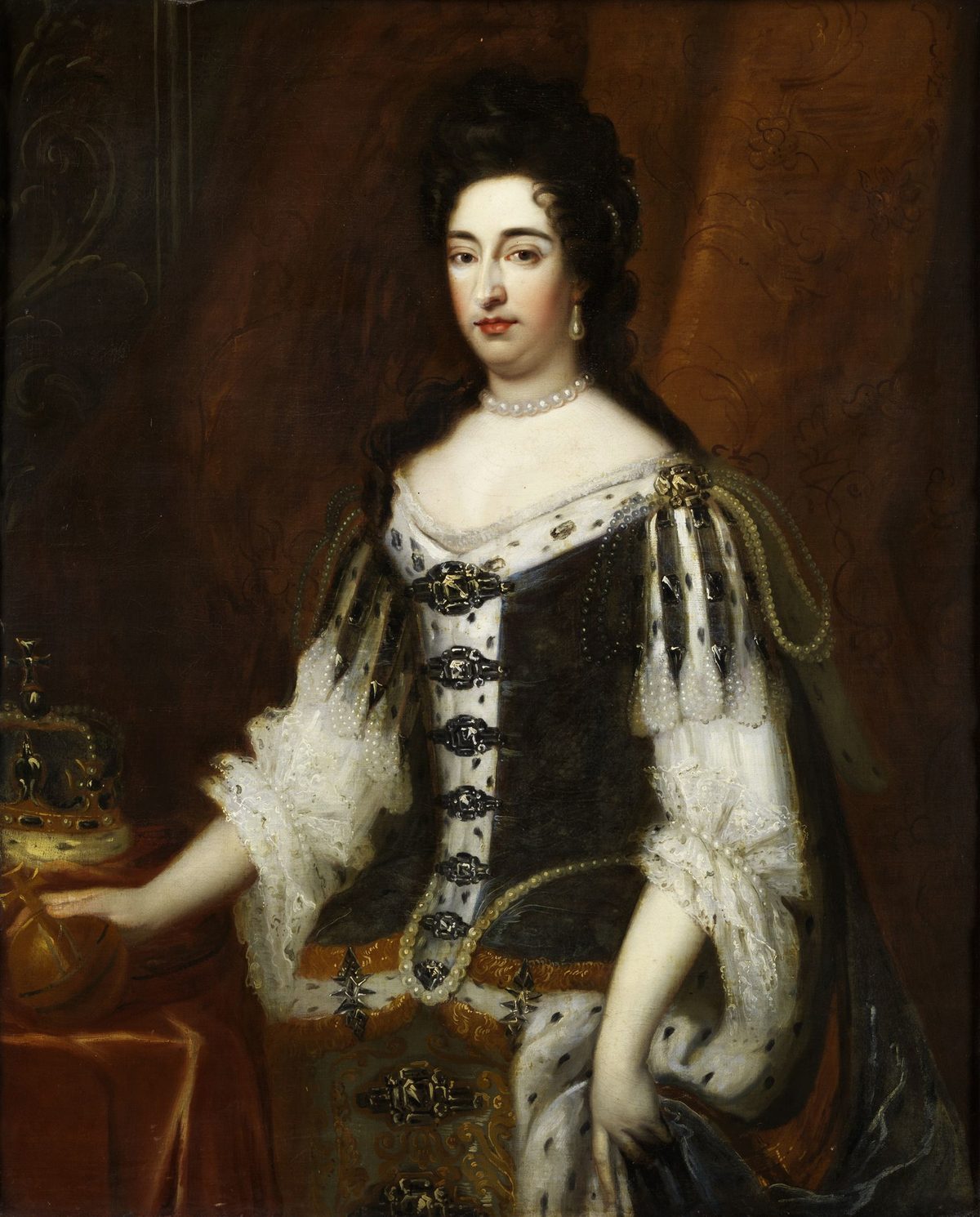
📷 Photo: After Godfrey Kneller. Public domain via Wikimedia Commons.