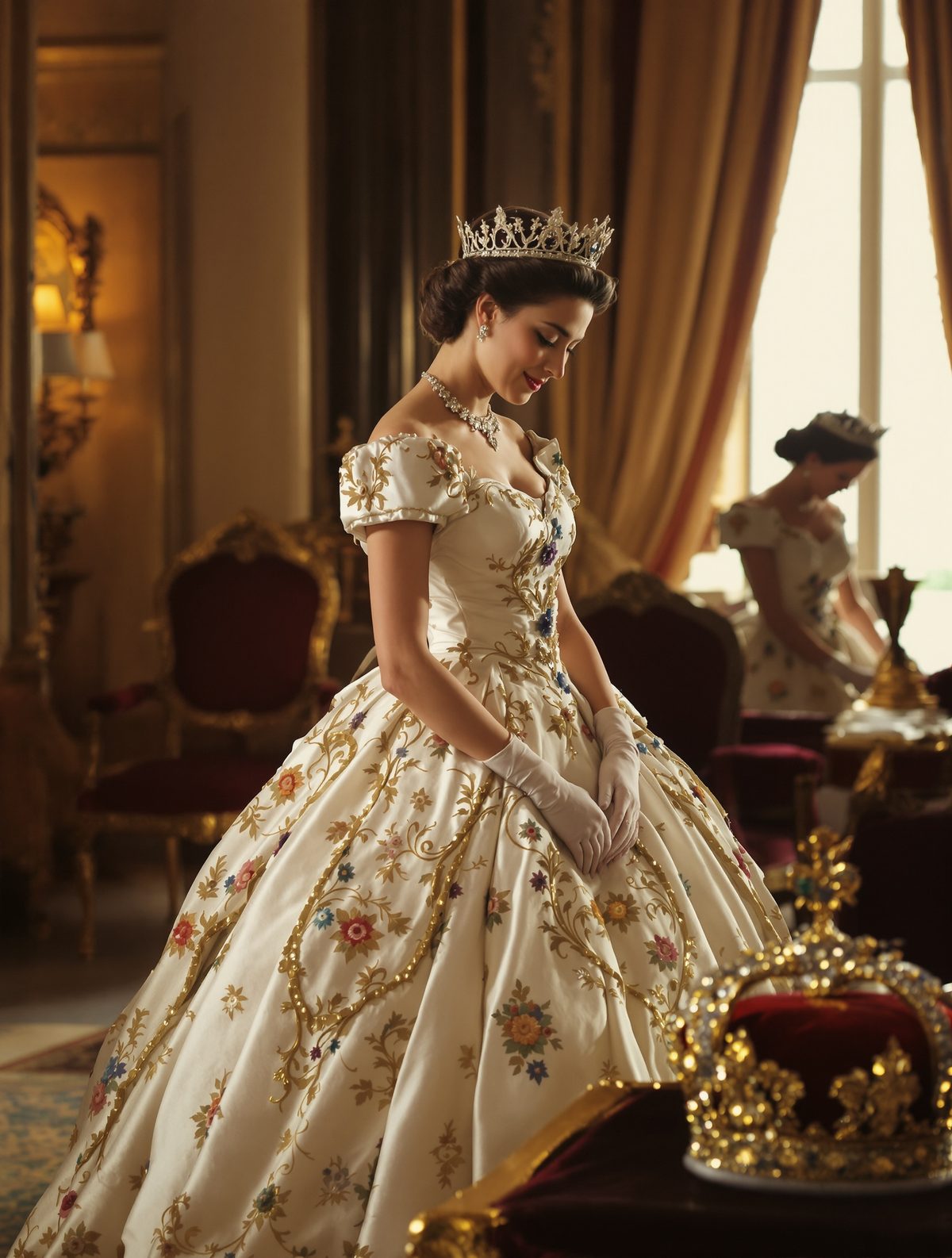
On a crisp June morning in 1953, the world watched as a young Princess Elizabeth became Queen. It was a momentous occasion adorned with the pageantry the British monarchy is so renowned for. Yet, behind the scenes, it was the choice of a single thread that almost altered this historic day. As Elizabeth prepared for her coronation, she noticed a small yet significant embellishment on her dress—a four-leaf shamrock meticulously sewn by her dressmaker, Norman Hartnell, hidden among the intricate embroidery of her gown. Unannounced and unasked, this symbolic addition was a gesture of luck and protection, one that briefly paused the ascending queen when she first glimpsed it, before softly whispering, "For luck." What could have led to a nearly refusals turns out to be a heartfelt story rich in tradition, trust, and the unseen bonds within the royal household.
The Vision of Norman Hartnell
Behind the exquisite coronation gown was the creative genius of Norman Hartnell, a fashion designer whose name was synonymous with royal couture. Hartnell had been a trusted couturier of the family, crafting garments that combined elegance with meaning. For Elizabeth's coronation dress, he aimed for nothing less than sartorial splendor, embracing emblems that represented the nations under her new reign, each stitched precisely to reflect unity and grace.
Hartnell's preparation was both an artistic and patriotic endeavor. Months were spent selecting fine silks and golden threads, while intricate symbols such as English roses, Scottish thistles, and Welsh leeks were delicately embroidered. But once Hartnell had completed the final sketch, an unmistakable sentiment urged him to add a secret gamble—a four-leaf shamrock. This addition was not just a nod to the rich tapestry of the United Kingdom, but a personal talisman for a young woman about to take on an extraordinary role.
Morning of the Coronation
The morning of June 2nd, 1953, was buzzing with anticipation at Buckingham Palace. Crowds thronged the streets, and the air was filled with expectancy and excitement. While the nation prepared to witness history in the making, inside the palace, the atmosphere was a blend of meticulous preparation and inevitable jitters.
As Princess Elizabeth donned the gown, she was poised to carry the weight of historical continuity upon her shoulders. In this moment of immense pressure and expectation, it was the very last touches—deliberate and delicate—that nearly unraveled everything. The hidden shamrock, symbolizing so much beyond its physical presence, made its mark upon her sight.
Why had Hartnell been secretive about this? In part, perhaps, to surprise; more likely, however, he had envisioned a private connection, an unseen talisman nestled to guide her through her ceremonial passage. The realization sparked hesitation but culminated in a smile—a silent acceptance between a queen and her couturier.
The Role of Tradition & Symbolism
The British monarchy is steeped in tradition and symbolism, each piece telling a part of a larger historical narrative. Coronation gowns are no exception; they reflect the personal and the political. For Elizabeth, combining these elements was crucial to portray the unity of the nations she was to lead. Acknowledging different cultural motifs in her attire was more than a fashion choice; it was an encompassing nod to the bond between sovereign and subjects.
The introduction of the four-leaf shamrock was, perhaps, Hartnell's gentle reminder of the personal amidst the pomp and circumstance. With its ties to Irish heritage and symbols of luck, it served as a private gesture, reflecting Elizabeth's own ties to the wider commonwealth and complexities that lay beyond the surface.
A Legacy of Gowns That Tell Stories
Elizabeth's coronation dress stands as a testament to sartorial brilliance and the layers of storytelling woven into royal apparel. The monarchy's garments are more than societal symbols; they are repositories of history, emotion, and unspoken bonds across royal courts and designer ateliers.
The behind-the-scenes stories of royal garments remain fascinating aspects of royal lore. They humanize iconic figures, shedding light on the intricate tapestry of their lives—personally delicate yet publicly monumental. Hartnell's four-leaf shamrock reminds us of the nuanced, often imperceptible threads that connect history's high moments to private intimacies.
Reflection on Monarchies Past and Present
As we reflect on Elizabeth's storied reign, a different gaze emerges, one that bridges the public pageantry with the subtle acts unseen. The shamrock, a small token on a grand stage, is a reminder of the humility and humanity within the royal narrative—a narrative that continues to inspire interest and affection today.
In today’s world, where traditions continue to evolve, the symbolism threaded into each royal act and garment still captivates those who cherish the monarchy. It's a reminder that while times change and monarchs rise, the heart of the monarchy remains steadfast, accumulating stories not only through grand policies and parades but also in subtle, private moments.
By embracing these details, we dive into a realm of richness and depth, celebrating a monarchy that rests not just in its visible grandeur but in the whispered tales tucked into its silken folds—like Hartnell's shamrock, both practically hidden and perfectly placed.