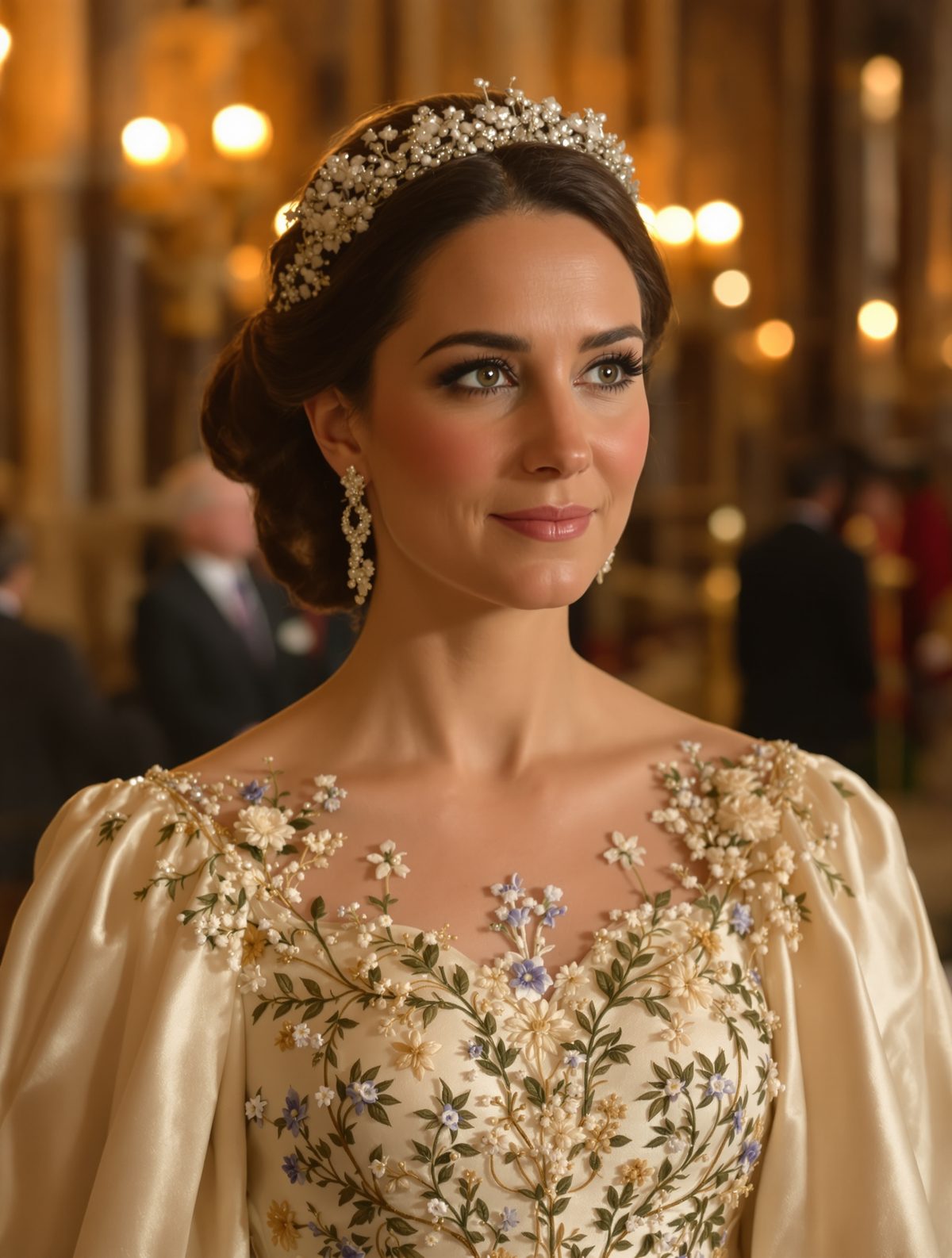
At the heart of King Charles III's coronation in May 2023 lay a tapestry of tradition interwoven with a quiet, personal tribute. Amidst the pageantry and splendour, Catherine, Princess of Wales, stepped into Westminster Abbey wearing a gown imbued with meaning that transcended the fabric. Enrobed in ivory silk, the gown was a masterpiece of craftsmanship, adorned with the emblems of England, Scotland, Wales, and Northern Ireland. Yet hidden tellingly among these celebrated national symbols was an intimate nod towards a figure whose shadow continues to grace the corridors of the British monarchy — Diana, Princess of Wales. A single sprig of forget-me-nots, her favourite flower, spoke volumes in its silent testament.
The Coronation Ceremony: A Modern Tale Woven from Tradition
The coronation of King Charles III marked a pivotal moment in the tapestry of British monarchy. It was a ceremonious blend of deep-rooted traditions and modern significance, echoing the balance King Charles seeks to maintain in his reign. As the royal family gathered, it was a scene replete with continuity and change, marking the first coronation since Queen Elizabeth II's in 1953. Inside the venerable Westminster Abbey, a history-laden venue for such illustrious occasions for over a millennium, the air was charged with anticipation.
For the Princess of Wales, the event was a moment to showcase a symbol of unity and homage, woven into the narrative of a new era. Her gown, designed with meticulous care and profound thought, poignantly unified the United Kingdom's nations through its floral motifs: the English rose, the Scottish thistle, the Welsh daffodil, and the Irish shamrock. But the inclusion of forget-me-nots was a deliberate, unobtrusive commemoration, acknowledging a bond with the past.
A Subtle Tribute: The Language of Flowers
Within the royal family, symbolism is woven tightly into the fabric of public life. It is an unspoken tradition that uses the subtle language of flowers and motifs to convey messages of respect and remembrance. Catherine’s choice to incorporate forget-me-nots, Diana's adored blossoms, whispered of a connection and continuity across eras. The flower’s name, a plea not to be overlooked with time, resonated with Diana’s enduring legacy of compassion and warmth.
Diana, Princess of Wales, was synonymous with her charitable works and human touch, attributes that endeared her to people globally. Her love for forget-me-nots was more than just sentiment; it was a representation of her enduring commitment to care and remembrance. By including this small, significant flower in her gown, Catherine crafted a heartfelt gesture that was public yet profoundly personal, forging a bridge between the past and her own presence in the royal family.
Bridging Generations: Catherine’s Unique Role
Catherine, in her role as the Princess of Wales, carries a mantle imbued with history yet evokes a grace and modernity that invigorates the monarchy. While her public responsibilities have burgeoned over the years, she has consistently maintained warmth and poise reminiscent of Diana. Through her sartorial choices and public demeanour, Catherine melds respect for royal protocols with a contemporary edge.
The decision to sew a sprig of forget-me-nots into her coronation attire speaks to this balance of tradition and novelty. It underscores her unique position within the royal family, one that respects the past while steadily looking forward. Creating a tangible connection to Diana was not just an act of filial piety but a guiding principle—a reminder of the qualities and personal touch Diana brought to her role. It is also a gesture that subtly cements Catherine's commitment to the benevolent values Diana championed.
Crafting a Legacy Through Fabric and Flowers
The royal wardrobe often serves as a canvas for storytelling—of eras, individuals, and ideals. Catherine's coronation gown exemplified this narrative style, not merely as a garment but as a crafted legacy that spoke to the hearts of onlookers around the globe. Opting for symbolic floral elements, she engaged the public in a tale of unity, remembrance, and admiration. The gown spoke not only of national pride but also of personal gratitude and legacy.
This act of weaving Diana's cherished blooms into such a pivotal moment in British history highlights a reverence for the past while fostering hope for the future. It was a subtle nod to Diana's maternal affection, alongside a marking of time transforming through reigns. Simultaneously, it acknowledged the enduring spirit of Diana that persists within the monarchy's evolution.
Continuity and Hope: The Gown as a Symbol
As spectators from around the world admired Catherine’s gown, it served as an epitome of more than just royal finery. Its quiet homage allowed Catherine to step in her own shoes while honouring Diana’s legacy with grace and sensitivity. In a ceremony marking a monarch’s ascension, her choice in attire reflected themes of heritage, identity, and the human yearning to connect across time.
This unassuming floral tribute encapsulates how the royal family is continuously reshaping its narrative, merging past with the present, serving as symbols of continuity and hope. The inclusion of forget-me-nots reflects a vivid familial memory—a poignant reminder that the spirit of loved ones lost continues to guide a generational story.
The golden threads of history are never truly broken; they are woven into the fabric of the future, stronger for their links to the past. Within the constraints of royal protocol, Catherine’s sartorial nod bridged two generations of women who have embraced their roles with commitment and care, carving everlasting imprints in the story of the British monarchy, with whispers of love and homage stitched silently into their legacy.