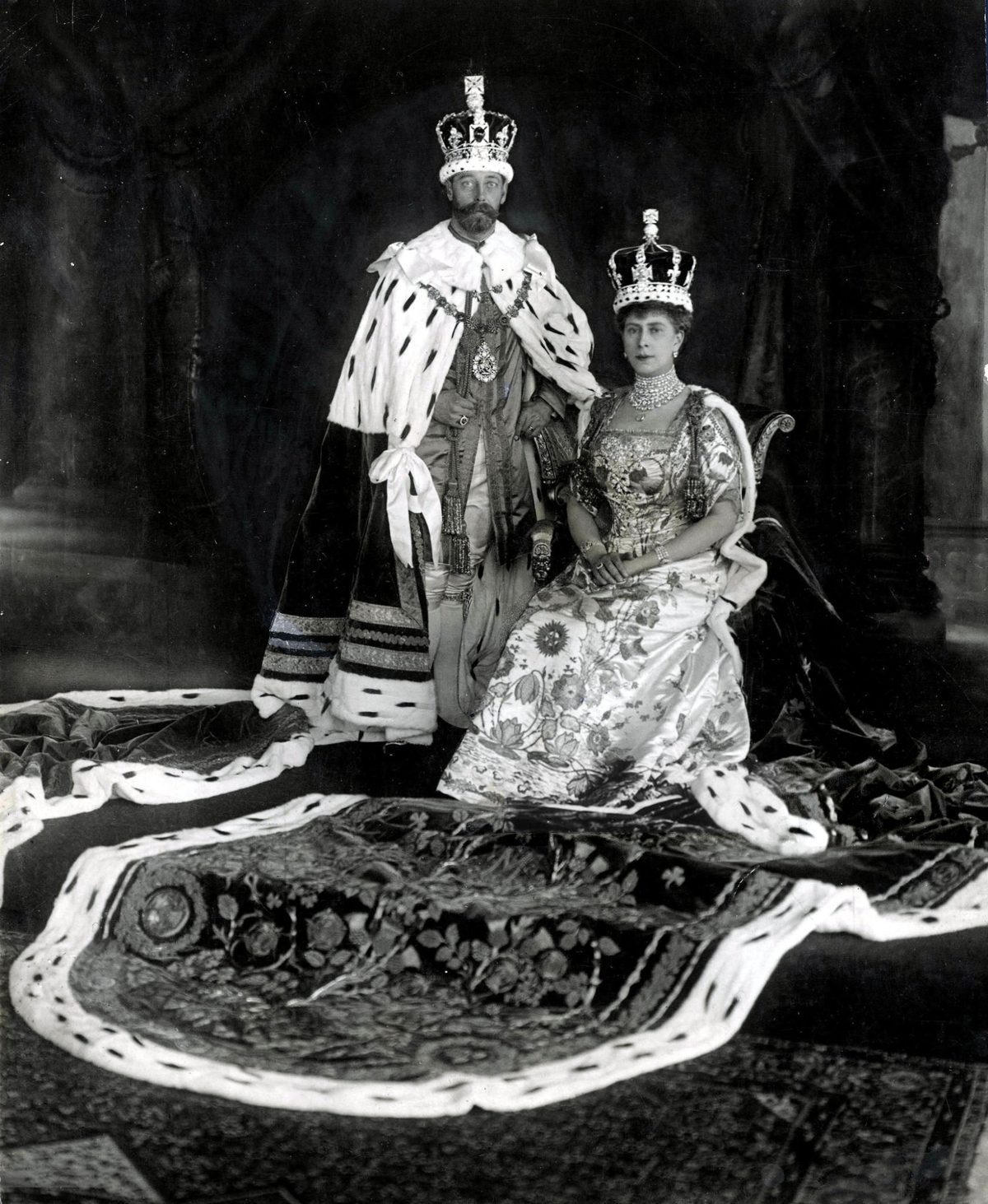
In the spring of 1937, beneath the ceremonial veil of Westminster Abbey, Queen Mary held her head high, stepping purposefully into an event awash with historic significance—the coronation of her son, King George VI. Bathed in a cascade of silver and diamonds, her resplendent gown was not merely a garment; it was an articulation of resilience in thread and embroidery. The vision of Queen Mary in that moment became an enduring symbol, her sartorial elegance weaving a story of steadfastness amid chaos. For a nation desperately clinging to stability, her appearance echoed through the halls of history as both a powerful declaration and a comforting whisper: We endure.
The Resilience Behind the Regalia
Queen Mary, born Princess Victoria Mary of Teck, was no stranger to the rigor and duty demanded by her royal position. By 1937, she had already traversed an era marked by profound upheaval—from the harrowing trenches of World War I to the seismic political shifts that left the world quaking in the early twentieth century. That spring, however, brought personal tumult of an unparalleled kind. The abdication crisis of 1936, in which Edward VIII relinquished the throne for love, had shaken the foundation of the monarchy itself. In the wake of that disruption, Mary's other son, Albert, known thereafter as George VI, ascended to the throne amidst manifold challenges.
The strain of these events was further burdened by a personal sorrow. Only months before the coronation, Mary endured the heartache of burying her youngest son, Prince George, Duke of Kent. Yet amidst profound grief and public spectacle, Mary understood the significance of appearances—not just as fashion, but as emblematic statements of stability and continuity.
Crafting a Legacy in Silk and Silver
The gown Queen Mary chose for the coronation of George VI was nothing short of a masterpiece. It was designed with acute attention to both tradition and personal narrative, honoring her place within the monarchy's past while gesturing towards a hopeful future. Crafted from shimmering silver lamé and intricately embroidered with gold thread and diamond accents, the garment was meticulously fashioned by the royal dressmaker, Norman Hartnell, whose work would eventually become renowned for its precision and imaginative detail.
The fabric itself was symbolic—a gleaming silver surface that caught the light, reflecting the dignified resilience of its wearer. The design featured the lotus flowers and English roses, emblems deeply rooted in the royal iconography, gracefully intertwining across the gown. Alongside such traditional motifs, the discreet addition of thistle and shamrock embodied a gesture of unity and cohesion within the United Kingdom's diverse fabric. By choosing such motifs, Mary paid homage to the entirety of the British Isles, an ever-relevant consideration amidst fluctuating political winds.
A Court in Transition
The coronation ceremony of 1937 marked not only the solemn crowning of King George VI but also a poignant reassembling of the royal identity amidst modern pressures. The court was in transition, embraced by a viewership that extended beyond the abbey's stone walls and into the homes of citizens, thanks to the burgeoning age of radio. The broadcast of the ceremony was one of the earliest to be publicized so widely, signifying a new era of engagement between the monarchy and the people. In this context, every detail carried significance, and no detail was more striking than Queen Mary’s gown.
While George VI ascended the throne with the intent of restoring and reassuring, his mother's presence provided an even deeper sense of continuity. Her fashion choice was eschewing the distractions of the times, and in juxtaposition with George’s naturally demure disposition, Mary's shining presence ensured the moment spoke volumes to the steadfast nature of the crown and its legacy
Lasting Influence: Fashion and Beyond
Queen Mary’s choice to wear a gown epitomizing grace under pressure resonated far beyond the grand stonework of Westminster Abbey. The image became timeless, an exemplar of how fashion is not merely aesthetics but narratives we wear, telling stories of power, resilience, and human fortitude. The gown’s influence permeates the royal garment lineage; its echoes visible in the ceremonial regalia of subsequent generations, particularly within the deeply symbolic wardrobes of queens and princesses who took cues from Mary’s masterful balance of homage and innovation.
Moreover, the legacy of Queen Mary’s gown continues to be studied and revered by fashion historians and enthusiasts, its stitches threading through discussions of how clothing can surpass function to become art—living messages on human perseverance.
Lessons in Thread: An Enduring Message
As we journey deeper into the twenty-first century, Queen Mary’s coronation gown from 1937 remains a vivid reminder of the strength and continuity embodied by the British monarchy. Her choice of garment was much more than a mere fashion statement—it was a declaration, an embodiment of endurance against a backdrop of political discord and personal tragedy. It underscores how, through the years, fashion can articulate hope and persistence in its embroidered whispers.
In today’s world, the relevance of Queen Mary’s message of resilience endures. As we face our own challenges, her story invites us to look beyond the surface, to seek strength in our narratives, and to embrace the fortitude that threads through the fabric of our human experience—woven across generations, stitched into the heritage of both the palace and the public. Her silver and diamonds remind us that while the world may change, the legacies we craft from courage and grace withstand the test of time. We endure.
📷 Photo: W. & D. Downey. Public domain via Wikimedia Commons.