Draped in the rich fabric of history and woven with the subtleties of remembrance, a single sartorial choice by Catherine, Duchess of Cambridge, on a somber November day in 2011 whispered a message louder than any spoken words could muster. Her first Remembrance Sunday as a member of the royal family was under the watchful gaze of the nation, handled with the elegance and warmth that have since become her signature.
The Power of Subtlety
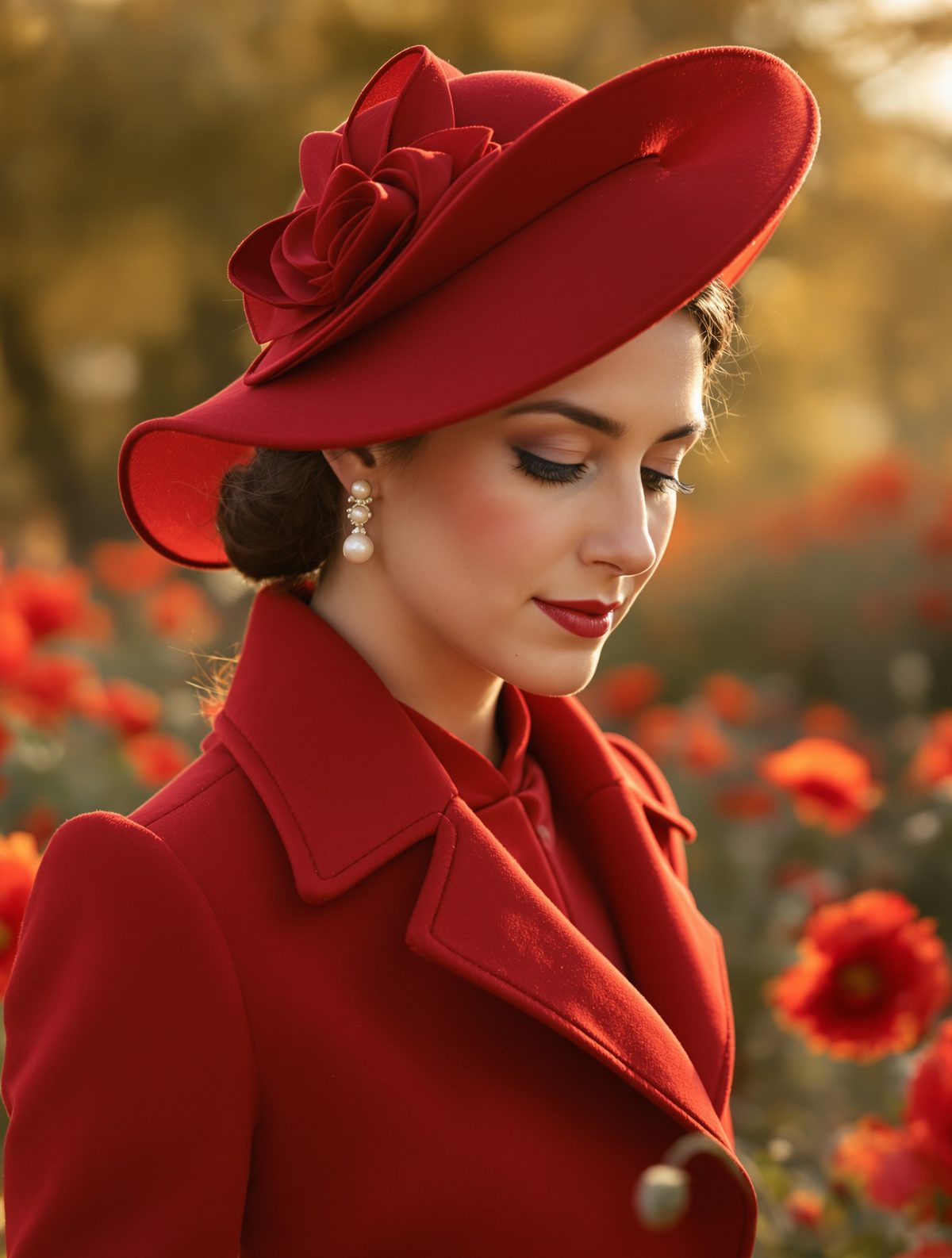
On November 13, 2011, all eyes were fixed upon the balconies of the Foreign and Commonwealth Office, traditionally occupied by royal family members during the Remembrance Sunday service. Amidst a sea of solemn black coats and restrained patterned hats, Catherine stood out in a bespoke Alexander McQueen coat dress, which bore the resemblance of a deep poppy field, wrapped in the symbolism of the day.
The coat's color—a striking deep red—was no arbitrary choice. It evoked the blood-red of Flanders Fields poppies, a symbol of remembrance that blooms from the fallen. But it was the minute detail at the hem of her coat that spoke the loudest—a small, hand-stitched poppy, invisible to all but those who were closest. Without an announcement or statement, this subtle addition to her ensemble honored a private family story intertwined with the broader national narrative of sacrifice and resilience.
An Unsung Tale of Love and Loss
Before becoming royal, Catherine Middleton was familiar with the poignant histories preserved within her family. Yet, it is said that the small poppy at her hem paid homage to a forgotten war bride—a relative whose wartime romance and subsequent trials remained a little-told chapter in family lore. As millions watched, the duchess’s act of respect extended beyond state duty to encompass a personal tribute to the unrecorded sacrifices of women during wartime.
War brides, often celebrated in sweeping romantic narratives, faced uncertain realities amid their newfound roles. These women married servicemen abroad during World War II and set sail for new homelands with courage and hope. For Catherine, the small gesture was a quiet assertion that these personal sacrifices must never be lost to time, even when history’s spotlight seems to have moved on.
Details Hidden in Plain Sight
Fashion within the monarchy is never merely about aesthetics; it is a language, a means of communication that often carries more weight than spoken words. The coat dress, designed by Sarah Burton for Alexander McQueen, was both traditional in its tailored elegance and innovative in its messaging. By choosing a deep red rather than the safer, expected somber palette of black, Catherine articulated a message of life, continuity, and individuality.
The Duchess of Cambridge, though still early in her royal duties, had already begun to harness the potential of her wardrobe to subtly advocate for causes close to her heart. On this day, amidst a nation’s collective remembrance, she taught a gentle lesson in the strength found within personal stories—often silenced background notes, yet crucial parts of the larger symphony of history.
The Balconies at Whitehall
The tradition of the Remembrance Sunday service sees royal family members gathering to honor those who have served and died for their country. On the balcony, where queens, princesses, and consorts have stood for generations, Catherine exhibited a quiet dignity that complemented the day's solemnity. It was a scene reenacted each November, part of the monarchy's broader role in the life of the nation—a pillar surrounding by formality, yet deeply human in its origins.
Her presence on that balcony, in her first year as the wife of Prince William, Duke of Cambridge, was both a continuation and a renewal of this custom. Like her predecessors, she stood firm, eyes fixed on the Cenotaph as the city moved through silence—an embodiment of tradition infused with personal intention.
A Legacy of Remembrance
Reverberating beyond the event, the Duchess’s choice in attire, and the depth of thought behind it, revealed the potential of the monarchy to nurture intimate connections with its people. Through a single garment, Catherine paid homage to countless individuals—acknowledging grief and honoring the perseverance of love forged in wartime.
This nuanced nod to history serves as a powerful reminder of how the monarchy, an institution rooted in tradition, can act as both custodian and beacon of personal stories. By threading a personal family history into the public fabric of remembrance, Catherine forged an embrace of past and present—a heritage enriched by remembrance and thoughtfully adorned in red.
It is in these moments of quiet power that the British monarchy continues to resonate with dignity and grace. And in her choice, Catherine demonstrated that remembrance is not solely an act of collective memory, but a deeply personal one, layered into the garments of our shared history.