In 1953, amidst the austere gothic arches of Westminster Abbey, a moment unfolded that would etch itself into the collective memory of a nation. As the grand procession of clergy, nobles, and dignitaries took their places, a young woman, merely twenty-seven, stood at the threshold of her own destiny. The occasion was the coronation of Queen Elizabeth II, an event imbued with centuries of tradition and meticulously orchestrated grandeur. Yet, it was in a singular, transient moment beneath the heavy weight of St. Edward’s Crown that the profound symbolism of monarchy and humanity resonated most deeply. There was a hushed silence as the archbishop lowered the crown onto her head; eyes closed, a quiet breath — and then open again, her transformation from a young woman to the Sovereign of Britain embodied in that instant.
The Long Walk to the Throne
The path to the coronation was laden with anticipation and meticulous planning. Following her father's untimely death in February 1952, Elizabeth ascended the throne amidst a Britain still recovering from wartime austerity. Her coronation was not only a ceremonial obligation but a promise of renewal and hope. The British monarch embodied continuity, serving as a living bridge between the grandeur of past reigns and the promise of an evolving future.
Westminster Abbey, the venue steeped in history, had witnessed the coronations of every English monarch since 1066. The abbey was alive with vibrant tapestries and the echo of divine hymns sung by the choir. The weight of history was palpable, and the solemnity of the occasion was underscored by the presence of heads of state and representatives from across the Commonwealth, a testament to the expansive reach of the British Empire. This was not just a national event but a worldwide spectacle, broadcast on television for millions to witness — the first of its kind.
Rituals Encased in Majesty
The symbolic rituals of the coronation are as intricate as they are ancient, each step laced with meaning. Dressed in a gown of white duchess satin adorned with intricate embroideries symbolizing the nations of the Commonwealth, Queen Elizabeth II moved with a dignified grace. The regalia held significance; the orb, scepter, and sword of offering were not mere ornaments but emblematic of sovereign responsibility, justice, and service.
As the queen approached the climax of the ceremony, the anointing — an act so sacred it was concealed from public view by a golden canopy — marked the true consecration of the monarch. It was an intimate affirmation of divine right, reinforcing the divine blessing upon her reign. When she emerged from beneath that canopy, the purity of Elizabeth’s duty was affirmed; she was not just a queen but The Queen.
A Singular Moment
Then came the moment of coronation itself. As Archbishop Geoffrey Fisher, towering in his clerical robes, held St. Edward’s Crown above her head, the abbey's vast congregation and millions throughout the Empire collectively held their breath. The crown, nearly five pounds of solid gold inset with jewels and encrusted in history, stood as a symbol of the monarchy's enduring legacy.
As it descended, Elizabeth's eyes gently closed. This was not captured in rehearsals where the crown had been swapped for a lighter, humbler replica. Here was the real moment, felt and weighed both physically and symbolically. It was as if the young queen needed that split second of inward reflection, to summon the fortitude that her monumental role demanded. In that fraction of time, she internalized the hopes and expectations of countless souls. Her eyes opened once more, steel with determination and softened with grace — a sovereign who embraced both duty and destiny.
A Nation's Promise
The coronation of Queen Elizabeth II was steeped in tradition, yet it was a nod to the modern world. While the ceremony itself was an ancient rite, the way it reached into living rooms across the globe marked a new era. A common British household could now feel as though they sat among the dignitaries, a testament to a rapidly advancing media landscape intertwining with royal tradition.
For Elizabeth, taking that quiet breath served as a reminder of her humanity amidst the trappings of royalty. It was a silent vow made not just to the nation but to herself — to serve with unwavering resolve, to embody the continuity of the Crown with every decision, every speech, and every appearance.
Today, as we reflect on that ethereal moment in 1953, we recognize a life dedicated to service, and a reign that continues to bridge the past with the present. For many, the image of Elizabeth, poised with eyes closed in Westminster Abbey, remains emblematic of the strength and steadfastness she has epitomized throughout her reign.
This enduring image not only captures a pageant of pageantry but cements the idea of monarchy as an evolving symbol of national unity and stability. As her reign progresses, this moment at her coronation serves as a perpetual reminder of the humanity behind the crown — a young woman, a queen — embracing the weight of history with grace and unyielding dedication.
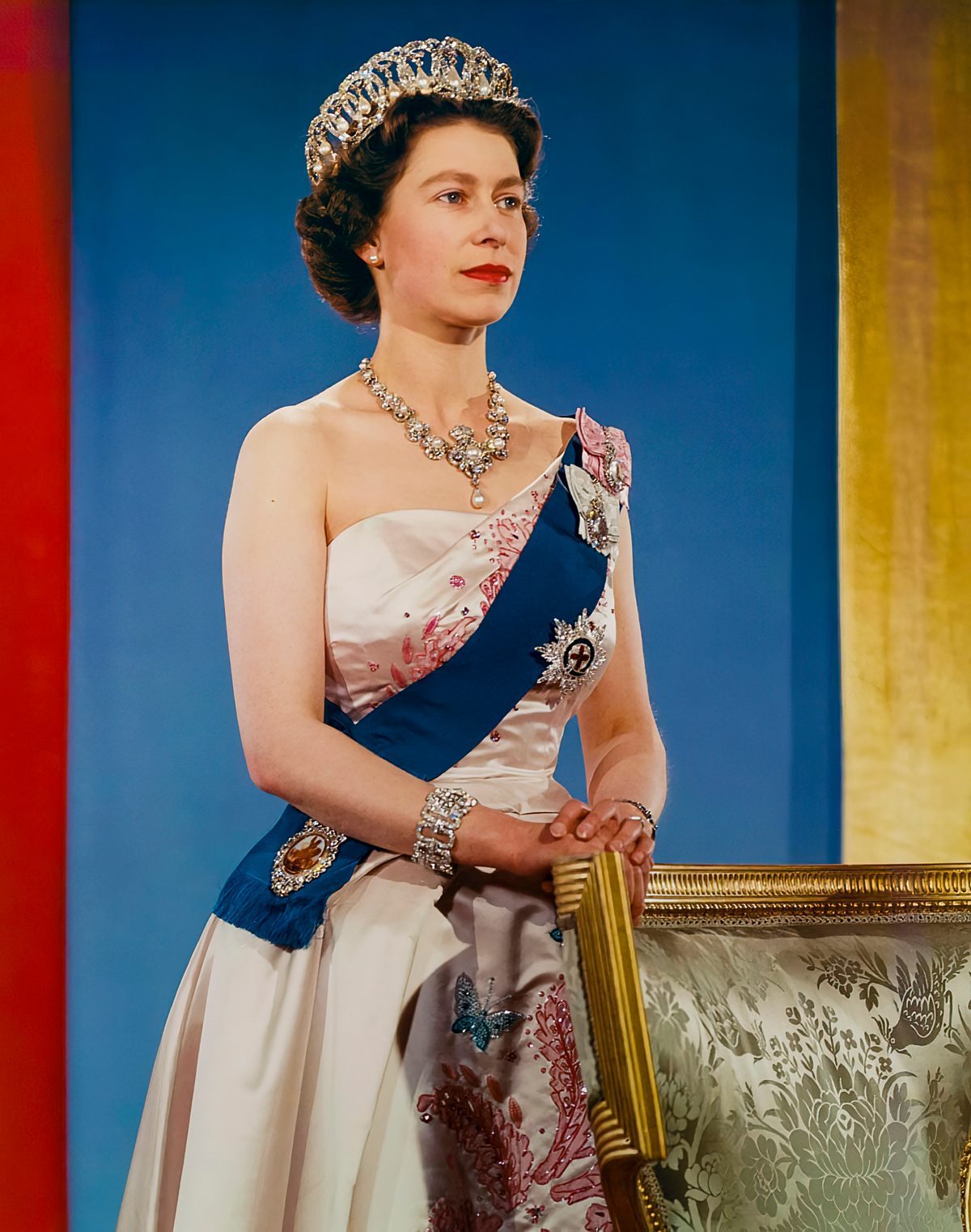
📷 Photo: Donald McKague. Public domain via Wikimedia Commons.