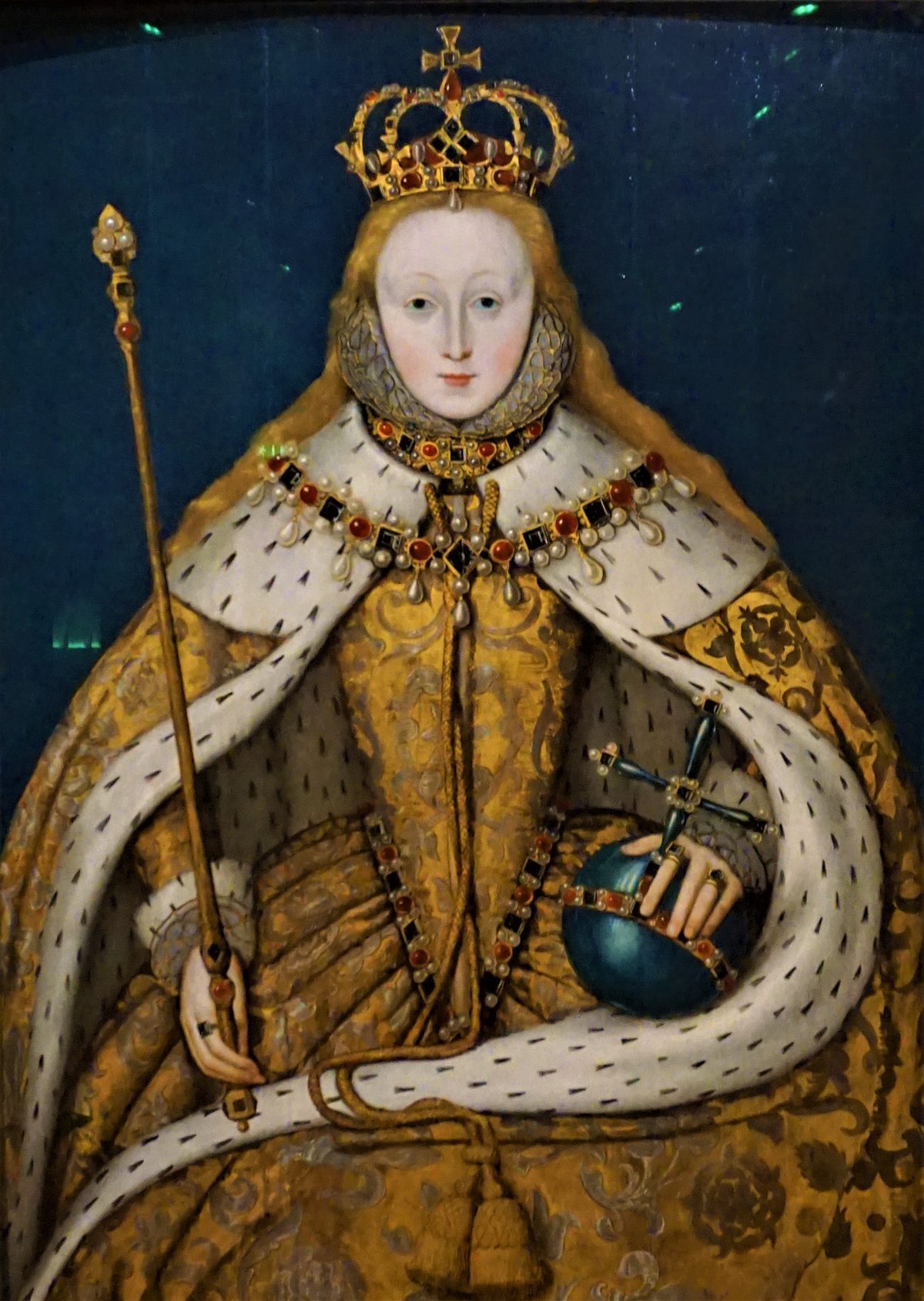
In the closing years of the 16th century, as foreign ambassadors visited the English court, they encountered a spectacle unlike any other. Queen Elizabeth I, the daughter of Henry VIII and Anne Boleyn, stood steadfastly on the throne, a glittering, unyielding symbol of majesty despite her advancing age. At 65, Elizabeth was far from the youthful glamour that had dazzled her early reign. Time had taken its toll, leaving her nearly toothless, her once-vibrant red hair hidden beneath an array of elaborate wigs, and her painted face showing signs of ageing. But it was precisely her unwavering choice to adorn herself in full regalia daily that fascinated—and intimidated—those who saw her. The crown that Elizabeth I refused to remove was more than a piece of royal jewellery; it was the cornerstone of a nation's stability.
The Indomitable Queen in an Era of Change
By the late 1590s, Europe was a tapestry of political intrigue, war, and diplomacy. Elizabeth I had steered her kingdom through decades of potential turmoil with a rare blend of intelligence, charisma, and shrewd political acumen. Known for her imperious nature and refusal to bow to marital pressure, "The Virgin Queen" maintained control in a world dominated by men, redefining what it meant to be a woman in power. But by 1598, whispers about her advancing years echoed through the corridors of power.
News from ambassadors painted a vivid picture of the ageing monarch. Despite visible signs of decline, Elizabeth insisted on presenting herself in the same dazzling fashion she had since her coronation. It was a calculated strategy, a powerful message to all who looked to England for either alliance or conquest. To her subjects and foreign dignitaries alike, Elizabeth appeared untouchable, cloaked in divine authority.
The Symbolism Behind the Crown
For Elizabeth, the crown was more than a symbol of her sovereignty; it was a testament to England's endurance. She understood that perception was everything. If she appeared weak or unwilling to uphold the grandeur of her position, it could destabilize the kingdom she had worked tirelessly to uphold.
Hence, Elizabeth donned her crown religiously, dressing in opulent gowns with diamonds that caught candlelight in a spectacle of brilliance. Her elaborate attire obscured the faint tremors of her ageing hands and the occasional falter in her step. The queen's commitment to this regal façade was not born out of vanity but a deep-rooted understanding of her role as the embodiment of England's strength and continuity.
A Court Intrigued and Awed
Inside the walls of the English court, life revolved around the queen's unyielding schedule of appearances and ceremonies. Courtiers and visitors were privy to a display of regal theatre that was never monotonous. It was a capricious blend of tradition and the flamboyant flair that Elizabeth had come to master.
One courtier famously remarked that in full regalia, Elizabeth looked "terrifying and utterly magnificent." This was no accident. Her carefully curated image was designed to instill both reverence and fear. The courtiers who served her witnessed a monarch who, though vulnerable to the relentless passage of time, refused to be diminished by it. As an aging lioness fights to maintain her dominance, Elizabeth battled insecurities with pearls, rubies, and royal decrees.
Legacy and Influence
While her physical form eventually gave way to the inevitable, Elizabeth’s unwavering commitment to her role left an indelible mark. She cultivated a narrative of strength and elegance that transcended her reign, leaving a blueprint for leadership that prized resilience in the face of adversity.
Her choice to wear her crown to the very end of her days was emblematic of her belief in the sacredness of her duty. It was a powerful reminder that leadership is as much about presence as it is about policy. Elizabeth’s legacy endures, her name continuing to inspire and captivate. Her reign serves as a poignant reminder of how the bonds between image and perception can hold a nation steadfast.
An Inspiration for Modern Monarchs
Elizabeth I's insistence on maintaining her regal demeanour, despite the challenges of age and time, resonates in our current era. In an age where public figures are constantly scrutinized, her understanding of the power of appearance offers timeless insight. Today, her story of defiance and dedication to duty enhances our appreciation of the monarchy’s endurance in a rapidly changing world.
Her image, both terrifying and magnificent, lives on. It serves as a reminder that while crowns can be symbols of power and beauty, they are also markers of responsibility. Queen Elizabeth I wore her crown and the mantle of leadership with pride and resolve, teaching us that sometimes true strength lies not in how we confront change, but in how we steadfastly maintain our course.
📷 Photo: Unknown authorUnknown author. Public domain via Wikimedia Commons.