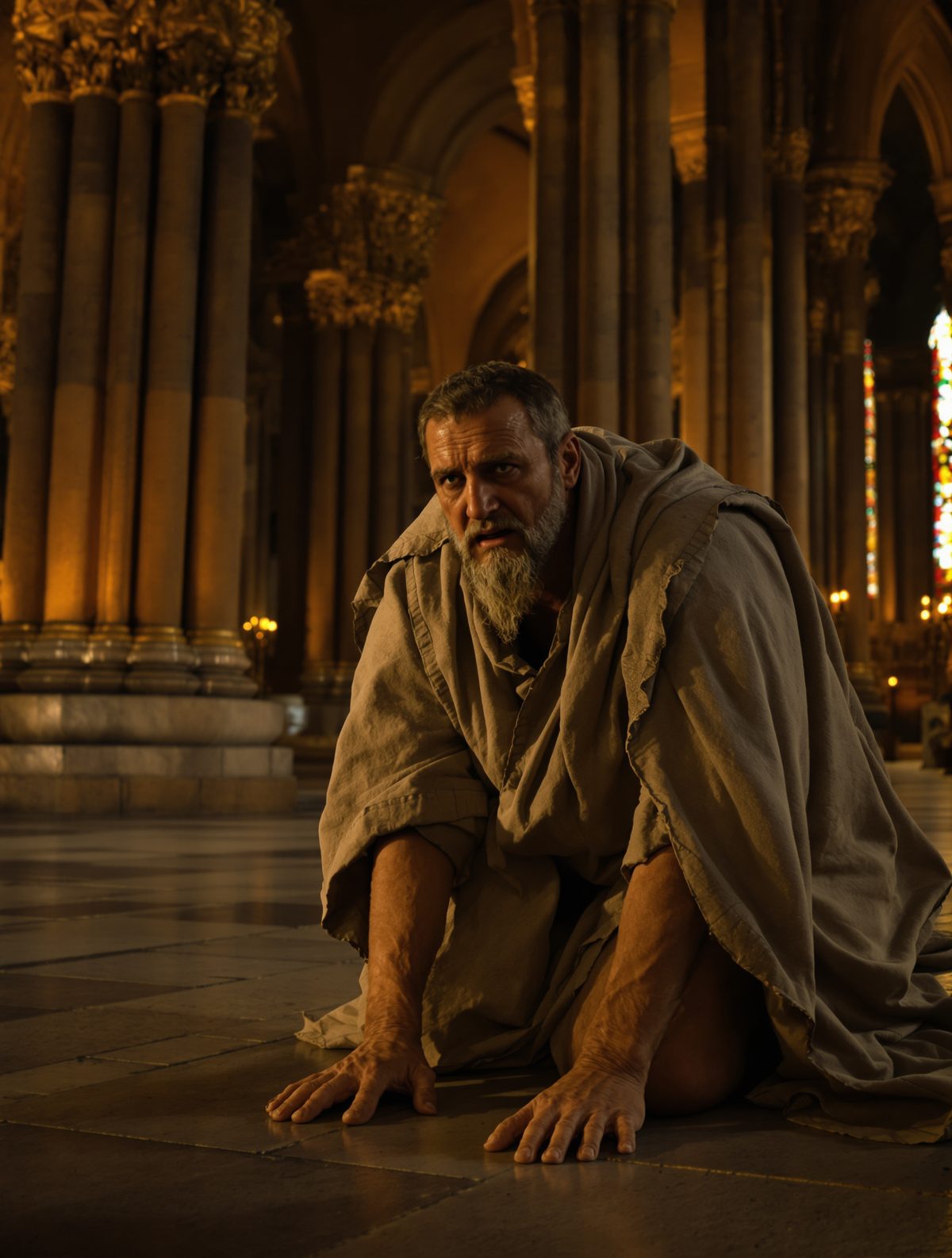
Amidst the biting chill of an English winter in 1174, the medieval streets of Canterbury witnessed a sight that would astonish even the most devout of Christians: King Henry II, ruler of England, humbly prostrated before the tomb of the man he once called friend and later saw as foe, Archbishop Thomas Becket. Dressed in simple sackcloth, his bare feet treading the icy cobblestones, the King sought penance in a public act of humility that was so profound it would echo through history. This was the day a monarch begged for forgiveness, bartering pain for peace and redemption.
The Tumultuous Reign of Henry II
King Henry II, the first of the Plantagenet kings, had a reign marked by formidable ambition and extraordinary energy. From 1154 until his death in 1189, he worked tirelessly to consolidate power, strengthen the justice system, and extend his realm to encompass not just England but much of France. His court was a vibrant center of political maneuvering and cultural patronage—a beacon of the medieval world.
Yet, it was also a battleground of personal and political conflicts. Henry's stormy relationships with his sons and the church defined much of his rule. Among them, none was more infamous than his conflict with Thomas Becket. Once the King’s trusted advisor and confidant, Becket, after being appointed as Archbishop of Canterbury, transformed into a steadfast defender of ecclesiastical independence, resisting Henry’s attempts to control church matters.
From Friendship to Feud
The friendship-turned-rivalry between Henry and Becket is the stuff of legend. Appointing Becket as Archbishop was a strategic move by Henry, expecting loyalty from his close ally who had served as his Chancellor. Yet, in a twist befitting the most dramatic of tales, Becket embraced his clerical responsibilities with unforeseen fervor, clashing with Henry over the rights and privileges of the Church.
This fateful tension climaxed with Becket’s murder on December 29, 1170, at the hands of four knights. Their infamous act was allegedly spurred by Henry's frustrated outburst about his "meddlesome priest." Regardless of Henry’s intent, Becket’s brutal end reverberated across Christendom, transforming him into a martyr and a catalyst for ecclesiastical power.
A Penance of Historic Proportions
Four years later, with political pressures mounting and a threat to his reign looming, Henry embarked on what many would deem an unthinkable journey. Intent on quelling unrest and altering public perception, he made his way to Canterbury to honor Becket’s memory with an act of penance.
The scene was stark: a king, accustomed to the finest trappings of royalty, stripped of his regalia, only a humble garment covering him. Walking barefoot through the city was an arduous pilgrimage of contrition, visible to all who thronged the streets. It was a public acknowledgment of responsibility, an olive branch extended to both his subjects and the heavens.
Upon reaching the cathedral, a ritual unfolded that defied the norms of regal conduct. Kneeling at Becket’s tomb, Henry beseeched the monks to administer a scourging, enduring eighty lashes. It was more than a symbolic act; it was a declaration of his penitence and a plea for reconciliation with the divine and his kingdom.
Impact and Legacy
Henry’s dramatic act of penance had immediate and long-lasting effects. The demonstration of humility restored his battered reputation, diffusing some of the rebellion's fervor and stabilizing his reign. The pilgrimage to Becket’s tomb became an enduring testament to the power of faith and forgiveness, adding luster to Becket’s growing cult and legacy.
Moreover, Henry’s pilgrimage to Canterbury paved the way for subsequent royal penances, highlighting a monarch’s capacity for remorse and reflection. Through this poignant moment, Henry forged a critical connection with his subjects—a leader’s vulnerability serving as a bridge between sovereign and society.
A Royal Lesson for the Ages
Today, as we navigate the complexities of leadership and accountability, Henry II’s penitential journey remains a vivid reminder of the intricate dance between power and humility. While the British monarchy’s role has transformed, the enduring symbolism resonates: a powerful leader recognizing his transgressions with contrition, seeking to heal and unite.
As admirers of the storied British crown, we find in this tale a timeless lesson about the responsibilities of leadership—an acknowledgment of complexity within regal identities that speaks to the heart of humanity. Enmeshed in both myth and history, King Henry II’s act of penance is a testament to the enduring resilience of the monarchy, continually adapting yet ever steadfast in its dedication to its people—a living heritage of regal grace and humility.