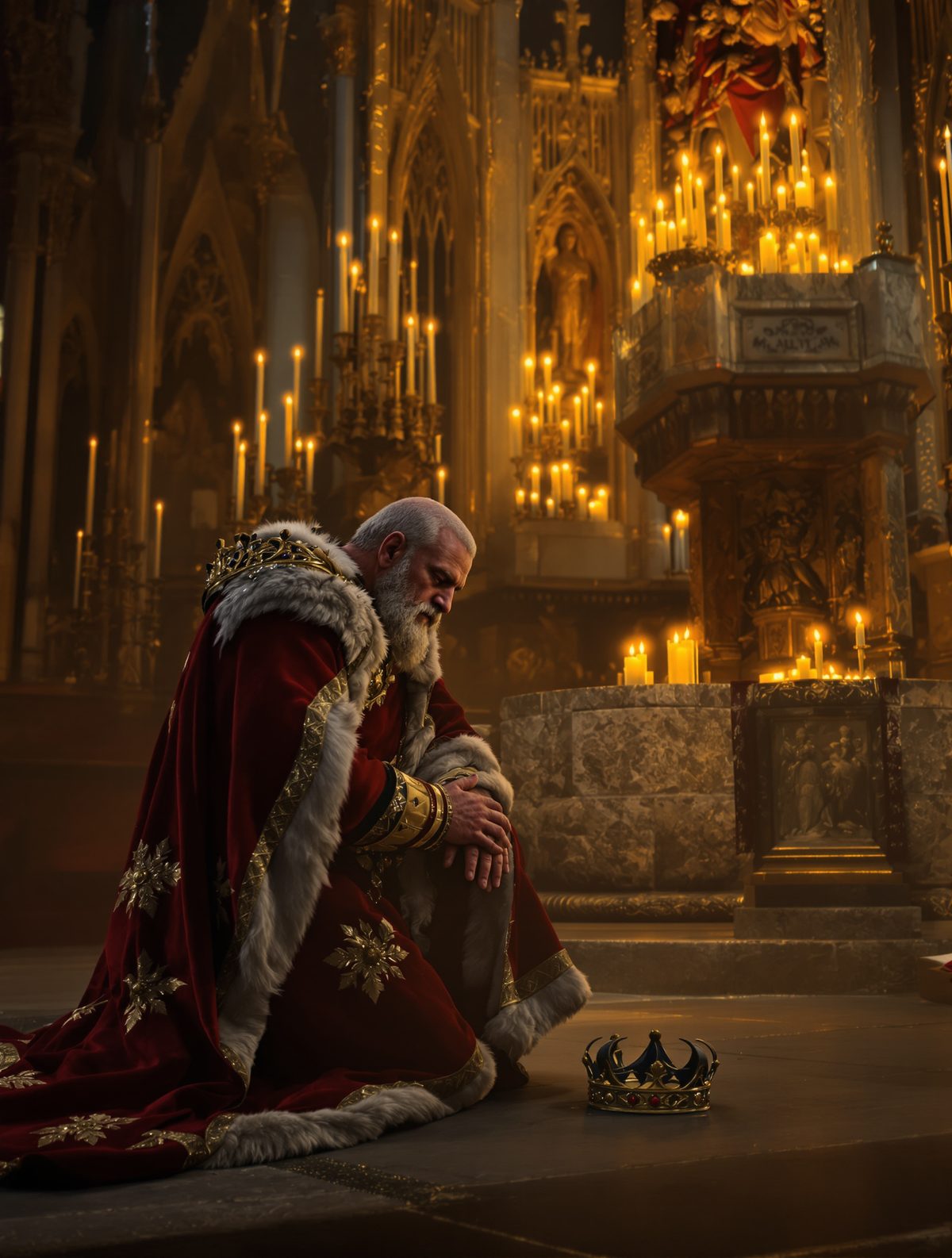
In the heart of the English winter in 1299, when icy winds swept across the countryside and frost bit into the ground, a sight unfolded that stunned and silenced all who bore witness. England's formidable monarch, King Edward I, was seen crawling on his knees, barefoot on the cold, hard stone, towards the shrine of his beloved queen. Eleanor of Castile, who had been his companion and confidante for decades, lay in eternal rest, and on the anniversary of her passing, Edward's grief was a force as unyielding as his mighty war conquests. This tale of love and loss reveals the softer side of a king often remembered for his martial prowess.
An Unbreakable Bond
The marriage of Edward I and Eleanor of Castile was not merely a union of political necessity, but one of profound partnership and mutual respect. From their wedding in 1254, Edward and Eleanor's bond was both tender and strong. In an age when royal marriages were often little more than strategic alliances, theirs stood out for its genuine devotion and shared ideals. Eleanor was by Edward's side through his campaigns in Wales and the Crusades, enduring hardships that few queens ever faced. Together, they forged not only a dynasty but a deep, abiding love that would fuel Edward's grief-stricken pilgrimage years later.
Edward's kingdom was one of growing power and influence. His conquests expanded English rule, and his legal reforms laid the groundwork for the English Common Law. Yet beneath the armor of this 'Hammer of the Scots' beat the heart of a husband who sorrowed as deeply as any common man over the loss of his cherished partner. Her death in 1290 at Harby near Lincoln left Edward devastated, and he was determined to honor her memory in an era that venerates chivalry and courtly love.
The Crosses of Remembrance
In the wake of her death, Edward ordered the construction of twelve elaborate stone crosses to mark the overnight resting places of Eleanor's funeral cortège from Lincoln to Westminster Abbey. Known as the Eleanor Crosses, these monuments were masterpieces of medieval artistry, each one a testament to her influence and his devotion. They embodied a route of remembrance, leading to the capital where she would lie beside England's ancient kings and queens.
Each cross, adorned with regal carvings and detail, told its own silent tale of sorrow. The most famous of these is the Charing Cross, in London, demonstrating that even in death, Eleanor's presence consoled Edward. This act of building was unusual even by the standards of medieval royalty and spoke volumes about the intensity of his loss. The crosses were not merely tombstones but poignant symbols of a royal love story that transcended time.
A King Brought to His Knees
But no act memorialized their bond more starkly and poignantly than what unfolded on the first anniversary of Eleanor's passing. Edward, known for his iron will and indomitable spirit, demonstrated a vulnerability that surprised all who beheld it. He embarked on a sombre pilgrimage to the shrine where his queen rested, in Lincoln Cathedral. Shunning the regal procession, the king, dressed in mourning, made the final approach alone, on his knees.
The sight of the king who had once commanded armies across Europe now humbled under the weight of personal grief was a deeply moving spectacle. Eyewitnesses, taken aback by this display, were reminded that beneath the crown lay a heart rent by sorrow, a testimony to Eleanor's enduring influence on Edward's life. They watched in reverent silence as Edward wept at her shrine, a widow's tears offered before God and kingdom for the woman who had been his life’s anchor.
A Love Remembered Through History
The radiant memory of Eleanor continued to linger within the hallowed halls of the royal court and beyond. Edward's subsequent actions only reinforced his enduring affection. He renamed the chapel at Westminster where she was interred St. Stephen's, in her honor. His consistent visits and memorial dedications were a reminder to all who followed that, while kings may wield swords and command vast territories, their hearts also bear the humble weight of love and loss.
Edward's mourning revealed a facet of his character that history only occasionally allows us to glimpse. While chronicles of epic battles and towering achievements paint a picture of a formidable ruler, the softer hues of personal devotion and vulnerability are what endear Edward eternally to enthusiasts of royal history. The depth of his emotions against the backdrop of his reign speaks volumes, inviting readers today to consider the humanity behind the crown.
The Legacy of Edward and Eleanor's Story
In the annals of royal history, King Edward I is often remembered for his military strategies and legal innovations, yet his love for Eleanor of Castile offers a touching counterpoint to his public persona. Their story is one of contrasts: conquest juxtaposed with humility, power balanced by personal sorrow. It is a reminder that, behind the grandeur of monarchy, lies a human story of love and loss as profound as any legend told through the ages.
Today, as the British monarchy continues to evolve, the legacy of Edward and Eleanor's partnership informs our understanding of royalty, transcending the barriers of time to offer a narrative of balance between duty and personal heartache. Their tale, brought into sharp relief by Edward's dramatic public mourning, still resonates, reminding us of the timeless bonds that define and dignify the human experience—royal or otherwise.
The image of a king on his knees for love, rich with history and emotion, captures our collective imagination, proving that even the mightiest among us can be brought low by the gentle force of affection. It is this profound essence of humanity that lends the monarchy its timeless allure and binds the pages of our shared history together.