He was a naval commander who had sailed through the fiery gauntlet of war. He was the steadfast consort to the most powerful woman in Britain. Yet, come every August morning at Balmoral Castle, Prince Philip, the Duke of Edinburgh, performed a quiet ritual that astounded his household staff — an act so simple, so profoundly human it spoke volumes about the man few truly knew. Armed with naught but a saucepan and grit reminiscent of his naval bravado, the Prince cooked porridge. Alone. In silence. Cloaked in his dressing gown, he stood by the stove, silhouetted against the gentle creep of Scottish dawn, embodying a warmth that was as much a part of the royal fabric as the grand halls and storied tapestries.
A Morning Ritual
Every year, the royal family's pilgrimage to their beloved Scottish estate commenced with a familiar ebb and flow. Balmoral, with its sprawling estates, lush forests, and the nearby River Dee, offered a sanctuary from the manic bustle of royal duties and the London skies. For Prince Philip, it was perhaps this serene backdrop that inspired his morning culinary tradition. As the family nestled in the castle's Victorian grandeur, Prince Philip would rise before the household awoke, quietly slipping into the kitchen where the aroma of raw oats would soon mingle with the crisp Highland air.
Tradition and routine are woven into the tapestry of royal life, yet this small act of rebellion against convention painted a compelling portrait of his independent spirit. Those who knew him weren't entirely surprised. Behind the public persona of duty and decorum lay a man who valued self-reliance and practical skills. His military past had sculpted him into a figure for whom silence was a canvas and simplicity an art form. The staff, stumbling groggily into their duties, would find him there, absorbed in the hum of his morning ritual, no pomp, no audience — just a prince and his porridge.
Balmoral: A Royal Refuge
Balmoral Castle holds a unique place in the storied history of the British monarchy. Purchased by Queen Victoria and Prince Albert in 1852, it served as a summer retreat, a world apart where the royals could engage in the timeless Scottish traditions of hunting, fishing, and afternoon picnics by the river. The robust stone structure nestled amidst the rolling hills became synonymous with respite and reflection, a place where time moved at its own gentle pace.
For Prince Philip, Balmoral was where familial bonds were strengthened and identities were momentarily freed from the corset of public life. It was here that his children remembered him as a man of action, clad in tweeds, conquering the landscape of rugged hills, teaching them the thrill of the chase and the patience of the rod. The Castle devoid of cameras allowed the monarchy to breathe, creating a bridge between the weighty past and a manageable present.
Prince Philip: The Man Behind the Title
In every corner of Britain and beyond, Prince Philip was recognized as the sovereign's steadfast companion, often witty, occasionally brusque, an unwavering pillar in a kingdom of great traditions. But his presence at Balmoral gave those around him a glimpse of his personal joys and philosophies. He didn’t revel in grandeur for grandeur’s sake; rather, he cherished accomplishments of the heart — the learned art of resilience, the merit in quietude.
His early life was marked by wanderlust and turmoil, fleeing from revolution in Greece and attending school across Europe, before finding steadiness at the British Navy. Such experiences no doubt fueled his appreciation for control over the ordinary, everyday tasks like cooking a simple meal — grounding him in the here and now. In an institution that often felt the pulse of history beneath its skin, Prince Philip was a pragmatist, a realist, and at Balmoral, a cook of humble oats.
The Silent Symphony
The staff members, exceedingly deferential to royal protocol, would find him at the stove — a smile warming the stern lines of his face. Prince Philip never needed theatrics or ceremony to find solace in domesticity. "Don't fuss," he would murmur if approached, a gentle reminder of the peace he cherished in those moments of solitude. A life spent in service to the Crown had perhaps endowed him with an appreciation for the unscripted, the unfussy, a respect for silence that was as sturdy as Balmoral’s ancient stones.
This image of Prince Philip, stove-side, amidst the quiet whispers of morning, speaks to a poignant truth. The saga of royal life is often portrayed in grand episodes, bound in gilded frames, yet it is the unpretentious acts of humanity that reveal the soul beneath the crown. The morning ritual of cooking porridge was not simply about the act itself; it was a testament to the unyielding spirit and grounded nature of the man beside the throne.
Connecting Past and Present
These echoes of August mornings at Balmoral remind us that roles, however grand, are but parts played on the public stage; the heart of a person is reflected in their habits, in silence, and in solitude. Through Prince Philip’s morning ritual, we glimpse a softer side of the monarchy, one that resonates deeply with the rhythm of ordinary life. Today, as the royal family continues its journey forward, embracing modernity while honoring tradition, the simple act of cooking porridge in the quiet of the Highland dawn remains a poignant reminder of what makes the monarchy both regal and relatable.
The legacy of Prince Philip's understated routine endures not in the pages of history books, but in the hearts of those who continue to find strength in the ordinary, beauty in simplicity, and pride in tradition. Like the spoonfuls of oats that sustained him each morning, such quiet acts of devotion are the true sustenance of a life nobly lived. In the solitude of Balmoral's kitchen, Prince Philip carved an indelible mark — one that celebrates the quiet dignity and resolute grace that often defines the most memorable of reigns.
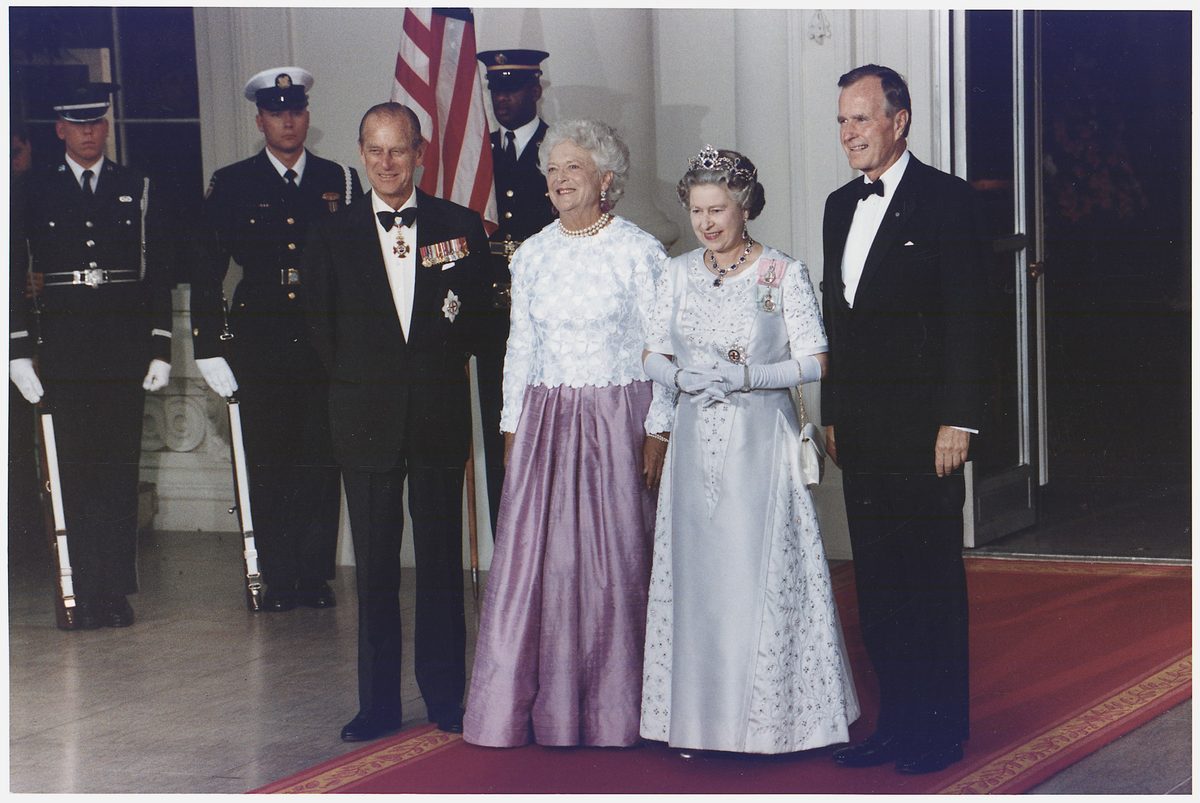
📷 Photo: Series: George H. W. Bush Presidential Photographs, 1/20/1989 - 1/20/1993 Collection: Records of the White House Photograph Office, 1/20/1989 - 1/20/1993. Public domain via Wikimedia Commons.