In the grand tapestry of British royal history, few events were as lavish — or as nearly disastrous — as the coronation of King George IV. On the morning of July 19, 1821, Westminster Abbey was primed for a spectacle. Gleaming with the opulence of gold and shimmering silks, the Abbey's every nook was a nod to the new king's pursuit of magnificence. But beneath the pomp and splendor lay a scene as precarious as ever, where the frailty of human dignity nearly unraveled the grand ambitions of a monarch. Encased in grandeur and restrained by a corset laced with the deliberation of an hour, King George IV teetered on the edge of collapse, his most spectacular moment nearly slipping from his grasp.
The King's Vision for Grandeur
George IV ascended to the throne consumed by a desire to outshine his predecessors. His coronation would not simply be a coronation; it was a declaration of his reign's commencement, as bold and resplendent as the monarch himself. In the court of public opinion, he was noted for his extravagance and love of aesthetics, aspirations that starkly contrasted with the more frugal times of his father, George III. The grand ceremony he envisioned was to be a benchmark for regal ceremonies, a pageantry filled with music, color, and an unspoken assertion of royal magnificence.
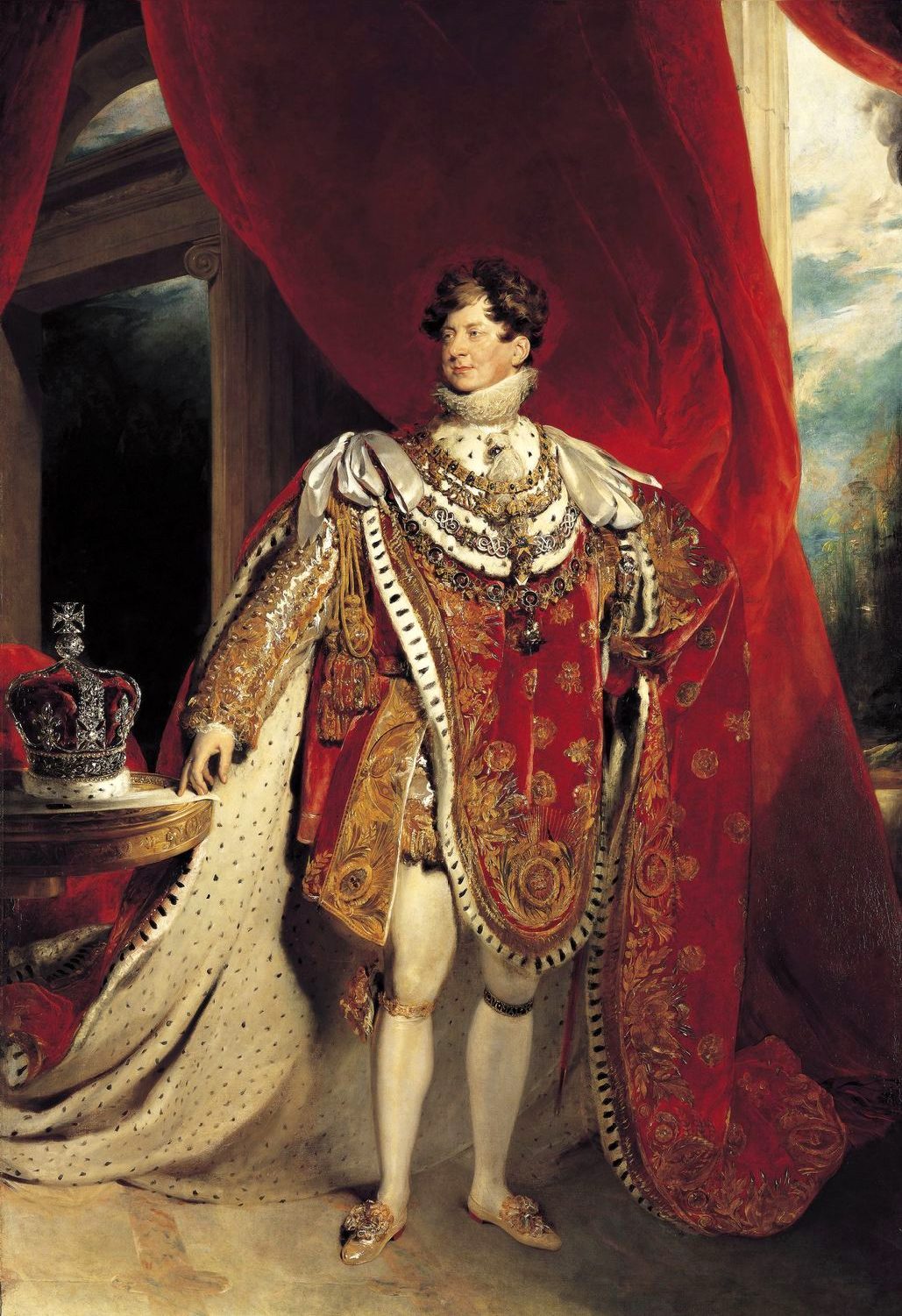
The coronation's scale was set to dazzle. The procession demanded over 500 horses, the Abbey was adorned with the finest ornaments, and the robes were woven from the richest velvets and decorated with ermine. Every rehearsal and detail was handled with the meticulous care afforded to the rarest of royal gems. And at the center of it all was George IV, who had vested his trust in his courtiers to embroider a ceremony as splendid as his ambition.
The Ritual of Preparation
In the very heart of this ceremonial theater lay an episode few were privy to — the king's arduous preparation. On the night before the coronation, the soon-to-be crowned head was restless, staying awake until dawn had begun to break over the city. The demands made upon his person were as much of a performance as any presented to the public.
A corset, designed to enhance the king's already prominent figure, required the efforts of four men to lace into place. The royal body was drawn in tight, the restrictive grip forcing shallow breaths from the future monarch. This contraption was the result of George's own vanity; intent on presenting a regal silhouette, he endured an uncomfortable ordeal for the sake of appearances. The velvet and ermine robes weighed heavy across his shoulders, a majestic burden reflective of his responsibilities as king.
The Unsteady Monarch
Amid the splendor of Westminster Abbey, the majesty of the coronation ceremony unfurled. Yet, unbeknownst to the throngs of nobility, politicians, and diplomats in attendance, beneath the crown jewels, the king struggled to maintain his composure. As he stood to receive the anointment — a sacred moment solidifying the divine right bestowed upon him — the world around began to blur.
Witnesses would say later that George IV swayed, a gentle tilt that belied the force of inner duress he felt. It was the vigilant attention of his attendants that prevented the collapse, their steady arms providing the stability that his own legs could not. To the observant courtier, this incident might have mirrored the tension and anxiety that marked the beginning of his reign, an embodiment of the pressures lurking beneath the surface glamour of royalty.
Behind Palace Walls
While the public saw a potentate regaled with all the paraphernalia of statehood, the personalities surrounding George IV understood his humanity. He was a king encapsulated by his love for finery and the trappings of authority, yet also a man pursued by personal insecurities and challenges. The prince regent before he was a king, his life had been under public scrutiny from his youth. His love for the arts, architecture, and fashion often sparked commentary, making him simultaneously adored and critiqued.
Support from his inner circle proved vital. Trusted confidantes, having devoted lives and careers in service to the crown, were ever-present. Among them were the likes of Lord Liverpool, the prime minister, who admirably managed political affairs, allowing George a semblance of steadiness amidst tumultuous times. It was this network that transformed Buckingham Palace and Windsor Castle into sanctuaries from the constant echoes of public discourse.
The Legacy of the Fainted King
Remnants of that day bear witness not just to a near-fall, but to the spirit in which George IV sought to transcend the ordinary bounds of kingship. The story of his faints — both publicly witnessed and whispered among the court — paints an image of regal aspiration marred by the delicate nature of personal limits.
Yet, George IV emerged from the day crowned, his persistence through personal trials foreshadowing the complex rule that lay ahead. His reign saw the extensions of Regency-era opulence into the narrative of historical grandeur, a time where royal personality often drove the forefront of the regal agenda.
The Resilience of Royalty
Today, the British monarchy continues to inspire fascination and admiration, a living chapter of historical legacy. King George IV's coronation — with its splendid spectacle nearly overshadowed by a human frailty — resonates with the ongoing balance of royal duty and personal endeavor that shapes the monarchy. In an age where ceremony still dances hand in hand with responsibility, the memory of that precarious morning becomes a reminder of the indomitable spirit that underpins the crown.
The brilliance of King George IV’s vision, alongside his personal trials, mirrors the continual evolution of the institution he elevated with such fervor. From the courts of Westminster Abbey to the halls of modern-day Buckingham Palace, the crown endures — steadfast, dignified, resilient. The monarchy, having navigated centuries, continues to encapsulate a living history, inspiring those who look to it with reverence for its past and optimism for its future.
📷 Photo: Thomas Lawrence. Public domain via Wikimedia Commons.