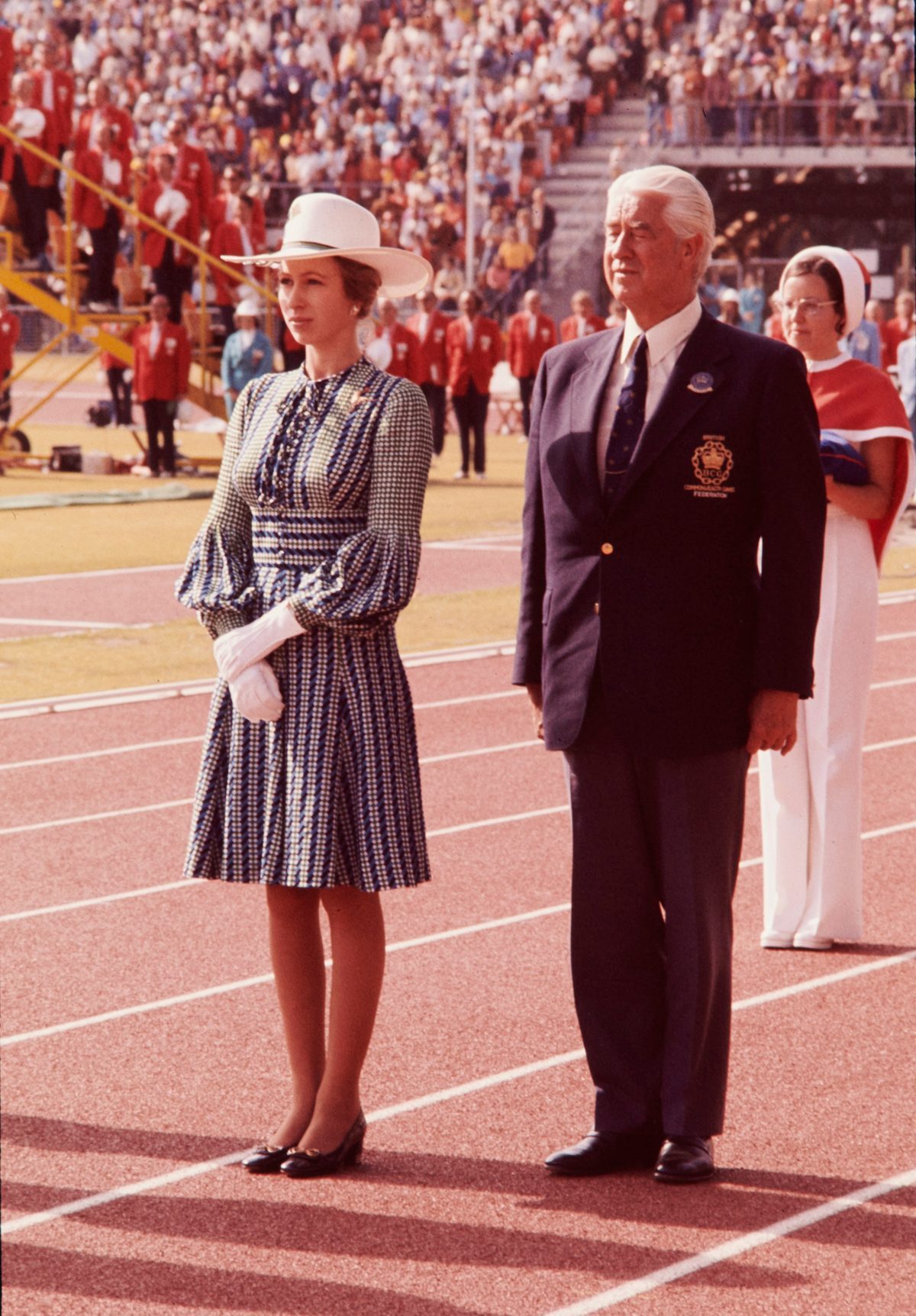
It was a crisp morning in 1976 when Princess Anne walked through the grand gates of Buckingham Palace, a sight unmistakably unique—a regal figure clad in an Olympic team jacket and carrying an air of humbling authenticity. Having just returned from the Montreal Olympic Games, Anne had not only represented her country on a global stage as an equestrian but also embodied the spirit of unapologetic individuality. As she navigated the corridors of her ancestral home with quiet confidence, her attire spoke volumes: Here was a royal who seamlessly blended duty with passion, privilege with modesty. The Queen watched her daughter with pride, acknowledging the milestone moment with nothing more than a warm, familiar smile.
The Unlikely Olympian
In the realm of royal history, the 1976 Olympics in Montreal mark a golden chapter. Princess Anne, an accomplished equestrian, made history by becoming the first British royal to compete in the Games. Straddling Sir Mark Phillips' horse, Goodwill, Anne's participation was not just a testament to her personal dedication but also a refreshingly human moment in the often-mystified fabric of royal life. As a rider among riders, she eschewed her royal title, preferring to be judged solely on skill and performance. The Olympics, in turn, became a stage not only for her sporting abilities but also for Anne's independence of spirit.
From Olympian Trials to Royal Traditions
It's hard to comprehend the rigor of Olympic preparation—more so when considering the simultaneous expectations of a royal life. For Anne, every canter and gallop in training was a stride away from the formal halls and ornate parades back home. The equestrian events in Montreal were demanding, both physically and mentally, challenging even the most conditioned athletes. But Anne navigated the competition with poise, a picture of determination under pressure. After competing, the return to London was worlds apart from her athletic odyssey. Stepping into the Palace that morning, still clad in her Olympic jacket, Anne represented a bridge between her dual roles of competitor and princess.
A Palace Welcomes Home
To the untrained eye, the dynamics within the royal court might seem tightly scripted, awash with protocol and decorum. Yet, Anne's homecoming was far from the grandeur that might be expected. She returned without fanfare, a return to familial normalcy epitomized in her choice of attire—the Olympic jacket remained a symbol of her earnestness. In that meaningful gesture, Anne reminded the world that the British monarchy, too, has quietly heartwarming stories of humility and familial love. The Queen's silent smile at her daughter’s sartorial choice spoke less of royal convention and more of motherly pride and understanding.
The Timeless Narrative: Monarchy Meets Modernity
In many ways, Princess Anne's journey in 1976 encapsulates the enduring magnetism of the British monarchy—its uncanny ability to adapt and stay relevant through changing times. By participating in the Olympics, she bridged a traditional institution with modern values, showcasing a blend of personal ambition and public service. Even today, the image of Anne, resolute in her Olympic jacket, resonates with a sense of authenticity. It signifies the universal balancing act of tradition alongside the evolution into personal passions and pursuits.
In observing this moment with insight and respect, we gain a richer understanding of how monarchy and the individuals within it navigate personal milestones. As Anne crossed the threshold of the Palace that day, she wasn't just returning from Montreal; she was carrying a story—a royal narrative still relevant long after the applause of the Olympic crowds faded. Her story reminds us that while titles may define roles, it is the human moments that truly connect us to history and each other.
📷 Photo: Archives New Zealand. CC BY 2.0 via Wikimedia Commons.