The morning light filtered softly through the grand windows of Buckingham Palace, illuminating the room with a gentle glow. Gathered in anticipation were courtiers, art connoisseurs, and a few members of the royal family, all eager to witness the unveiling of a masterpiece. Italian painter Pietro Annigoni had completed his latest portrait of Queen Elizabeth II, a commission that had garnered immense interest across Europe. As Queen Elizabeth II herself entered, a quiet murmur of admiration drifted through the room. But as the cloth was lifted to reveal the painting, her unexpected reaction brought the air to a standstill.
A Master at Work
Pietro Annigoni was no stranger to royal commissions, renowned for his remarkable ability to capture the essence of his subjects. His first portrait of Queen Elizabeth II in 1955 had already been hailed as a masterpiece, cementing his reputation as a favored artist of the royal household. His approach was traditional yet imbued with a sense of vivid realism, a style that seemed to extract the very soul of those fortunate enough to be immortalized by his hand.
For this second portrait commissioned in the early 1960s, Annigoni was given months to meticulously perfect his craft. Each session with the Queen, who was in her early thirties at the time, was marked by a keen attention to detail and an earnest drive to depict her with both regality and grace. He worked predominately at the Fine Art Society's studio in London, where he paid extraordinary attention to the color palette and lighting, seeking to evoke not only a regal stateliness but a deep sense of character.
Reports from those sessions describe Queen Elizabeth II as genuinely interested and accommodating during sittings, despite the busy schedule befitting a reigning monarch. Annigoni himself was particularly struck by her poise and contemplative nature — qualities he sought to capture in the final piece.
The Portrait Unveiled
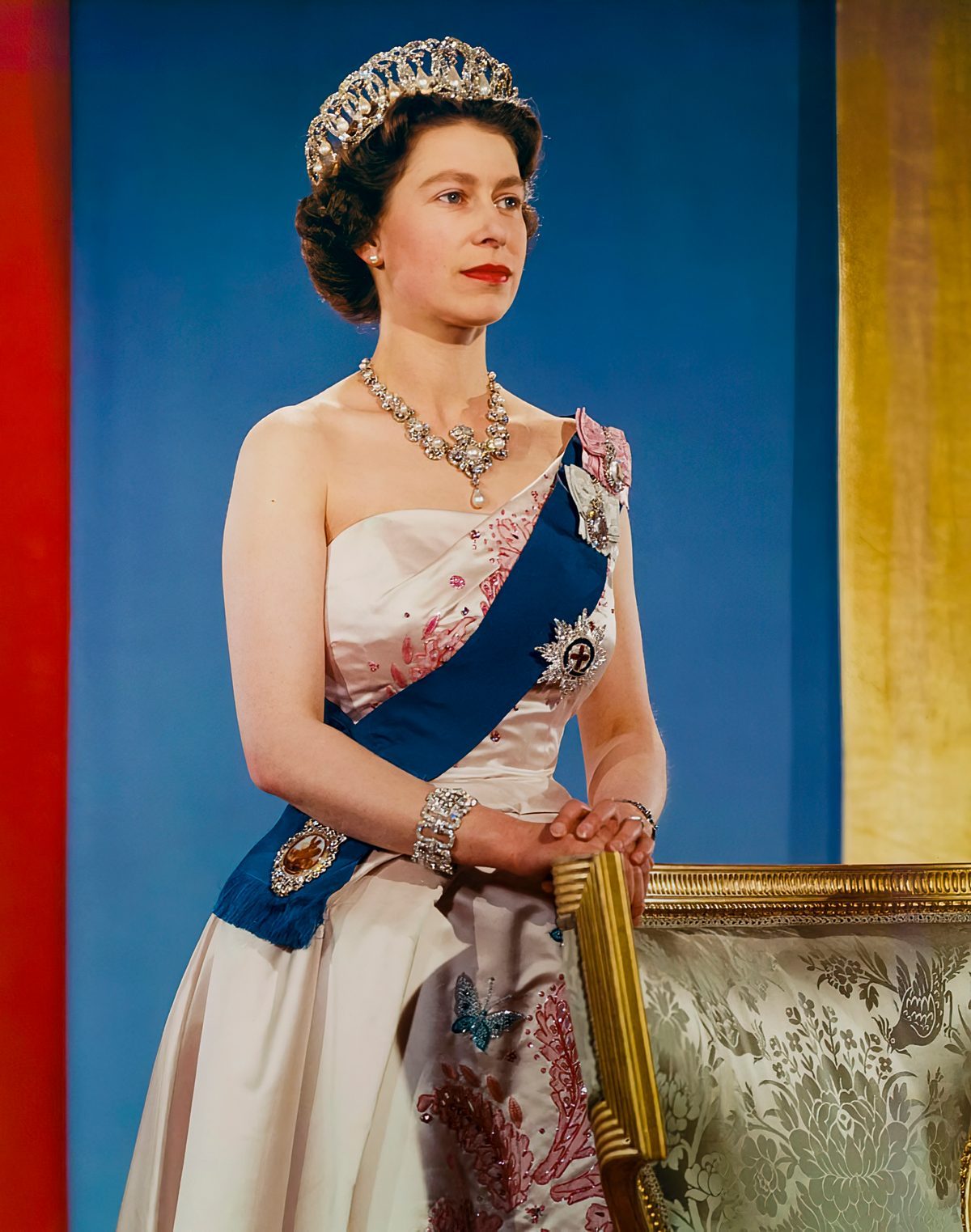
As the artist unveiled the grand portrait that cool morning, the room was swept into awe. The painting portrayed the Queen in a formal pose, adorned with the traditional regalia of the Order of the Garter. Her gaze was calm yet piercing, embodying a regal authority mingled with a whisper of vulnerability. Annigoni had captured a likeness that was both strikingly accurate and evocatively layered.
Yet, it was Queen Elizabeth II’s immediate response that shocked those gathered. Peering at her own likeness, she let out a chuckle, a rare break in her usual composed exterior. She remarked with a bemused smile that she appeared 'rather grim,' a comment that hung in the air, mingling surprise with her characteristic candor.
The Queen's Perspective
Queen Elizabeth II’s reaction was not one of disdain but of self-reflection and mild amusement. Indeed, it revealed the often unseen aspects of her personality that endeared her to so many: a sense of humor and an ability to view even herself with a touch of irreverence. Her laughter diffused an initial tension and added a humanizing note to the event.
A glimpse into her life reveals a woman who bore the weight of the crown with humility and wit. From her wartime service as a mechanic during WWII to her devout sense of duty, Queen Elizabeth II's reign was characterized by a steadfast resolve paired with a warm relatability. By the time of this sitting with Annigoni, she was adept at maintaining this delicate balance — a testament to her understanding of both her ceremonial role and personal identity.
Always a proponent of tradition, the Queen appreciated the classical style of Annigoni’s work, and despite her own initial comments, she was said to be extremely pleased with the portrait’s final outcome. Critics praised the piece for its depth and the aura of solemnity it encapsulated, cementing its place as one of the iconic images of her reign.
Beyond the Canvas
The 1960s marked a period of transformation for the British monarchy, as the institution sought to modernize amidst a rapidly changing world. Queen Elizabeth II’s interactions with Annigoni embodied this transition — even within the halls of power, there was room for laughter and levity amidst the ceremony. It was these personal moments that cast a warm light on a monarch often viewed from afar, wrapped in symbols of ceremonial grandeur.
There’s a certain magic in Annigoni’s portrait that transcends time, a magic that resides not only in the paint on canvas but in the shared moment between the artist and his royal muse. The humanity of Queen Elizabeth II, captured in a solitary painting, continues to resonate, revealing a portrait of a sovereign who laughed, loved, and led with unwavering dedication.
A Timeless Legacy
Looking at Annigoni’s masterpiece today, one is reminded of the enduring legacy of Queen Elizabeth II and the timelessness of the monarchy she so dutifully represented. Her reaction — that genuine moment of levity — adds a personal touch to the royal narrative, drawing us closer to the remarkable woman whose image on the canvas connects history with the present in significant ways.
As admirers of the British monarchy, we are continually drawn to the stories and images that reveal the humanity behind the crown. Queen Elizabeth II’s time with Pietro Annigoni offers a window into the past, where art and reality intertwined, creating a tapestry of memory and majesty that speaks to us today and undoubtedly will to future generations. The anecdote of her surprise and laughter serves as a gentle reminder that behind every crown is a personal story, waiting to be discovered and cherished.
📷 Photo: Donald McKague. Public domain via Wikimedia Commons.