In the spring of 1945, just as the world was beginning to glimpse light at the end of a long, dark wartime tunnel, a young woman stepped into a military vehicle clad in her immaculate Auxiliary Territorial Service (ATS) uniform. She was not just any mechanic or driver; she was Princess Elizabeth, future Queen of the United Kingdom, and this day would cast her in an iconic light for generations to come.
A Princess in Uniform
In 1945, the British monarchy was a symbol of resilience and hope. The Second World War had battered not just the landscapes of Europe but the very spirit of its people. As bombings swept across cities and food rationing became a way of life, every family had to pull together. Amidst these harsh realities, a young Princess Elizabeth chose to make her own contribution to the war effort.
Join her in April 1945, when at twenty years old, she proudly donned the uniform of the ATS, the women’s branch of the British Army, reflecting a sense of duty that surpassed royalty. In fact, this choice was monumental — never before had a female heir to the British throne taken such a step. Trained as a mechanic and military driver, Princess Elizabeth was determined to serve her country in a deeply personal, tangible way.
Driving the King
The morning Elizabeth drove King George VI through the lanes of Windsor is one that stands tall among the many defining moments of her extraordinary life. After completing her training and proudly earning her military driving license, Elizabeth needed a passenger to accompany her inaugural outing.
No chauffeur, no ceremony, no retinue — just a father and his daughter on a casual drive. She greeted King George VI with a salute only a soldier could master, shattering the norms that wrapped the monarchy in layers of protocol and grandeur. The drive itself was brief but brimming with poignant significance. The escort through the serene grounds contrasted sharply with the thunder of battles not too far away.
King George VI, always attuned to the intricacies of leadership and the subtleties of image, sat alongside his daughter, buoyed with undeniable pride. The sight of the young Princess confidently handling the vehicle’s controls put the paternal relation, their bond evident. In those moments, her father saw an embodiment of duty and transformation — a princess who was readying to bear the weight of a crown much sooner than expected.
The Royal Court’s Support
As far-reaching as her gesture was, Princess Elizabeth's decision to join the ATS didn't arise from an impulsive sense of adventure. Within Windsor Castle, discussions had unfolded around appropriate roles for a princess in wartime. Their majesties understood the importance of their daughter’s aspirations and supported her choice wholeheartedly. Queen Elizabeth, the Queen Mother, known for her steadfast commitment to the nation, perhaps appreciated better than most the need for the royal family to share in their people's burdens.
The royal household, accustomed to traditions, heraldic ceremonies, and aristocratic duties, welcomed the sight of a working Princess. Through her service, Elizabeth strengthened the monarchy’s bond with the common citizen, portraying an image of equality and perseverance that continues to resonate today.
Challenging Traditions and Inspiring a Nation
Princess Elizabeth's decision to join the ATS in 1945 marked a subtle revolution within the realm of the British monarchy. It wasn't just an act of service, but more an act of transformation. Her participation in the war effort mirrored a pivot towards a more modern, relatable image of the royal family. Many esteemed royals have endeavored to be seen as approachable, yet Elizabeth’s approach broke down barriers previously considered impenetrable.
The message embedded within her military service echoed beyond borders, standing as a testament to the unity and resilience of the British spirit during the war years. Her service offered a palpable example of leadership grounded in action and empathy, leaving an indelible mark on both domestic and global perception of the monarchy.
Legacy and Lessons for Today
Reflecting on that remarkable morning in April 1945, we see more than just a young princess driving a military vehicle; we witness a defining step towards a redefined monarchy. Even long before ascending to the throne, Queen Elizabeth II embodied a nuanced blend of tradition and evolution. Her actions that day would continue to inspire, highlighting the enduring power of service and duty.
As we explore the nuances of modern royalty, this moment remains a beacon of inspiration. It reminds us of the timeless values shared across generations and continents. In a world still faced with its own challenges, this drive through history reassures us of the monarchy's steadfastness — a symbol of continuity and grace.
In a year when peace was slowly returning to a broken world, that drive through Windsor carried the promise of a brighter future, led by a monarch who had lived through the woes of her people and had actively strenthened the bonds between her legacy and her citizens. It was not just a drive; it was a movement — one that continues to drive the heart and soul of a nation.
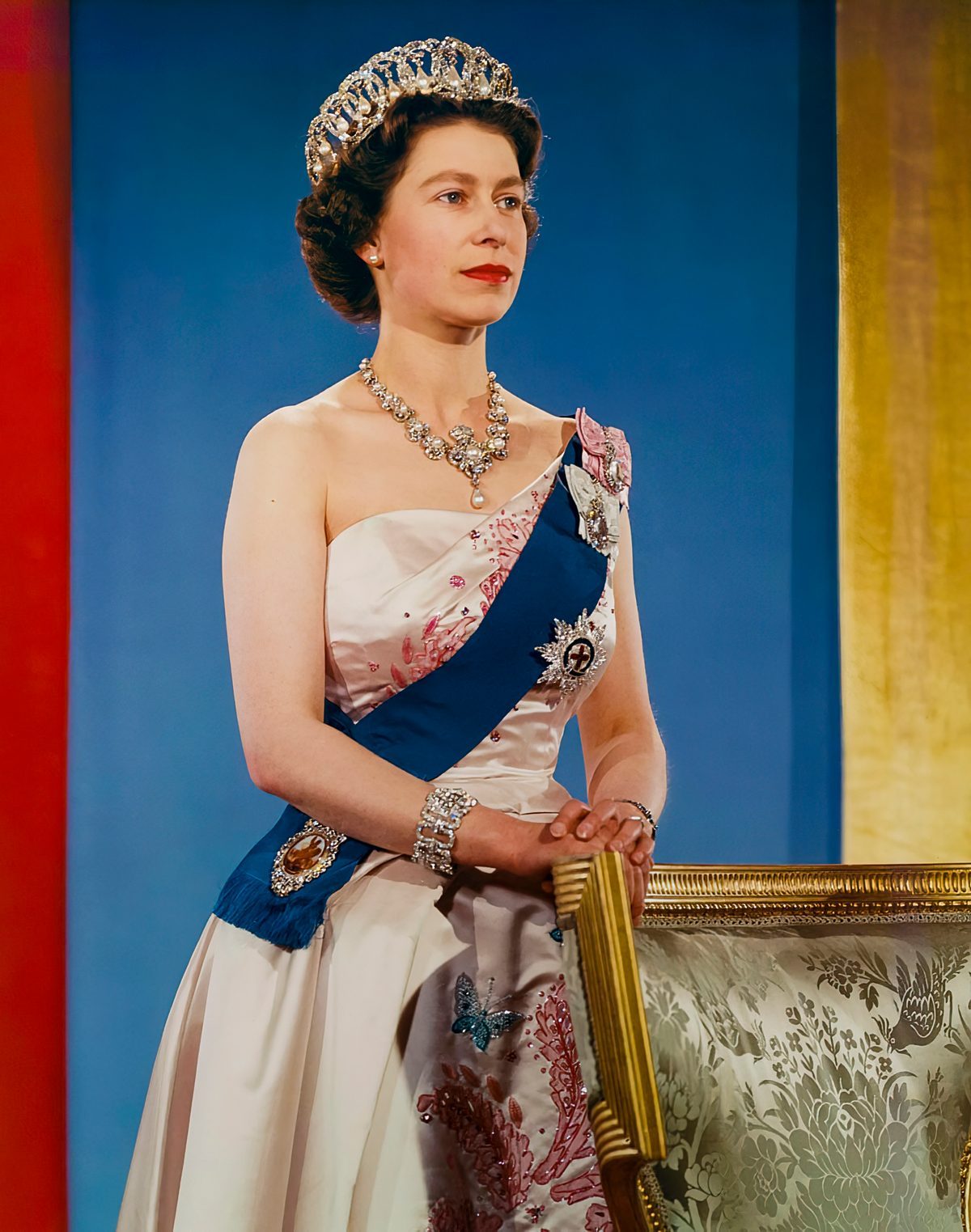
📷 Photo: Donald McKague. Public domain via Wikimedia Commons.