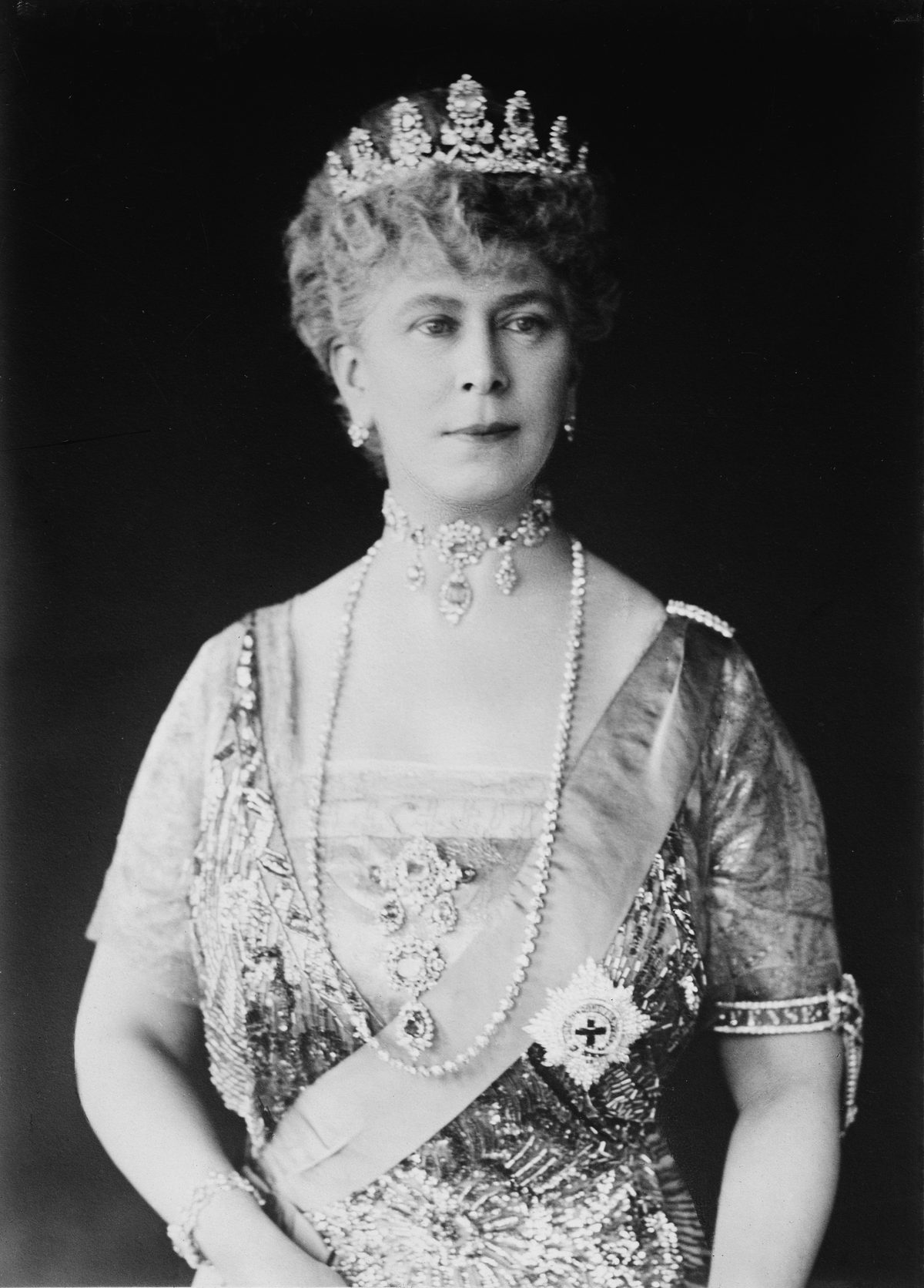
Amidst the majestic tapestry of royal history, where every stitch tells tales of grand banquets and state affairs, there emerges the captivating story of a queen who wasn't afraid to get her hands dirty. In 1940, as the world echoed with the clamor of war, Queen Mary chose to set aside restraint and protocol for the sake of duty. The incident at Badminton House, when she donned her tiara and picked up a mop, stands as a testament to her indomitable spirit. This unexpected act of solidarity not only surprised her staff but also symbolized the resilience and adaptability ingrained in the British monarchy.
A Royal Refuge at Badminton
In the autumn of 1939, Europe was cast into the abyss of conflict. As bombs rained down on London, the safety of the royal family became paramount. Queen Mary, the formidable widow of King George V and grandmother to the ruling King George VI, took refuge at Badminton House—a grand estate in the Gloucestershire countryside. Here, she found herself amidst opulent decor and expansive grounds, yet surrounded by the austere backdrop of wartime Britain.
The Duke and Duchess of Beaufort extended their hospitality, offering the queen a sanctuary where she could ride out the ravages of the Blitz. Yet Queen Mary, then 72 years old, was not one to idle in serene exile. Known for her strong will and unwavering dedication, she sought ways to remain active and contribute to the wartime efforts as Britons across the nation rallied to support the cause.
Stepping Beyond the Palace Gates
Even in retirement, Queen Mary's days at Badminton were far from leisurely retreats. With her characteristic fortitude, she quickly immersed herself in the war effort. She organized local salvage drives in the village, collecting scrap metal, newspapers, and anything else that could be repurposed for the production of war materials. For Queen Mary, it was a natural extension of her sense of duty and civic responsibility—a commitment she hoped to instill in those around her.
The Queen, renowned for her meticulous attention to detail and order, was well equipped to manage these operations. Under her direction, Badminton became a bustling hub of patriotic activity, where the spirit of determination and adaptability thrived amid the serene English countryside.
The Tiara-Clad Cleaning Incident
It was during one of these busy mornings that Queen Mary decided to surprise her household. The story goes, with some variation in detail, that the Queen, ever mindful of order and cleanliness, noticed a particular patch of floor that seemed in dire need of a scrub. In an era where royalty was often shrouded in mystique and aloofness, her response was unexpected and unprecedented.
Without hesitation, she did what to many seemed unthinkable: she picked up a broom and started scrubbing. Clad in her habitual attire, which on this peculiar day included the regal symbol of her stature—a tiara—Queen Mary worked alongside her staff. For the servants at Badminton House, it was a moment frozen in time. The Queen, who ordinarily delegated household tasks, was now performing them herself, transforming the everyday into an extraordinary spectacle.
This unanticipated labor was much more than an unusual sight. It was a potent symbol of unity and shared purpose in a time of hardship. Despite her royal status, Queen Mary's actions reflected the common human experiences of labor and diligence, drawing her closer to the subjects she served.
A Legacy of Duty and Service
Queen Mary's selfless act at Badminton offers a poignant glimpse into her character and the ethos of the monarchy during the war years. It was a moment that illustrated her enduring commitment to service, forged through decades of royal life and public duty. Her willingness to engage directly in the war effort embodied a broader shift within the British royals—a transformation from an epitome of distant majesty to a more relatable, involved leadership role.
The story of the "cleaning queen" echoes beyond its historical moment. While many other aristocrats stayed aloof during the struggle, Queen Mary became a role model for royals engaging directly with their subjects. Her adaptability, even in her later years, served as an inspiration to younger royals, signaling the evolution of a monarchy that could meet the modern world and its challenges.
Reflections on Today's Monarchy
As we look to the present, Queen Mary's actions resonate with ongoing conversations about the role of the monarchy in contemporary society. Her story reminds us that true leadership often transcends tradition, requiring a personal commitment to service and empathy with the people. In times of crisis, as during the Second World War, the ability of the royals to engage actively and meaningfully with their citizens is a powerful statement of unity and resilience.
Today, members of the British royal family continue to embody these values, engaging with the public and supporting charitable causes. From the tireless work of the late Queen Elizabeth II to the humanitarian efforts of the current generation, the legacy of involvement and duty established by Queen Mary continues to guide and inspire.
Queen Mary's morning at Badminton, with her tiara sparkling amidst the soap suds, stands as a timeless reminder of the power of humble, determined service—a royal gesture of solidarity in its truest form. In every era, her story reminds us that even amidst grandeur, the heart of royalty lies in their humanity and shared commitment to bettering the world around them.
📷 Photo: W. & D. Downey. Public domain via Wikimedia Commons.