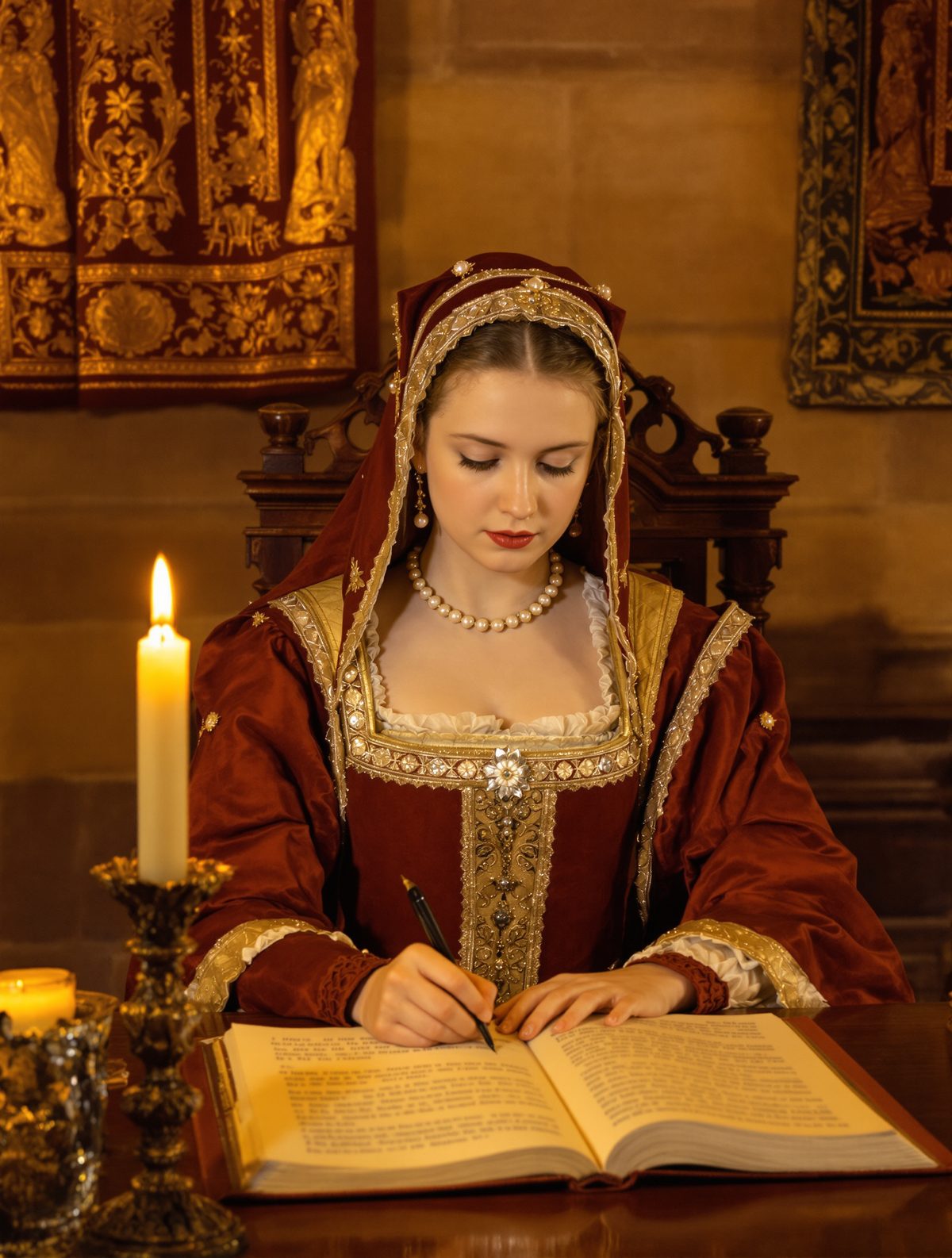
The year was 1543, and England was gripped by more than just the political machinations and religious upheavals that defined Henry VIII's reign. Behind the walls of his grand palaces, in the labyrinth of intrigue and power, a young girl was quietly shaping a future no one anticipated. Removed from the corridors of influence, declared illegitimate, and stripped of her royal title was Elizabeth Tudor, the daughter of Henry VIII and Anne Boleyn. Few at court gave her a second thought, considering her a pawn that had been cast aside. But in her solitude, this young princess was preparing to defy expectations, for she secretly harbored ambitions of greatness.
The Dispossessed Princess
Elizabeth Tudor was but a child when the complexities of royal succession changed her life forever. At just two years old, her mother Anne Boleyn was executed on charges of treason, and Elizabeth's status was ruthlessly altered from legitimate princess to illegitimate offspring. Stripped of her official title, her rearing and education were no longer of significant concern to the throne.
Despite this fall from grace, Elizabeth's education did not grind to a halt. Her intelligence was undeniable, and while figures at court might have overlooked her, those responsible for her upbringing did not. Elizabeth, demonstrating remarkable resilience and foresight for a girl of her age, absorbed knowledge like a sponge. In the isolated halls of her sequestering, she was already charting a path back to power, albeit silently and without outward shows of ambition.
A Secret Scholar
Elizabeth's intellectual pursuits during these formative years became the bedrock of her future reign. Under the guidance of Roger Ascham and other scholars, she embarked on a comprehensive study of the classical works. It was during this time that her future tutor, Ascham, would remark on the profoundness of her intellect, declaring her unlike any pupil he had ever encountered. Her aptitude for languages, particularly Latin, was noteworthy; when Ascham later reviewed her translations, he reportedly wept at the skill and precision displayed by the young Elizabeth.
Her education encompassed much more than languages. Elizabeth devoured philosophy, theology, history, and the arts. She embraced humanism, a crucial intellectual movement of the times. Her studies were not merely a pastime; they were a deliberate act of self-preservation and preparation. Elizabeth was equipping herself with all the tools she would need should fate offer her a chance to step into her father's unenviable shoes.
Life at Court: A Stage of Politics and Power
The Tudor court was a place of grandeur and peril in equal measure. Within its halls, allegiances and fortunes shifted like the winds, and those who failed to secure their footing could find themselves swiftly out of favor. Elizabeth navigated these rocky grounds with an awareness well beyond her years. Although outwardly sidelined, she kept her eyes and ears open to the whispers of court politics and the delicate ballet of influence and power.
This era was marked by Henry VIII's notorious marriages and the subsequent descendants who jostled in the shadow of the throne. Elizabeth's own half-brother, Edward VI, and her elder half-sister, Mary, also had claims to the crown. Elizabeth's status made her vulnerable, yet she learned early to discreetly observe and absorb the political machinations around her, gleaning lessons that would one day inform her own reign.
The Self-Made Monarch
Elizabeth's transformation from a forgotten princess to one of England's most revered monarchs was extraordinary. It wasn't until the death of Henry VIII and Edward VI's brief reign that the wheels of fortune began to turn in her favor. Despite Mary I's initial suspicion and the tumult of her own rule, Elizabeth emerged as the natural and popular successor, thanks in part to the alliances and intelligence she had cultivated under the radar.
Her later rule would exemplify the political acumen and adaptability she honed during her formative years, navigating through a series of internal and external challenges. The Elizabethan Era was marked by its cultural rebirth, financial stability, and the deft oversight of foreign relations. The seeds of this success were sown in those quiet years of study and reflection, far removed from the lime-lit spectacle of palace life.
A Legacy of Resilience and Intellect
Elizabeth's story, a testament to resilience and perseverance, endures as an inspirational chapter in the annals of royal history. It serves as a reminder of the often unseen and unsung preparations that lead to greatness. In a world that has always been rife with the unpredictability of politics and life, she demonstrated the timeless values of preparation, resilience, and self-reliance.
Today, Elizabeth's life resonates with modern audiences, a story of rising above adversity to seize one's destiny. Her legacy, marked by brilliance and tenacity, offers a window into the past and inspiration for those who dare to define their futures. Her remarkable journey from a declared 'bastard' to one of the nation's most lauded monarchs is a narrative that underscores the enduring allure of the British monarchy, spotlighting the unique blend of history, heritage, and humanity that defines it.
"From what I have seen and heard, this child is the greatest thing that England now sports," remarked one ardent admirer of the young Elizabeth Tudor, a sentiment that would echo through time as her reign established a golden age for a nation reborn.