The night before her coronation, a twenty-seven-year-old queen knelt alone in private prayer, far from the pageantry that would consume the following day. What she carried into that silence — and what she brought back out — shaped every decade of a seventy-year reign that would become the longest in British history.
The Quiet Resolve: Elizabeth Before the Crown
The coronation of Queen Elizabeth II on June 2, 1953, was a dazzling spectacle, broadcast to the world as a dazzling display of British pomp and circumstance. However, the night before this grand occasion, within the quiet confines of her own private chapel at Buckingham Palace, the young queen was not the epitome of regal elegance, but rather a humble figure seeking guidance and strength.
This poignant moment of solitude stands out in a life that would be marked by constant public interest and scrutiny. Elizabeth, a young woman thrust into a life of duty following the untimely death of her beloved father, King George VI, had already assumed the responsibilities of the crown even before the ceremony bestowed upon her its visible symbolism. Alone with her thoughts and the enormity of her destiny, Elizabeth sought wisdom far away from her advisors and the elaborate rehearsals of her imminent enthronement. The weight of her vow was as invisible as it was profound.
A Legacy of Responsibility
Elizabeth's dedication to duty was shaped by those who came before her. Raised with a clear understanding of royal obligations by her parents, particularly her father, she saw firsthand the toll the crown could take on its bearers. Yet, she also witnessed the deep bond of service between the monarchy and its subjects, a relationship forged in the fires of two world wars and hardest years of the twentieth century.
The Archbishops and Lords who surrounded her during the days leading to the coronation had seen the rigours and the resilience required for such a life. Elizabeth, even at a tender age, demonstrated the maturity and grace that characterized her reign. These were not qualities forged overnight but honed over years of exposure to the intricate dance of the court, military reviews, and state banquets.
What is perhaps less known is the young queen's affinity for connecting beyond the rigid walls and gilded corridors of her palaces. She was attuned to the shifting tides of a post-war Britain, empathizing with citizens eager for renewal and hope. Her vow, therefore, was not only to her God but to her people — a promise to dedicate herself to them with grace, commitment, and unwavering resolve.
The Day of Splendor
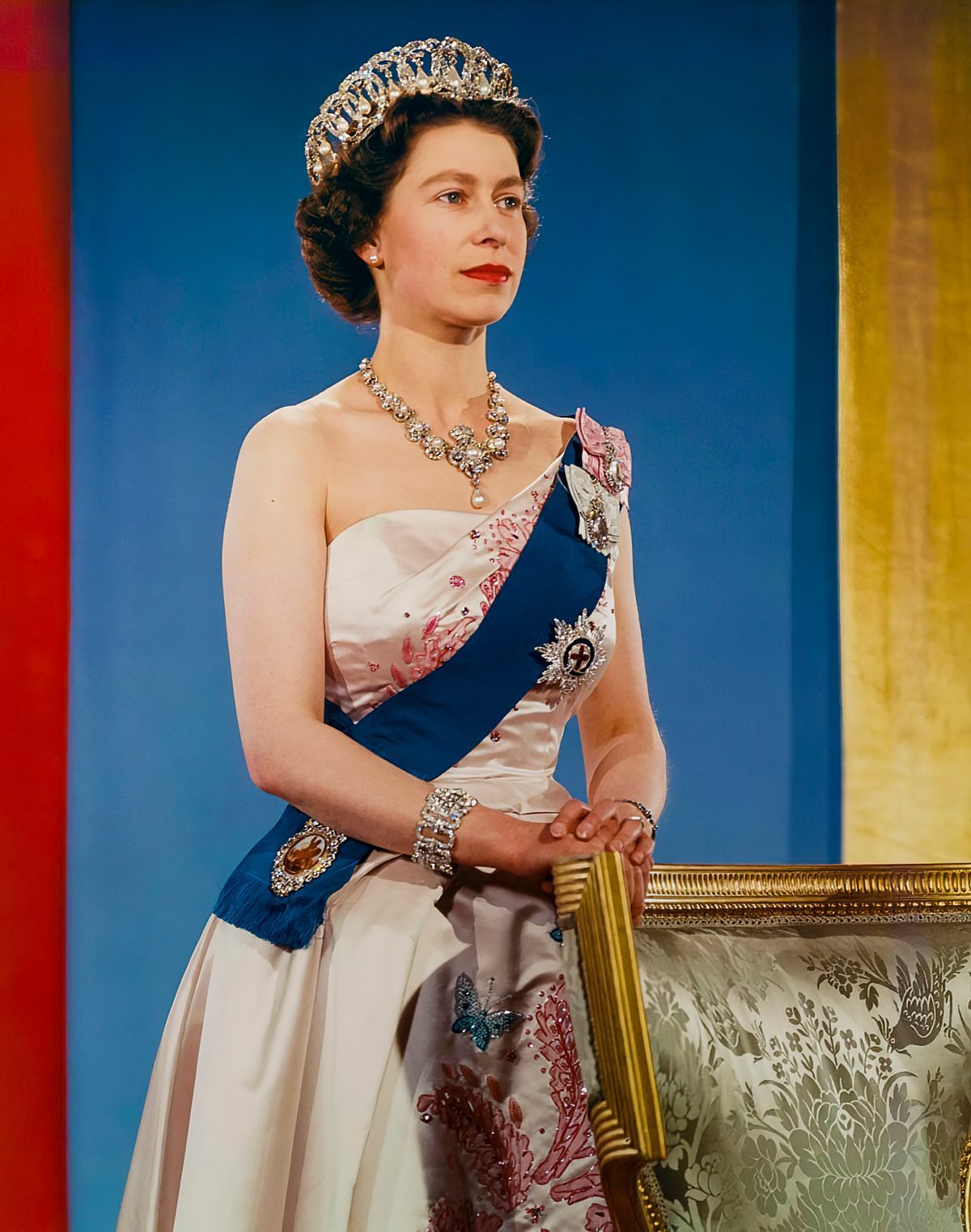
As dawn broke on Coronation Day, Elizabeth rose from her solemn vigil with renewed strength. The eyes of the world were upon her as she slipped into the stunning white satin gown designed by Norman Hartnell, meticulously embroidered with floral emblems representing the nations of the Commonwealth.
The service at Westminster Abbey was nothing short of a grand pageant of history and tradition, a confluence of ceremonial grandeur and deep spiritual significance. Dignitaries and heads of state filled the Abbey, eager to witness the anointing of a queen who promised not only to reign but to serve. The coronation itself was not only a momentous event for Elizabeth but also a way for a nation to witness the continuity of tradition. Through this lens of history, one could see echoes of previous queens, from Victoria to Elizabeth I, intertwined in the choreography of rite and ritual.
The imagery from that day would become iconic — the young queen, bathed in sunlight, with the Imperial State Crown placed upon her head, holding the symbolic orb and sceptre. Each element of her regalia was steeped in history, a testament to her lineage and a mantle that connected her to her forebears.
A Reign of Uncommon Dignity
For the next seventy years, Queen Elizabeth II's reign would manifest the promise she made in solitude on the eve of her coronation. Her enduring presence became a source of stability through eras of significant change — the swinging sixties, the digital revolution, and the economic challenges of the 21st century. Her leadership was defined not by seismic shifts but by the duty, respect, and reverence that characterized her reign.
Her public persona was only one facet of her role. Behind the scenes, Elizabeth was a devoted wife, mother, and, later, grandmother. Her union with Prince Philip was a partnership strengthened by the same values she vowed to uphold. Together, they navigated the complexities of royal life while nurturing a family that, in its own way, mirrored the broader shifts in society.
The Vow Continues
As we reflect on Queen Elizabeth II's monumental reign, the quiet moment of prayer sequestered away in Buckingham Palace's chapel resonates as a touchstone of her life of service. Her story is one not only of commitment to her role but also of adaptation and evolution — much like the nation itself.
Today's monarchy, with King Charles III at the helm, continues to be influenced by her ethos of duty, service, and perseverance. As the world looks onward, the values she embodied serve as both a foundation and an inspiration. In the whispers of tradition and amid the vibrant mosaic of modern life, the vow of a young queen remains a guiding light for the monarchy and its future.
Such is the enduring legacy of Queen Elizabeth II, a testament to how a personal moment of private reflection can reverberate across decades, shaping the future of a nation and its people. Her reign continues to remind us of the timeless impacts of steadfast dedication, now etched in the annals of history and in the hearts of those she so devotedly served.
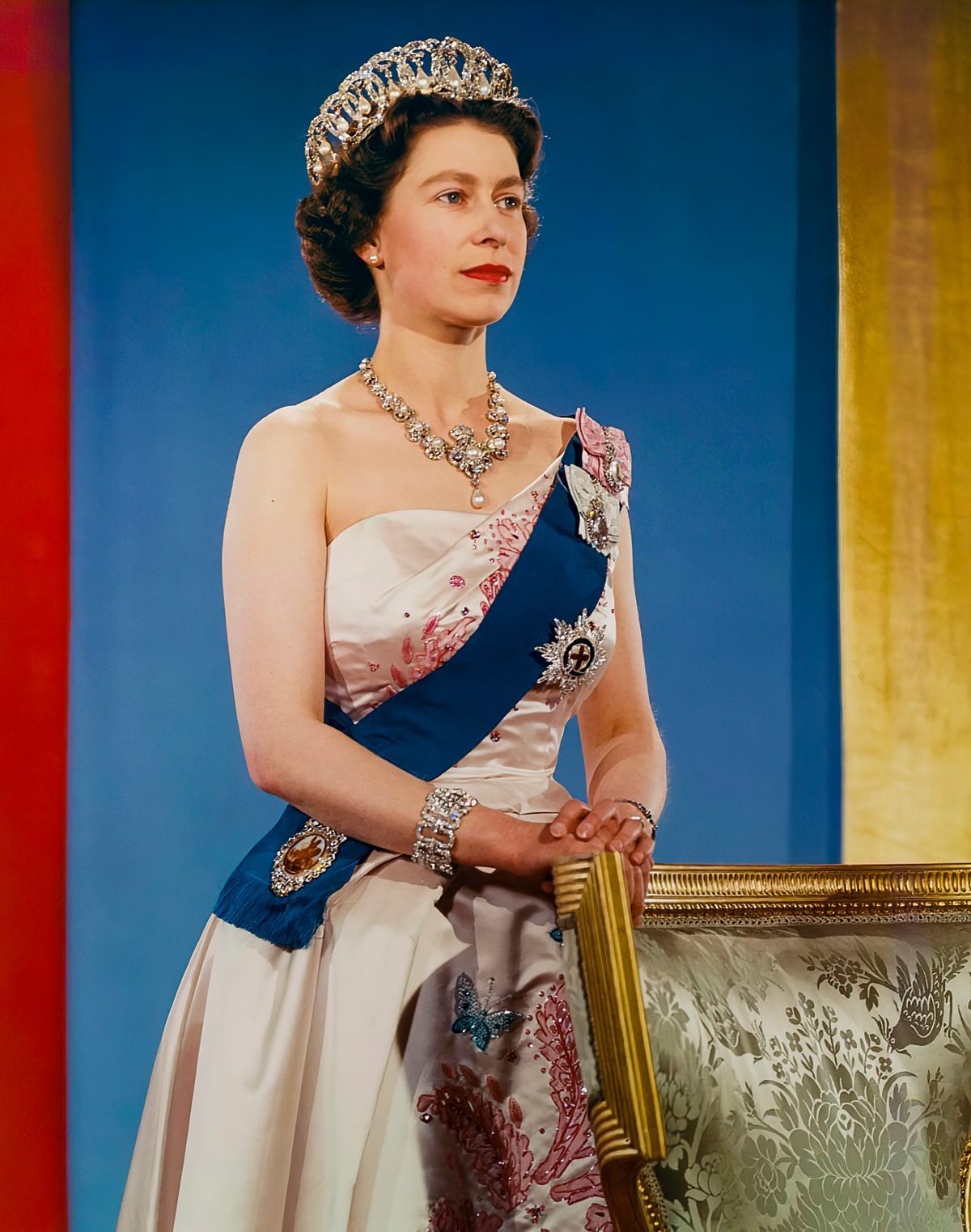
📷 Photo: Donald McKague. Public domain via Wikimedia Commons.