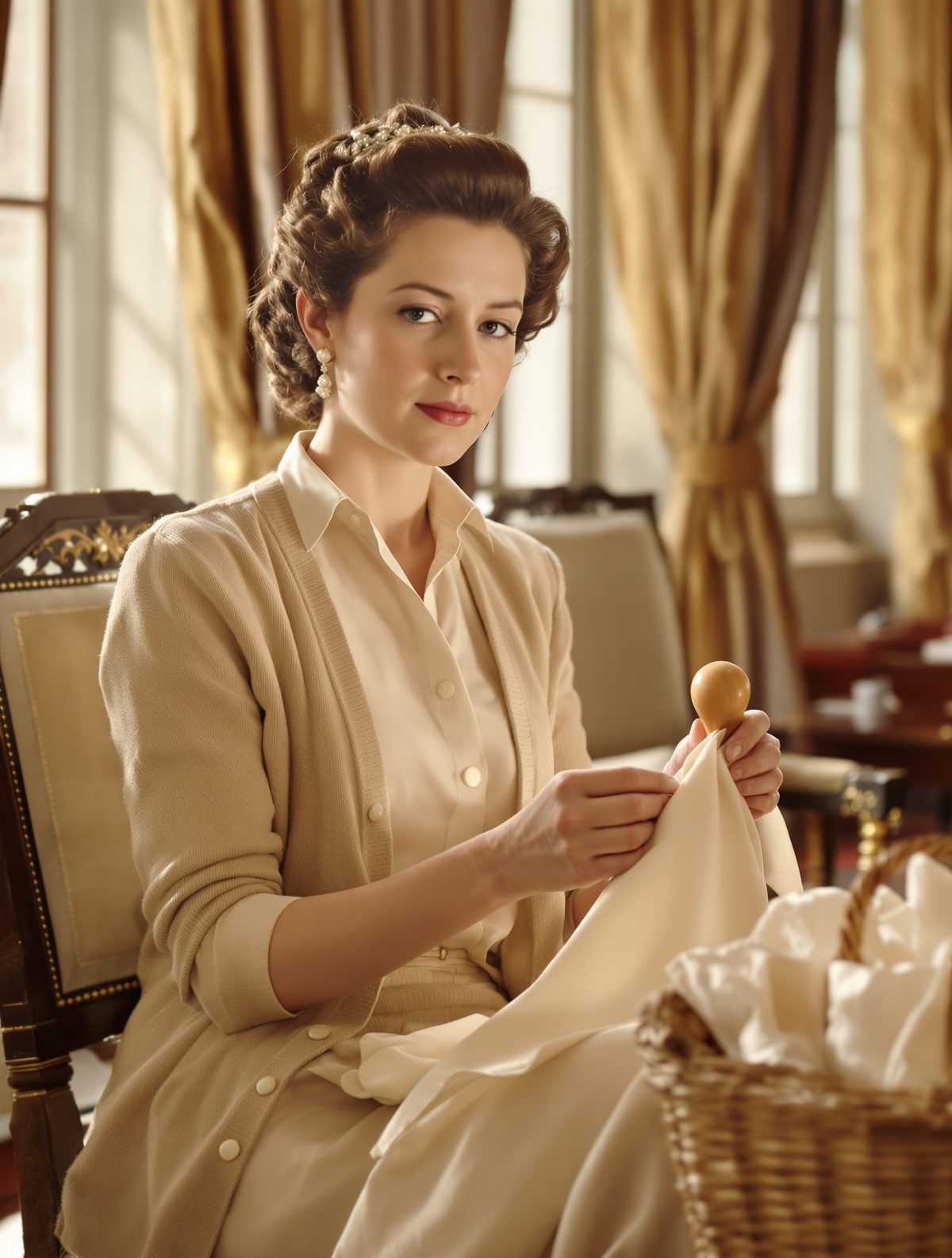
The sound of footsteps echoing through Windsor Castle's stone corridors would normally send servants scurrying to attention, but on this particular wartime afternoon in 1943, those footsteps belonged to Queen Mary herself—and she was about to discover something that would shake her understanding of royal propriety to its very core. There, in the modest servants' quarters, sat the future Queen of England, her golden head bent in concentration over a wooden darning egg, carefully threading cotton through the delicate silk of her stockings with the practiced hands of any ordinary British girl making do during the war.
A Princess Learning the Art of Making Do
The Second World War had transformed life across Britain, and even the hallowed halls of Windsor Castle were not immune to the spirit of rationing and resourcefulness that gripped the nation. Princess Elizabeth, then just seventeen years old, had been quietly observing how the palace staff managed their meager wartime allowances with remarkable ingenuity. While her grandmother Queen Mary believed firmly in maintaining royal standards regardless of circumstances, the young Princess had developed a fascination with the practical skills that ordinary families used to stretch their clothing rations.
Silk stockings were among the most precious commodities during wartime Britain. With just sixty-six clothing coupons per year for each person—royal or commoner—every item had to last. The Princess had noticed how the housemaids and ladies' maids would gather in their quarters during quiet moments, sharing techniques for extending the life of their precious hosiery. The sight of these skilled women transforming laddered stockings back into wearable condition with nothing more than a darning egg and careful stitchwork captivated the practical-minded teenager.
What began as curious observation soon developed into secret lessons. The Princess would slip away from her formal duties to watch the servants work, asking questions about their techniques and eventually requesting to try the delicate art herself. Her natural aptitude for detailed work—later demonstrated in her lifelong love of jigsaw puzzles and crosswords—served her well as she mastered the intricate patterns of darning.
The Royal Matriarch's Shock
Queen Mary, the formidable matriarch of the House of Windsor, had spent decades perfecting the art of royal dignity. Born into the aristocratic world of the late Victorian era, she believed unshakably that members of the royal family should maintain their elevated position even during the darkest times. Her own wardrobe, though adapted for wartime practicalities, remained impeccably maintained by professional staff. The idea that a future queen might soil her hands with domestic work was simply inconceivable.
The discovery scene has become part of Windsor Castle folklore. Queen Mary, making one of her regular inspections of the household, opened the door to the servants' common room expecting to find the usual collection of staff taking their afternoon break. Instead, she was confronted with the extraordinary sight of her granddaughter, the heir presumptive to the throne, sitting cross-legged on a simple wooden chair, completely absorbed in the delicate process of reweaving silk threads.
The wooden darning egg—a humble tool that would have been familiar to millions of British households—sat nestled inside the stocking as Princess Elizabeth worked with remarkable concentration. Her technique, clearly learned from expert tutors among the palace staff, was surprisingly accomplished. The future Queen had not merely been playing at domestic work; she had genuinely mastered this essential wartime skill.
Tradition Meets Wartime Necessity
The confrontation between grandmother and granddaughter represented more than a simple breach of protocol—it highlighted the fundamental tensions within the royal family during wartime. Queen Mary's horror was not born from snobbery alone, but from a deep-seated belief that the monarchy's strength lay in its separation from ordinary concerns. She feared that if royalty appeared too common, too accessible, the mystique that sustained the institution might be irreparably damaged.
Princess Elizabeth, however, had inherited from her parents King George VI and Queen Elizabeth a more modern understanding of royal duty. The King and Queen had chosen to remain in London during the Blitz, sharing the dangers faced by their subjects. This spirit of solidarity with the British people extended naturally to sharing their wartime privations, including the need to make do and mend.
The Princess's actions reflected a generational shift in royal thinking. While Queen Mary saw the maintenance of royal dignity as paramount, the younger generation understood that true leadership sometimes meant demonstrating shared sacrifice. The teenage Princess Elizabeth was already displaying the instinctive understanding of public sentiment that would serve her so well throughout her long reign.
The skills she learned during those clandestine sessions in the servants' quarters would prove surprisingly useful throughout her life. Even as Queen, she was known for her practical approach to clothing care and her appreciation for craftsmanship and attention to detail.
Lessons in Leadership and Humility
What Queen Mary initially saw as a shocking departure from royal standards, history would judge as an early indication of Princess Elizabeth's exceptional fitness for the throne. The future Queen's willingness to learn from her subjects, to understand their daily struggles, and to master the practical skills that wartime demanded, demonstrated a humility and connectedness that would define her approach to monarchy.
The servants who taught the Princess their darning techniques spoke later of her genuine interest in their methods and her respectful attention to their expertise. She did not approach these lessons with the casual interest of someone amusing herself with quaint customs, but with the serious dedication she brought to all her studies. This respect for knowledge and skill, regardless of its source, would become a hallmark of her character.
The incident also revealed the Princess's natural instinct for thrift and resourcefulness—qualities that would serve the monarchy well in the challenging post-war years. Her understanding that even silk stockings were worth preserving and repairing demonstrated a practical wisdom that resonated deeply with subjects who were making similar sacrifices across the nation.
A Royal Legacy of Service
The image of Princess Elizabeth with her darning egg represents something profound about the monarchy's evolution during the twentieth century. Her willingness to engage with the everyday realities of her subjects' lives, even in such a humble way, foreshadowed the accessible yet dignified approach that would characterize her eventual reign as Queen Elizabeth II.
The skills learned in those servants' quarters—patience, attention to detail, respect for craftsmanship, and the wisdom of making things last—would prove invaluable throughout her life. These qualities, developed through something as simple as mending stockings, contributed to her reputation as a monarch who understood both the weight of tradition and the need for practical adaptation to changing times.
Today, as we face our own challenges with sustainability and resourcefulness, there is something remarkably contemporary about a teenage princess learning to repair rather than replace, to value skilled craftsmanship, and to find common ground with people from all walks of life. Queen Mary's horror has transformed into historical admiration for a future sovereign who understood that true royalty lay not in distance from her people, but in shared experience and mutual respect.