In the spring of 1945, as the echoes of war still reverberated across Europe, intrigue swirled not just on the battlefields but within the regal confines of the British monarchy. Amidst this cacophony, a startling transformation was underway. An 18-year-old Princess Elizabeth quietly shed her royal trappings to don the practical garments of the Auxiliary Territorial Service (ATS), marking a transformational chapter not only for herself but for the Royal Family’s storied history.
An Unconventional Decision
The year saw Europe teetering on the brink of rebuilding from the devastation wrought by years of conflict. Against this backdrop of uncertainty and valor, Princess Elizabeth's choice to join the ATS might have seemed, to many, startlingly unconventional. Here was the future Queen of England, whose life seemed destined for ceremonial duties and public appearances, opting instead for the grittiness of military service. It was an unprecedented decision in the history of the British Royal Family, emblematic of a generation’s fortitude.
Elizabeth did not seek the comfort of privileged treatment, despite her royal lineage. She was determined to be "just another second subaltern," a low-ranking officer in the ATS. In doing so, she cast aside the trappings of royalty — no footmen attending to her, no relentless hierarchy of servants intervening in her daily tasks. Her duties were challenging, her surroundings unembellished, yet she embraced this new lifestyle with a pragmatic grace well beyond her years.
The Training Regimen
Her initial days at the ATS training camp were filled with activities that might have confounded those familiar with her customary regal image. Princess Elizabeth proved herself a willing student, methodically delving into the nuances of engine mechanics and vehicle maintenance. She was trained as a driver and mechanic, two roles requiring not just aptitude but a profound commitment to detail and service.
Elizabeth thrived under the tutelage of seasoned instructors. She rolled up her sleeves and immersed herself fully, mastering the art of changing tires, stripping engines, and correcting mechanical faults. In the act of shedding the ornamental gown for the grease-spattered overalls, she endeared herself not only to her colleagues but also to the fabric of a nation that was beginning to see her in a new light, not merely as a figurehead but as a contributor to the war effort.
The Royal Court's Response
The decision did not come without its hurdles. The British Royal Family's historical context reveals a tapestry of strict etiquette and defined roles. Elizabeth’s decision represented a deviation from this path, one met with both admiration and caution within the royal court. The world and its challenges demanded adaptations, and Elizabeth’s bold move did not go unnoticed by the public and the palace alike.
The reigning monarch, King George VI, expressed his pride in Elizabeth's fortitude. The sight of his daughter adopting an unvarnished role within the military resonated deeply with the King, himself a veteran of the First World War. The harmony of duty, service, and shared sacrifice resonated with the Royal Family and the kingdom, offering a poignant testament to a unique period in history.
Elizabeth: A Beacon of Wartime Spirit
The legacy of Elizabeth's service is profound. It underscored the Royal Family's commitment to the nation during a period when unity was not merely desired but necessary for survival and recovery. Her decision to serve in the ATS has rippled through the decades, casting her image as not only a Queen but as a servant of her people.
This chapter of Elizabeth's life lends credence to her enduring popularity and provides a touchstone for her future reign. She navigated through her duties with a deftness that bolstered her public image as a relatable and steadfast figure of the post-war British identity. In a land yearning for hope and leadership, Elizabeth’s efforts were a beacon of the indomitable wartime spirit.
A Lasting Implication
The wartime contributions of Elizabeth offer a profound insight into her later reign, where duty and service would emerge as the central tenets of her monarchy. Her time in the ATS set a precedent and served as a defining moment in her journey towards becoming a monarch who is both relatable and revered. Her life of service, seen in the context of those grease-stained days, reveals a Queen intimately acquainted with the duties she later embraced on behalf of her nation.
Today, as we reflect on her history, her unwavering dedication to duty continues to resonate. Even now, the story of a young princess, sleeves rolled up amidst the tumult of a world at war, serves as a reminder of the honesty of her pledge to serve. It tells of a sovereign drawn from a realm of tradition, yet one who redefined the way royal service is perceived, crafting a legacy informed by her unique wartime experience.
As admirers of the British monarchy, we are invariably drawn to the human stories behind the crown, stories that speak of resilience, determination, and an unyielding commitment to one's people. Queen Elizabeth II’s secret wartime job is but one chapter in her majestic and transformative life, yet it encapsulates the very essence of a ruler who has tirelessly served her country with grace, humility, and unmatched dignity.
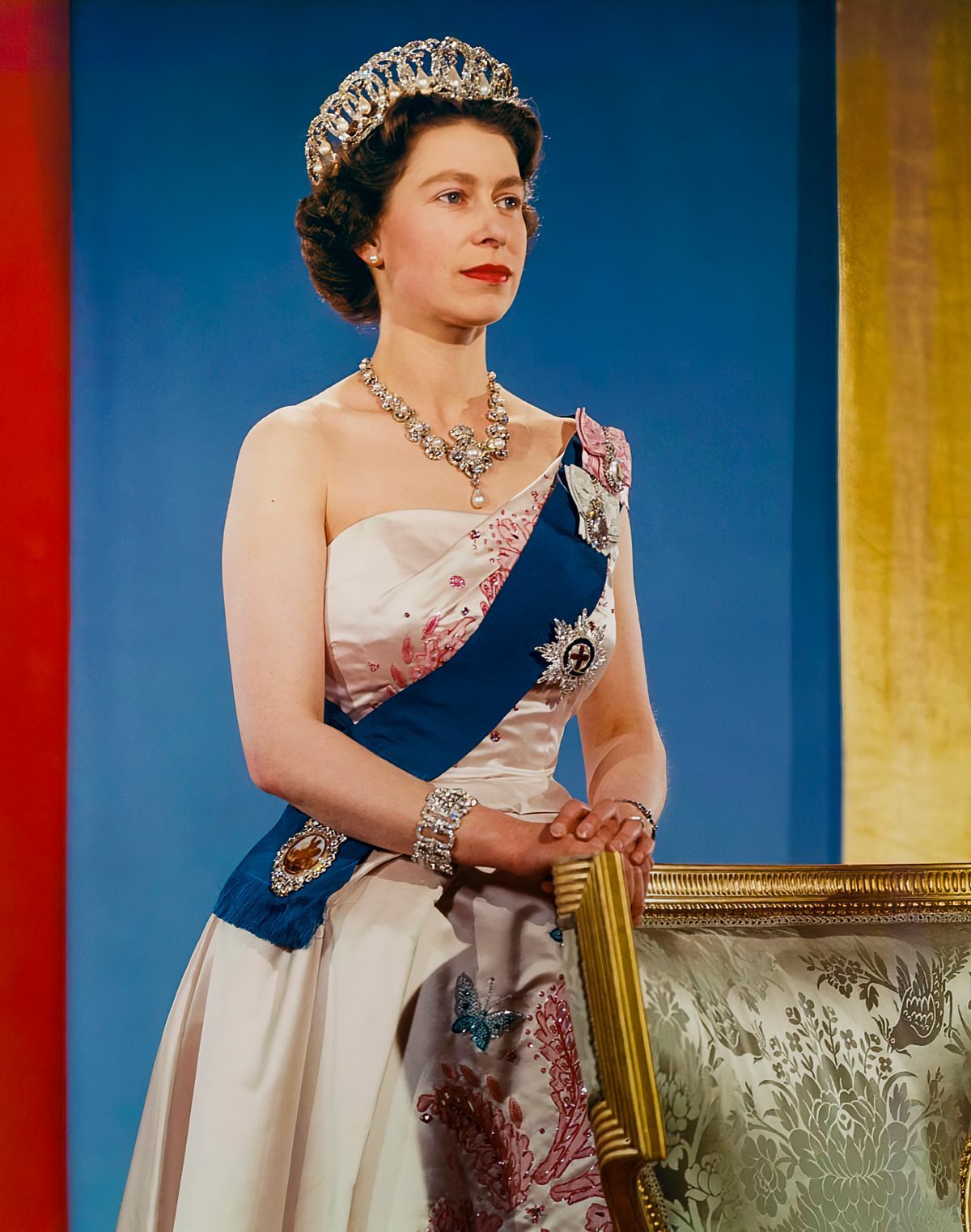
📷 Photo: Donald McKague. Public domain via Wikimedia Commons.