In a realm where elegance and restraint often reign supreme, Princess Diana chose fashion as her language of liberation. In 1997, she made headlines around the globe with a bold fashion statement, not by wearing a dress but by letting go of 79 of them. The story, however, goes beyond the auction room. While her selection of stunning gowns went under the hammer at Christie’s in New York, one particular ensemble, known as the midnight blue Victor Edelstein gown, stayed behind in her private collection. The dress was more than a garment; it was a symbol of iconic moments, emotional insights, and a step towards the woman she was becoming.
The Charity Auction: A Majestic Send-Off
The late 90s were years of transformation for Diana, a time when she began to redefine her legacy beyond the confines of royalty. Her monumental auction was a testament to this change, raising over three million dollars for charities close to her heart, including AIDS and cancer research. It was both a generous donation and a symbolic farewell to a chapter of her life that was, quite literally, embroidered with memories.
The auction at Christie’s was not just a public sale; it was an intimate glimpse into the wardrobe of a woman who had captured the world's imagination. Each dress was a visual narrative of Diana’s journey, from her debut in royal life to her metamorphosis into the "People’s Princess". However, among the prestigious Zimmermanns and glamorous Zandras was one beloved gown that never saw the auction block.
The Dance That Dazzled the World
It was November 1985, at a White House gala hosted by President Ronald Reagan and First Lady Nancy Reagan, that the world witnessed a moment that seemed to pull time in with its grace. Princess Diana, draped in a striking midnight blue gown by Victor Edelstein, had stepped onto the dance floor with actor John Travolta. The gown flowed like liquid silk as they swirled under the chandeliers, crafting a picture so enchanting that it would be etched into royal lore.
Though there were many designers in Diana’s repertoire, it was Edelstein’s creation that she chose for that particular evening—a bodice that whispered sophistication and a skirt that spoke of freedom. It was a gown that, to many, symbolized more than a dance; it was a statement of poise and freedom amid life’s orchestrated expectations.
Style as a Form of Empowerment
For Diana, the blue gown was not merely an article of clothing but a reminder of personal evolution. As she transitioned from her traditional role within the royal family to forging her own identity, her fashion choices became increasingly autonomous and expressive. A woman once defined by her wardrobes’ adherence to royal protocols transformed into a style icon on her own terms.
The gown’s allure wasn’t just visual; it resonated on a deep emotional level. It was a vivid reflection of a night she swept aside protocol for spontaneity, elegance for individuality. For charity and history, she was prepared to part with wedding gowns, cocktail dresses, and numerous other outfits tied to royal ceremonies, but the blue Edelstein was a piece she retained, symbolizing a memory unbounded by the walls of a palace.
A Legacy of Warmth and Giving
Diana’s decision to retain this specific gown illustrated an affection for moments that were uniquely hers—a step away from her charitable contributions that continued to transform lives even after her passing. It revealed a multidimensional story of a woman who harnessed the allure of glamour as both a shield and a beacon of change.
Even as Diana moved beyond her royal constraints, her charity work remained a touchstone—demonstrating her enduring commitment to fostering a better world. Through her auction, she made space in her life to continue good works, reinforcing the idea that style and substance could indeed walk hand in hand.
From Then to Now: A Reflection
Princess Diana's style, spirit, and devotion to humanity resonates even today, connecting the past majestically to the modern world. Her choices reflect a harmony of duty and desire to uplift others, illustrating the timeless essence of grace underpinned by impact.
While the midnight blue gown remained unworn by another, its story fabricates a bridge between Diana's personal narrative and her public life, a vivid reminder that some memories, like certain people, transcend time and trend. She showed that while fashion could, indeed, communicate status and power, it also could serve as a canvas for a deeply personal story—one of hopeful beginnings and enduring legacies.
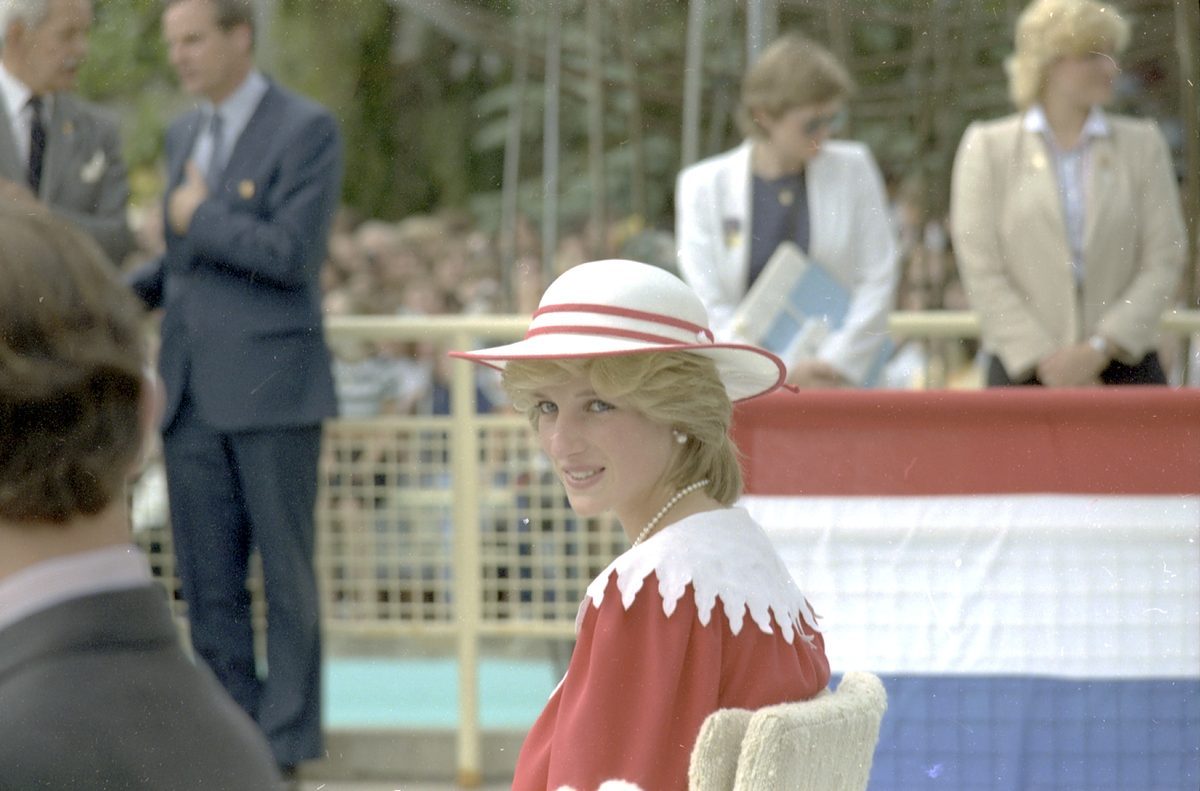
📷 Photo: Provincial Archives of Alberta. No restrictions via Wikimedia Commons.