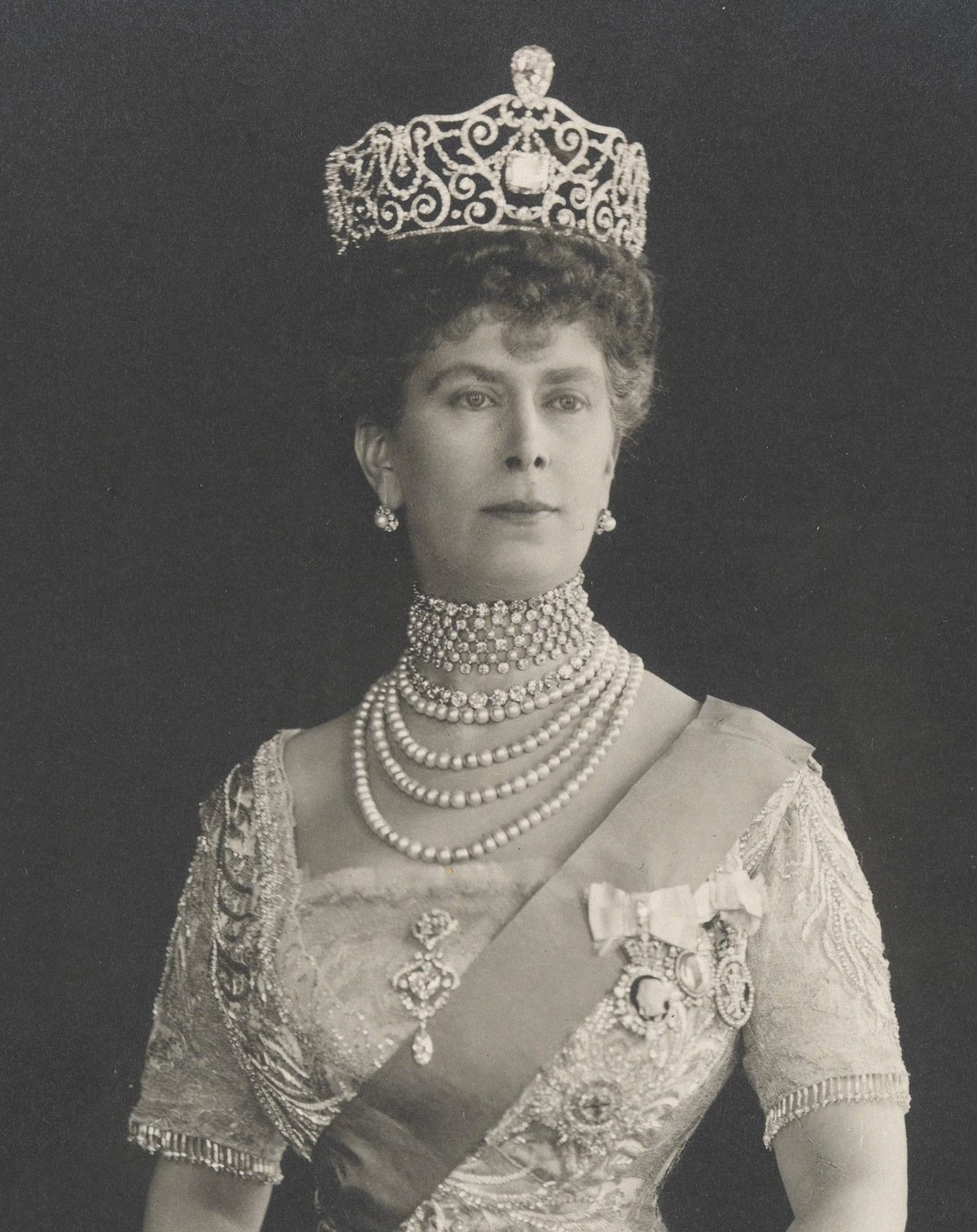
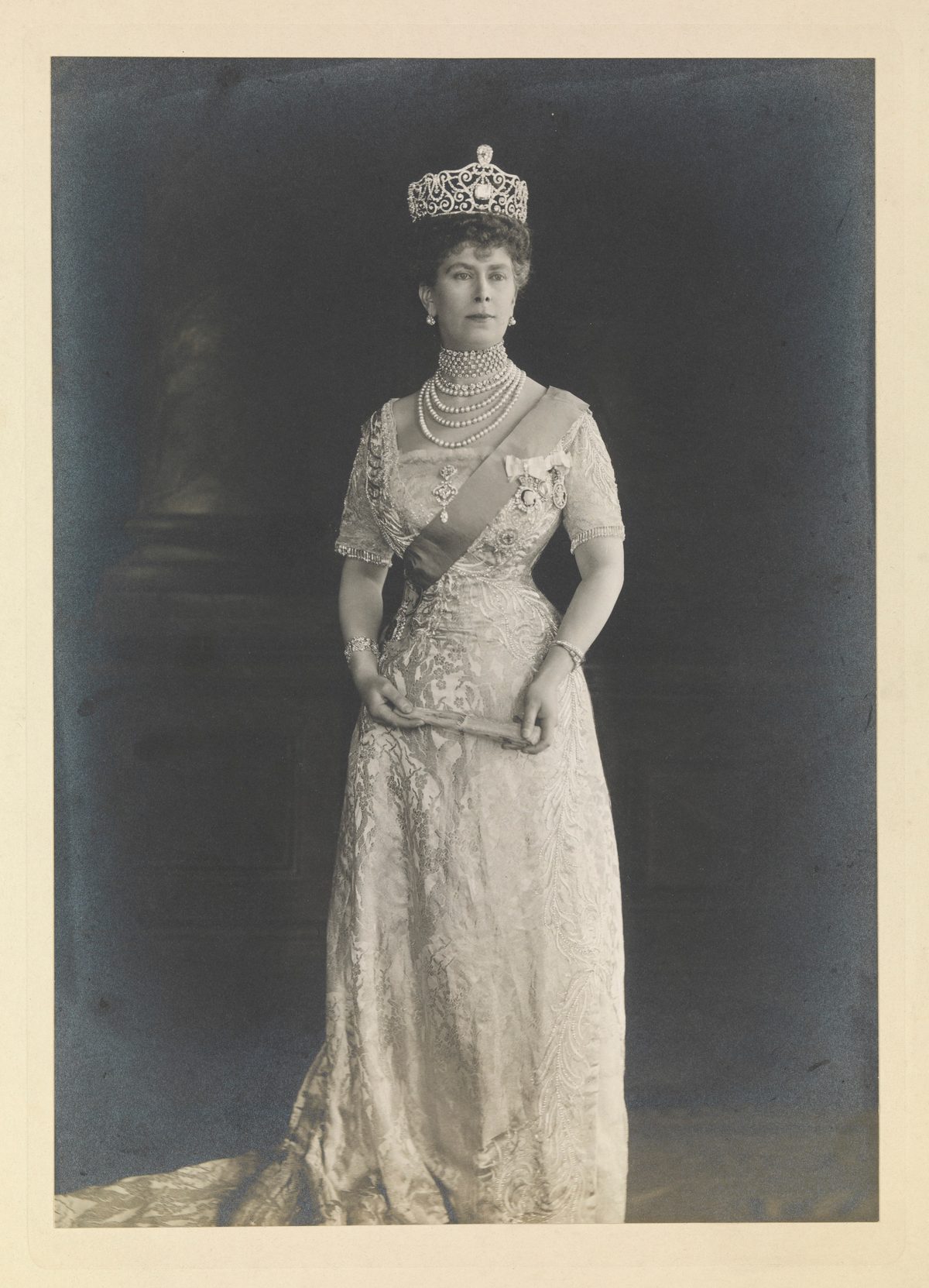
In the hush after the passing of King Edward VII in May 1910, all eyes turned to Queen Mary, the new Queen Consort. She stepped into her role as a symbol of stability and grace at a time when the nation lay shrouded in grief. Her selection of a mourning gown, meticulously chosen for its every detail, became emblematic of continuity and reassurance. This gown, in deep violet silk, was not merely an article of clothing, but a quiet statement of devotion and duty – a demonstration that the monarchy held steadfast amid the sorrows of change.
A Queen for the Ages: Mary of Teck
Mary of Teck was not simply born into royalty; she was shaped by a life of service and subtle elegance. Born in 1867, her early years were marked by the regal passage of time, yet she remained grounded, a young woman defined by duty rather than dalliance. Her marriage to the future King George V was one of partnership and mutual respect – a guiding light for her future role as Queen Consort.
Mary's upbringing imbued her with a deep understanding of the responsibilities that accompanied her status. This understanding would soon become essential. On May 6, 1910, King Edward VII, known affectionately as “Bertie,” passed away. A nation mourned its charismatic leader, and Mary was propelled into a new era alongside her husband, George V, who ascended as King. As the consort of the freshly crowned monarch, Queen Mary knew her every action was a reflection of the Crown, and she embraced her new role with an unerring sense of duty.
The Brocade of Grief: A Historical Context
In Edwardian England, the rituals of mourning were almost as meticulously structured as those of royal life itself. It was not just about sorrow, but also about demonstrating resilience and dignity in the face of grief. Mourning dress was a language spoken by society, with color, fabric, and style conveying specific meanings. The royal family followed with a stringent code to display propriety and poise during such periods.
In this context, Queen Mary's choice of attire for public engagements following King Edward VII's death took on profound significance. The deep violet color of her mourning gown spoke volumes. While black was the conventional mourning color, violet indicated a step past the initial depths of grief, looking ahead with solemnity and hope.
The silk fabric of the gown revealed the intricate nature of royal mourning — luxurious and rich, yet controlled and respectful. The choice demonstrated an awareness of her Queenly image, capable of offering comfort through the mere presence and appearance of strength.
The Gown: A Vision of Composure
The gown itself was a masterpiece of royal attire. Crafted with the utmost care, every aspect of it told a story of continuity and support. While the silhouette adhered to the regal norms of the time, with long lines and high necklines that reflected propriety, it was the color that set it apart.
Queen Mary’s choice of a sophisticated, muted violet silk was deeply symbolic — a color denoting half-mourning, an appearance of acceptance and looking forward while still honoring the past. During public appearances, this gown struck a resonance with the British public, projecting an image of a Queen who was both mourning daughter-in-law and the face of the future.
“In Queen Mary’s regal choice of attire, the silk spoke of dignity, and the color of the gown whispered of resilience. It was a reflection that, in mourning, a steadfast heart could hold both grief and hope.”
Embellishments were few, a testament to the sobriety of the day. Delicate lace hems and modest adornments ensured that the focus was not on extravagant display but rather on the quiet strength that defined her reign.
The Human Story: A Nation Healed
The nation, while grieving its beloved King Edward VII, took solace in the composure displayed by Queen Mary. Her public appearances in the mourning gown became moments of collective comfort, where people found reassurance in her poised presence. The gown symbolized not just the monarchy's commitment to its people, but Queen Mary’s personal dedication to her new role.
Within the walls of Buckingham Palace, Queen Mary continued to find balance between her private sorrow and public duty. Her court was marked by the same calm authority that she projected onto the world stage, supporting her husband, King George V, through the early years of his reign.
In choosing this gown with deliberation, Queen Mary communicated a timeless message: while the circumstances may change, the Crown remains a steadfast symbol of continuity and strength.
Legacy Woven in Silk
Queen Mary’s choice to don a deep violet silk gown in the wake of her father-in-law’s passing stands as a beacon of her enduring legacy. It was more than mere attire; it offered a nation something to hold onto as it navigated the delicate transition between reigns.
Her understanding of the power of visuals and symbolism resonates even today, reminding us that the monarchy, though steeped in tradition, is built on the foundation of human stories and emotions. Her nuanced choice paved the way for future generations to understand the importance of symbols in articulating strength and unity.
Today, in a world that continues to reverberate with change and uncertainty, the story of Queen Mary’s mourning gown holds relevance. It inspires those who follow in her footsteps to lead with dignity, resilience, and an unwavering commitment to their roles and this beloved institution.
📷 Photo: John Thomson. CC BY 4.0 via Wikimedia Commons.