He had waited 59 years to be king. But when the moment finally came, Edward VII did not reach for a crown. He reached for his mother's hand. The dawn of a new century was marked by the end of an era at Osborne House on the Isle of Wight. Queen Victoria, the imposing emblem of the British Empire's grandeur and gravitas, drew her final breath on January 22, 1901. For her son, Albert Edward, the man who would become King Edward VII, it was a moment of profound personal loss entwined with the weighty mantle of newfound responsibility.
The Vigil of a Devoted Son
Osborne House, Victoria’s beloved retreat, became the backdrop of her last days. The queen's family gathered as the monarch, a figure so deeply intertwined with the very fabric of British identity, lay between this world and the next. But among those assembled, none displayed a more tender constancy than her eldest son. Potentially overshadowed by the Victorian age's rigorous sense of decorum, the true sentiment of the moment was Edward's refusal to leave his mother’s side.
Edward, who had spent much of his life in the wings of his mother’s shadow, found in her dying hours a rare opportunity to express the deep filial love that had often been eclipsed by the public’s perception of him as the wayward prince. For hours, he held Victoria’s hand, his tears mingling with the hushed reverence of mourning that permeated Osborne's rooms. This was not a king yet — this was a son saying goodbye, his heart bare and vulnerable.
Osborne House: A Setting for Farewell
Nestled on the Isle of Wight, Osborne House was designed to be a family refuge away from the demands of courtly life in London. Victoria and her beloved Albert chose the location as a place where they could be less sovereigns and more parents. Its Italianate architecture and landscaped grounds bore witness to many tranquil summers, children at play, and a family genuinely bonding beyond the throne room’s intrigues.
In those final days, the walls of Osborne House absorbed the orchestration of physicians, the whispers of courtiers, and the hushed prayers of a family keen to hold on to their matriarch a little longer. The queen’s eventual passing closed not just a personal chapter for the royal family but signaled the end of the Victorian epoch.
The Emotional Transition of Power
As news of Victoria's death spread, the world watched a son's deep personal grief collide with the demands of royal duty. It was a paradoxical moment; Edward had waited nearly six decades to ascend the throne, a position inherently his since birth. However, the reality of his ascent was wrapped in tragedy. His tears amidst the rituals of succession underscored that this transition was not merely the shift of a crown; it was a deeply familial moment of mourning.
Throughout the empire, subjects mourned their "Grandmother of Europe," whose steady hand had guided the British dominion through a transformative era. The new king's initial steps into his role would be marked by respect and reverence for his mother's legacy while also infusing his reign with a distinct personality, one that historians would later reflect as vibrant and energetic compared to that of his mother.
The Unforgettable, Human Side of Royalty
It is a remarkable reminder that behind the pomp and circumstance of monarchy lie genuine human stories of love, loss, and family. Edward VII’s immediate reaction to his mother’s deathbed was not of a sovereign concerned with state affairs but of a son, caught in a singular moment of profound grief. This raw exposure of human emotion connected the king with his subjects in a way few royal moments had before.
While the notion of royalty often conjures images of grandeur and unattainability, Osborne House on that morning brought the monarchy closer to the public than any decree or spectacle could. It prompted an appreciation for the shared human experiences that bind us all, regardless of status or society.
A Legacy Beyond Victoria
As Edward VII took the helm of the British Empire, the tone of his reign diverged from Victoria’s. Known widely for his genial nature and social demeanor, Edward set out to modernize the monarchy, making it more open and connected. His defining years as king included improvements in military reform, cultural patronage, and international diplomacy — particularly with a focus on improving UK-France relations, which laid groundwork that benefitted his successors.
Unlike his mother, whose reign was long and defined by the industrial revolution and expansion, Edward's short-lived rule became a prelude to the modernizing shifts that would follow and strengthen the royal family’s place in contemporary society. His affection for his mother, demonstrated so openly in her final hours, suggests that the values of family and personal connection played a pivotal role in his approach to being a monarch.
An Enduring Reflection on Love and Leadership
The morning of January 22, 1901, remains etched in the annals of royal history as a poignant juxtaposition of sorrow and duty. It was an enduring testament to the melding of personal affection and sovereign obligation. In the gentle grasp of his mother’s hand, Edward VII illustrated a truth that humanizes even the loftiest of titles: that love is the guiding light behind all leadership.
Today, as we reflect on the legacy of Queen Victoria and the transition to Edward’s reign, it invites contemporary admirers of the royal family to see beyond the ceremonial into the heart of the monarchy. The strength, resilience, and genuine affection displayed by Edward VII continue to resonate, shaping an understanding of the British monarchy that values continuity, history, and the ever-relevant power of familial bonds.
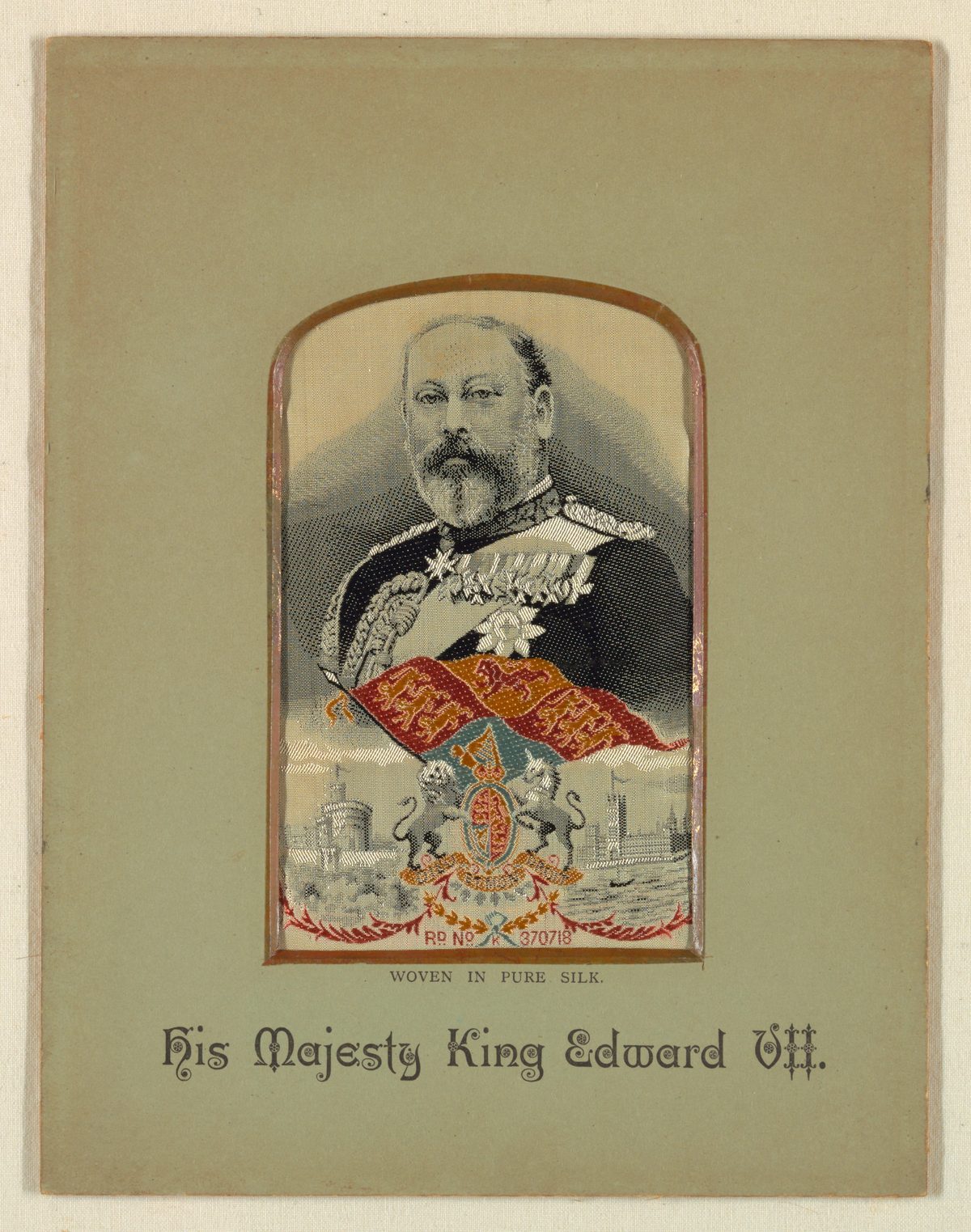
📷 Photo: Made by W.H. Grant & Company. Public domain via Wikimedia Commons.