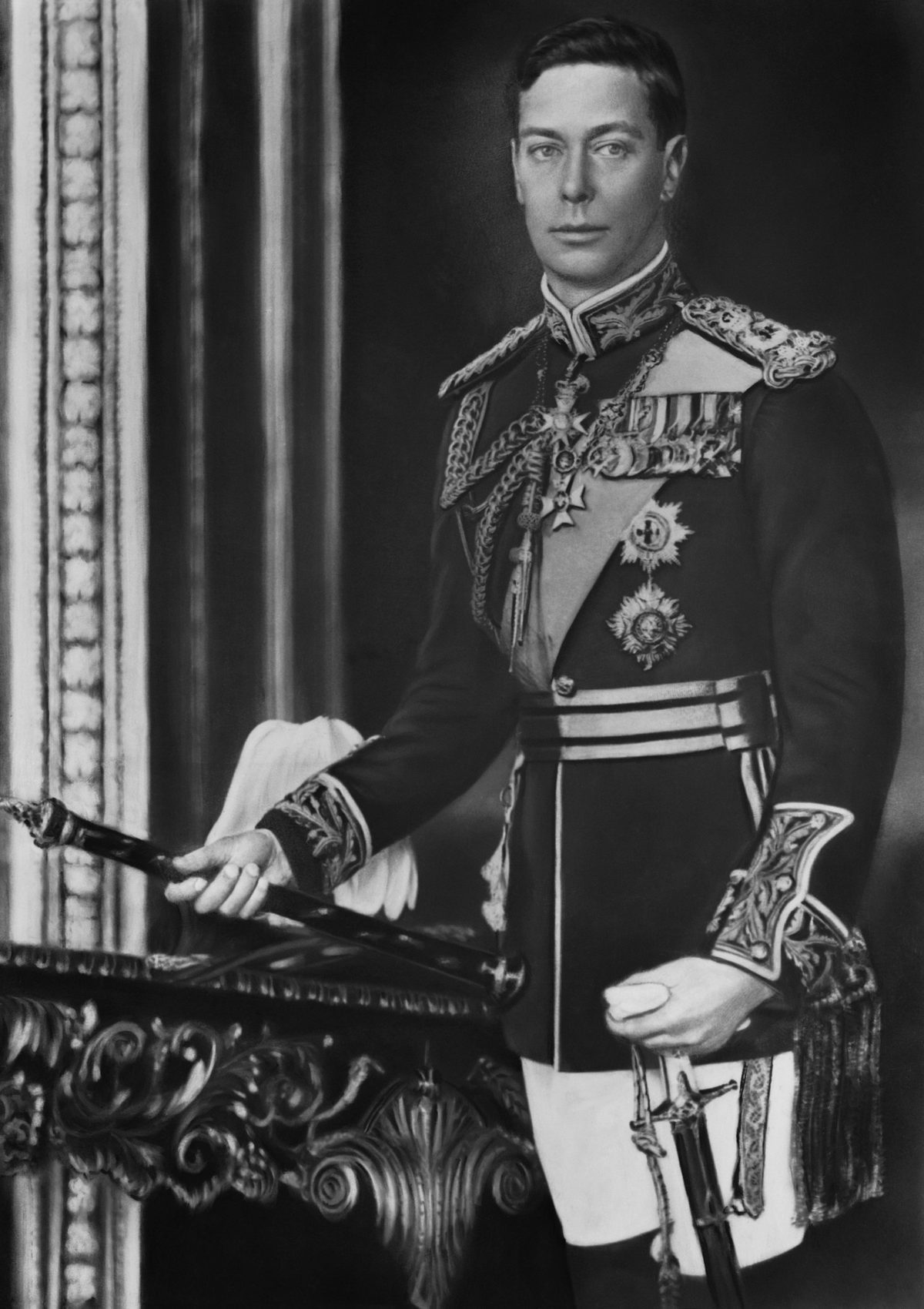
As the relentless autumn rain poured down over London in September 1940, King George VI braved the chill evening air, stepping out from the opulence of Buckingham Palace into the beleaguered streets of a city under siege. The Blitz had ignited fear across London’s populace, with nightly air raids leaving destruction in their wake. Amidst this backdrop of uncertainty and courage, the King performed an extraordinary act of solidarity that would resonate deeply with the people he served. Without ceremony or the protective entourage typical of his station, King George VI sought out an air raid shelter. In doing so, he revealed a deeply human aspect of monarchy that would inspire both his contemporaries and future generations.
The Weight of the Crown During War
The early years of King George VI’s reign were indelibly marked by the shadows of conflict. When he ascended the throne following the abdication of his brother, Edward VIII, in 1936, the UK faced an era fraught with international tension and domestic challenges. Known informally as ‘Bertie’ to his family, George VI never expected to become monarch and often felt ill-prepared for the demands of his role. Yet, as global turmoil loomed large, he grew into his position with steadfast resolve.
By 1940, the ravages of World War II had reached British soil, with the Blitz beginning its relentless assault in September. Night after night, German bombers unleashed destruction upon London, seeking to crush the spirit of the British people. Buckingham Palace itself came under attack several times, yet the King and his wife, Queen Elizabeth, were adamant about staying in the city to align themselves with the endurance demonstrated by its citizens.
A Quiet Act of Courage
Amidst this turmoil, King George VI made an unprecedented decision. As the echoes of war reverberated through London, he dressed in modest attire, devoid of any royal emblem that might set him apart from the common citizen. Without notifying his aides or ensuring the usual security, he quietly left the palace.
It was an extraordinary breach of protocol. For a monarch to roam the streets without protection was unheard of, yet this calculated risk revealed the depth of the King’s character. His destination: a public air raid shelter, where he would share in the collective anxiety of those who gathered for protection from the bombs overhead.
Entering the shelter, he was barely noticed at first, a solitary silhouette among many huddled in the dim light. The immediacy of shared fear created an unspoken bond between the King and his subjects, a testament to his understanding of the pressures they endured and his desire to offer moral support, however discreetly.
Strangers in the Dark
The sight of King George VI, descending into the depths of an air raid shelter, peeling back the layers of regal mystique, became a poignant tableau of empathy and solidarity. The people within the shelter, once they realized who sat among them, were abuzz with surprise. Yet, the King’s presence bore a calming effect.
This unannounced visit to the shelter was more than a simple expression of empathy; it was a declaration of unity in the face of adversity. Here was a King who chose to sit shoulder to shoulder with his subjects, offering reassurance without words, his noble lineage dissolving into the shared experience of vulnerability.
The average Londoner, accustomed to the strains and dangers of life under siege, found in their King a surprising ally. This symbolic gesture was a powerful reminder of the shared burden of survival and resilience during wartime. It was also an implicit promise: through suffering and sacrifice, their King stood with them.
Royal Duty and Public Compassion
King George VI’s wartime actions extended beyond this single memorable evening. Throughout the conflict, he and Queen Elizabeth made numerous visits to bombed-out areas, interacting with the public and boosting morale. They watched with their citizens as buildings burned but also saw firsthand the indomitable spirit that would come to define their people’s response to the war.
This commitment to share in the trials of war reflects the King’s fundamental belief in his duty to the nation. Raised in royal tradition, yet shaped by personal trials—including a well-documented struggle with a stammer—George VI’s determination to connect with his people on a human level was deeply sincere.
The King’s steps that September evening were, in many ways, a continuation of this hands-on, deeply personal approach to leadership. By crossing the threshold of the shelter, he blurred the lines between sovereign and subject, suggesting that in times of crisis, unity must overshadow hierarchy.
The Legacy of a Humble Monarch
The simple, unadorned act of sitting in a shelter with strangers left an indelible mark on those who shared the moment with him. It was a legacy of humble leadership that spoke volumes about King George VI’s character and priorities. His reign, underscored by such moments of humanity, fostered a renewed sense of kinship between the monarchy and the public.
Today, this legacy persists, emphasizing the profound connections that can be forged through shared tribulation. Even in contemporary times, when monarchies are often scrutinized under modern lenses, the acts of King George VI resonate as examples of leadership that transcend ceremonial duty.
As we reflect on this event, it stands as a poignant reminder of the strength found in unity and compassion. In the darkness of that air raid shelter, the line between king and commoner was effectively erased. Shared experiences in times of crisis can build bridges where they are most needed, illuminating the path forward for both royals and their realm. In the heart of adversity, King George VI reached across these divides, teaching us all the power of a single, silent act.
📷 Photo: Matson Photo Service. Public domain via Wikimedia Commons.